
The Latino Heartland: Broken Promises and ICE Vans Shape the Midterms
A Perfect Storm in California’s 22nd District
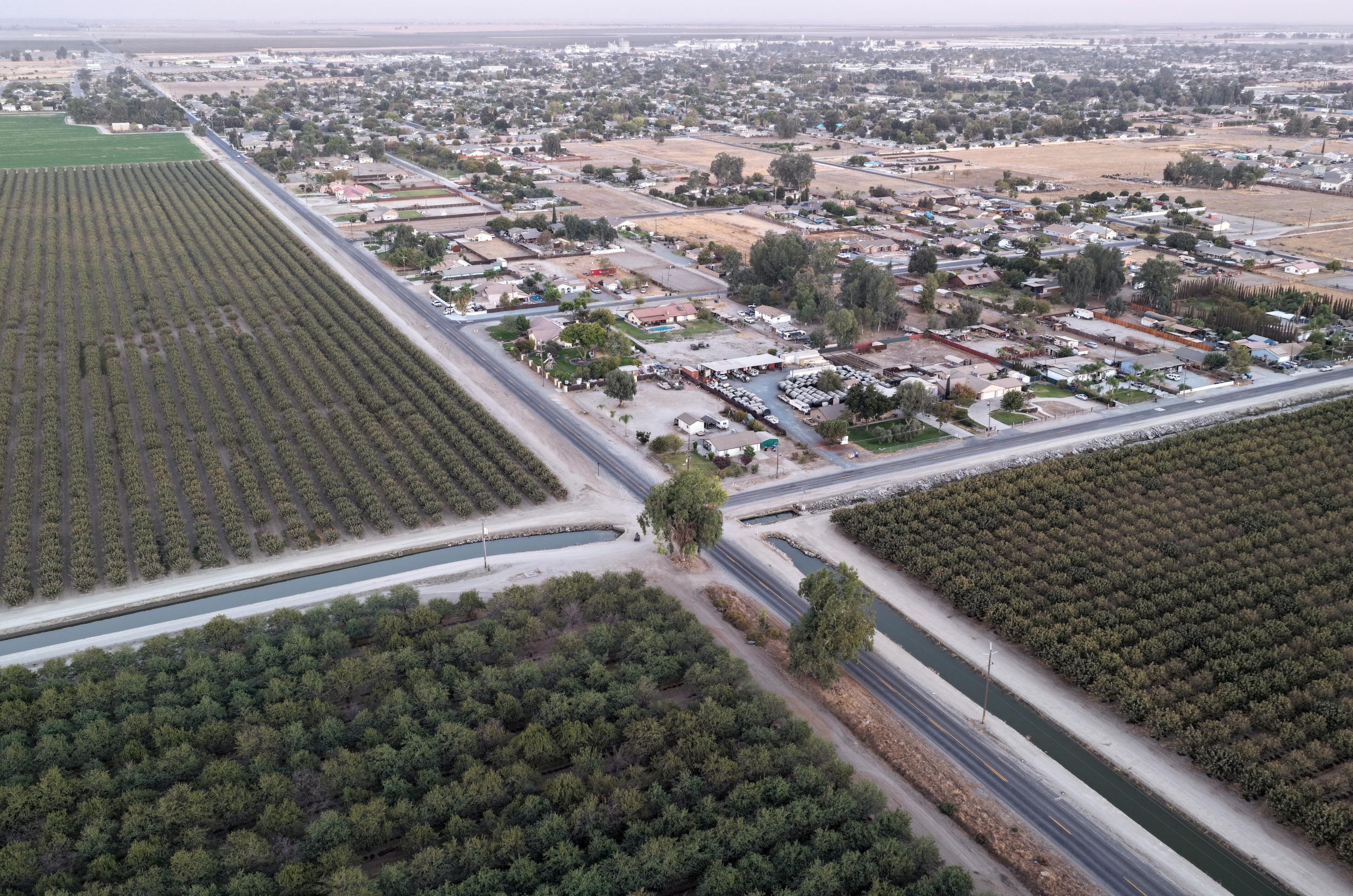
California’s 22nd Congressional District, once considered a political anomaly, has become the epicenter of a high-stakes battle that could determine control of the U.S. House of Representatives in November 2026. The race between Republican incumbent David Valadao and Democratic challenger Randy Villegas is no longer just about partisan politics—it’s a convergence of healthcare policy, immigration enforcement, economic hardship, and voter suppression fears, all unfolding in one of the most politically volatile districts in the nation.
At the heart of the controversy lies Valadao’s pivotal role in the May 22 House passage of what critics have dubbed the “One Big Beautiful Bill”—a sweeping reconciliation package that included significant cuts to Medicaid. Despite publicly vowing during the campaign trail that he would never support any bill that harmed Medi-Cal benefits, Valadao cast the deciding vote—215 to 214—in favor of the initial passage. This reversal sent shockwaves through his district, where 64% of residents rely on Medi-Cal, the highest percentage of any Republican-held congressional seat in the country.
The irony is not lost on voters: Valadao, a Hanford dairy farmer who first won the seat in 2012, has long been credited with defying demographic trends. His district is 74% Latino, and historically leans Democratic. Yet he has secured six consecutive victories by appealing to rural, working-class voters across the San Joaquin Valley. His sole defeat came in 2018, when healthcare was front and center in the national conversation—a dynamic now repeating with eerie precision.
A Redrawn Map, a Sharper Divide
In late 2025, California voters approved Proposition 50, which redrew district boundaries in ways that significantly altered the political landscape. The changes extended the partisan gap, giving Democrats a 42% share of registered voters compared to Republicans’ 26%—a 16-point advantage. This shift prompted the Cook Political Report to reclassify CA-22 as a toss-up, a designation both campaigns treat as a declaration of war. For the first time in years, the district is no longer a safe Republican hold—it’s a battleground.
That volatility has only intensified in recent months. In early October, a 45-day federal immigration enforcement operation swept through communities in the San Joaquin Valley. What made this operation particularly alarming was its location: arrests were documented outside pharmacies, domestic violence shelters, and Latino-owned grocery stores—places where families seek essential services and safety. The timing coincided precisely with the arrival of mail-in ballots, sparking widespread concern among civil rights advocates and community leaders.
In Kerman, the mayor confirmed that eight residents were detained over two days. Many of those arrested were reportedly taken without warrants, raising questions about due process and the targeting of non-citizens. While Valadao acknowledged that the Department of Homeland Security (DHS) confirmed the operations targeted individuals with active warrants, he also urged federal authorities to prioritize those with criminal histories over peaceful farmworkers.
Democrats argue the timing was no coincidence. They contend the immigration sweep was strategically timed to intimidate Latino voters and suppress turnout—especially among vulnerable populations already wary of federal overreach.
The Healthcare Promise Broken
Valadao defended his vote on the Medicaid cuts by asserting the legislation included reasonable work requirements and maintained coverage for the most vulnerable populations. But his explanation did little to quell outrage. Governor Gavin Newsom directly called out the congressman by name, condemning the decision as a betrayal of hundreds of thousands of families.
Randy Villegas seized on the contradiction during their first televised debate in early October. “He publicly promised that he would not cut Medicaid,” Villegas said to viewers. “And when push came to shove, he was the deciding vote on this bill that is going to rip away health care from Valley families.”
The statement struck a nerve. For many residents, healthcare is not just a policy issue—it’s a matter of survival. With rising costs and an unstable economy, the threat of losing Medi-Cal coverage looms large.
An Economy Under Pressure
The agricultural backbone of the Central Valley—once a source of regional pride—is under siege. In 2025, Chapter 12 farm bankruptcies surged by 46%, driven largely by unpredictable tariff policies that have disrupted export markets and inflated input costs. California’s agricultural output, which generates roughly $60 billion annually and dominates the state’s farming economy, continues to face mounting pressure from global trade uncertainty.
Valadao voted against a bipartisan effort to stabilize tariffs—an action Villegas has highlighted relentlessly on the campaign trail. “Farmers are paying the price,” Villegas argues. “They’re dealing with higher feed costs, unpredictable markets, and now, a Congress that refuses to act.”
Across the district, price fatigue has set in. Families are struggling to afford groceries, utilities, and medical care. And as inflation persists, trust in leadership erodes.
With healthcare, immigration, and economic stability converging in one district, the stakes couldn’t be higher. Every ballot in CA-22 may well determine whether the House remains in Republican hands—or flips into Democratic control.
A Race Defined by Economic Anxiety and Shifting Political Tides
Voters across California’s 22nd Congressional District have consistently pointed to economic pressures as the defining issue in this year’s election. In interviews with Valley Public Radio, residents from Bakersfield to the rural outskirts of Kern County echoed a shared concern: rising grocery prices, volatile gas costs, and the general strain of maintaining a household budget in an inflationary economy. These issues, which transcend party affiliation, have created a political landscape where traditional partisan divides are less reliable predictors of voting behavior.
The result is a race that defies conventional expectations. While the district has historically leaned Republican, recent demographic shifts, economic volatility, and a growing electorate disillusioned with both major parties have injected uncertainty into the contest. Independent analysts suggest that the outcome hinges not on ideological alignment, but on how voters perceive each candidate’s ability to address their immediate financial challenges.
Polling Data and Forecast Models Paint a Complex Picture
The most recent polling data — collected in July 2026 — shows a tight race between Democratic challenger Jesus Villegas and incumbent Republican David Valadao. Villegas leads with 48%, while Valadao holds 44%. Though a four-point gap may seem modest, it reflects a significant tightening compared to earlier surveys, signaling momentum for the Democratic campaign.
More telling is the updated forecast from the Split Ticket model, released on October 13. The model assigns Villegas a 78% chance of flipping the seat — a strong indication that the race is no longer considered a safe Republican hold. This projection takes into account multiple variables, including voter registration trends, past turnout patterns, and the increasing influence of independent and unaffiliated voters in the district.
Dr. Ivy Cargile, a political science professor at California State University, Bakersfield (CSUB), emphasized the fragility of the current balance. “This race remains genuinely open,” she said. “It could swing either Democrat or Republican based on your independent voters. If those moderates feel the economy is being managed effectively, they might stick with Valadao. But if they believe Villegas offers a more responsive alternative, especially on cost-of-living issues, the shift could be decisive.”
Financial Advantages and Electoral Geography
Despite the competitive polling, Valadao maintains a structural advantage in campaign finance. Through the most recent federal filing period, he out-raised Villegas by a substantial margin, giving him greater resources to fund advertising, outreach, and ground operations. His campaign has leveraged this edge to saturate media markets with messaging focused on border security, fiscal responsibility, and opposition to what they describe as “radical” Democratic policies.
However, this financial strength is counterbalanced by broader electoral trends. Between the 2020 and 2024 presidential elections, the district shifted 19 points to the right — a seismic change that Republicans argue insulates Valadao from national Democratic waves. This realignment is attributed to several factors: the migration of conservative-leaning populations into suburban areas, increased voter mobilization among older white voters, and a backlash against perceived progressive policy overreach.
Still, some experts caution against over-reliance on historical trends. “A district can shift dramatically in just four years,” noted Cargile. “What matters now is not just where the district was in 2020, but where it is today — and who is showing up at the polls.”
National Attention and High-Profile Campaign Visits
The stakes of this race have drawn national scrutiny. On September 30, House Speaker Mike Johnson made a strategic visit to Bakersfield, declaring CA-22 one of the “most important” stops on his nationwide campaign tour. His presence underscored the Republican leadership’s belief that retaining this seat is critical to maintaining control of the House majority.
Johnson’s visit was not merely symbolic. It signaled a coordinated effort to energize the base, rally local GOP operatives, and signal to undecided voters that the race is part of a larger battle for congressional control. With federal agents still conducting outreach in farmworker communities — a key demographic in the district — early voting is already shaping the narrative. Each returned ballot contributes to a developing picture of voter sentiment, one that could ultimately determine whether the 22nd District becomes a rare pickup for Democrats or another stronghold preserved by Republicans.
As Election Day approaches, the focus remains on the everyday concerns of ordinary Californians. Whether economic anxiety will tip the balance toward Villegas, or whether Valadao’s financial edge and conservative base will prevail, remains to be seen. But one thing is clear: in CA-22, the future of Congress may be decided not by grand ideology, but by the price of groceries, the cost of fuel, and the trust voters place in their representatives to deliver tangible results.