Trump Stumbles at Joint Base Andrews Amid Rising Health Scrutiny
A Moment on the Tarmac, a Wave of Speculation
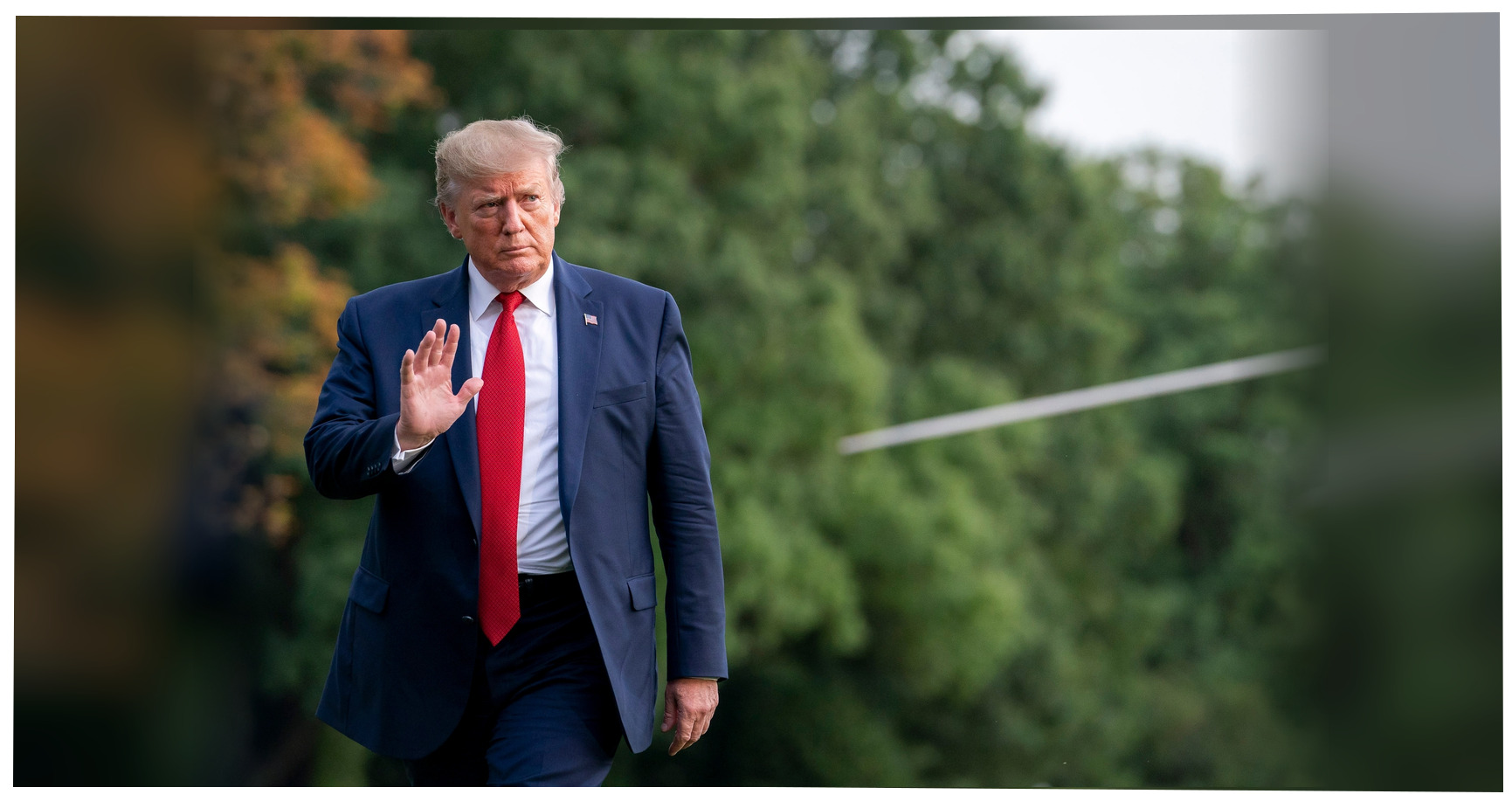
A brief, unremarkable moment at Joint Base Andrews on October 16 has unexpectedly become a flashpoint in the ongoing national conversation about President Donald Trump’s health. At 80 years old, Trump’s physical condition has long been under public and political scrutiny—especially as the midterm elections approach. The incident, captured on video as he stepped off the aircraft onto the tarmac, involved a slight stumble while walking across uneven ground. Though seemingly minor, the footage quickly circulated online, sparking intense debate over what it might reveal about his well-being.
The clip shows Trump briefly losing balance as he moves from the plane to the waiting motorcade. His gait appears slightly unsteady, with visible attention given to how he places his feet and supports himself. Some viewers noted the apparent swelling in his ankles, others pointed to what they described as an unusual posture or stiffness in his lower limbs. These observations were amplified by social media users, many of whom began speculating about hidden medical devices beneath his trousers. Phrases like “bionic legs” and “braces under the suit” gained traction, despite no verified evidence supporting such claims.
It is critical to emphasize that video alone cannot diagnose a medical condition. A stumble can result from any number of common causes: uneven pavement, fatigue, ill-fitting footwear, or even a momentary lapse in concentration. The human body is not always perfectly coordinated, especially during transitions between different surfaces or after prolonged periods of sitting. Without context, medical records, or direct testimony from healthcare providers, interpreting a single moment of imbalance as a sign of serious decline is both premature and potentially misleading.
Health Concerns Amid Public Scrutiny
The reaction to the incident did not occur in isolation. Over the past year, reports have increasingly focused on observable signs of aging and potential health issues affecting Trump. Multiple outlets have documented visible bruising on his hands, persistent ankle swelling, and noticeable weight gain. In July, the Times of Israel reported that Trump had been diagnosed with chronic venous insufficiency, a condition where blood pools in the veins of the legs due to weakened valves. This diagnosis helps explain the recurring swelling but does not confirm a link to the airport stumble.
Medical experts have offered mixed assessments based on publicly available information. The Washington Post cited doctors who expressed concern over Trump’s reported weight increase, noting that excess body mass can strain cardiovascular systems and contribute to mobility challenges. Conversely, the New York Times highlighted input from cardiologists who found reassurance in Trump’s ability to manage cholesterol levels—a positive indicator for heart health.
Yet these analyses remain speculative. Outside physicians cannot conduct full evaluations using only public images or secondhand reports. They lack access to vital data such as blood pressure readings, lab results, or comprehensive physical exams. Any attempt to draw definitive conclusions about a patient’s health from fragmented visuals is inherently flawed and risks fueling misinformation.
What Is Known — And What Isn’t
To clarify the facts:
-
Confirmed:
- Trump was filmed arriving at Joint Base Andrews on October 16.
- He appeared to lose balance during a short walk across the tarmac.
- The moment triggered widespread discussion about his physical condition.
-
Not Confirmed (by video or credible reporting):
- Whether Trump wore leg braces or other supportive devices.
- The exact cause of the stumble.
- Whether this event reflects a worsening in his overall health.
-
Not Supported by Evidence (in public discourse):
- Claims that the stumble indicates incapacity.
- Predictions about Trump’s ability to finish his term or campaign effectively.
- Assertions that he is physically unfit to serve based on one brief clip.
Trump himself has addressed health concerns in general terms. On October 15, he told reporters he faced “severe problems,” though he clarified he abstains from alcohol, drugs, and tobacco. Without additional context or detailed medical disclosures, this statement remains open to interpretation—and should not be used to justify sweeping conclusions about his current condition.
The Politics of Presidential Health
Presidential health has always been a legitimate subject of public interest. Voters have a right to know whether their leader is capable of performing the demanding duties of office. Yet when isolated incidents are dissected through partisan lenses, the result is often more heat than insight. The timing of this event—just months before the midterms—heightens its significance.
Midterm elections often function as a referendum on the ruling party, and perceptions of leadership strength, stamina, and visibility play a role in voter decisions. For candidates, donors, and strategists, any signal of presidential vulnerability can influence messaging, fundraising, and campaign tactics. Critics argue that greater transparency—from regular, detailed medical updates—would help reduce speculation and foster informed public discourse.
Defenders of the administration counter that a single stumble does not equate to disability. They note that public figures are routinely judged by selective clips, often stripped of context. A momentary misstep should not be mistaken for a broader pattern of decline, especially when no official diagnosis has been issued.
As the nation watches closely, the challenge remains clear: balancing genuine concern with responsible reporting, avoiding sensationalism, and respecting the privacy of a public official while acknowledging the public’s right to know.
The Limits of Viral Footage in Political Discourse
The moment when former President Donald Trump stumbled at Joint Base Andrews has become one of the most scrutinized public incidents in recent political history. Yet, despite its widespread circulation and intense analysis across social media platforms, the video does not constitute a medical diagnosis—nor should it be treated as such. What we are witnessing is not a clinical evaluation but a cultural phenomenon shaped by optics, timing, and political narrative.
While the clip captures a brief, unscripted moment of physical imbalance, it lacks critical context: the environment, the conditions under which the stumble occurred, and any prior health disclosures that might explain such an event. Without access to medical records, physician statements, or even a clear timeline of Trump’s physical condition leading up to the incident, any attempt to draw definitive conclusions about his health is speculative at best.
The real issue lies not in the stumble itself, but in how quickly and widely it was interpreted as evidence of decline—particularly in relation to age, cognitive function, or underlying medical conditions. This reflects a broader trend in modern political discourse: the increasing reliance on fragmented visual content to make sweeping claims about leadership capability. A few seconds of footage, often taken out of context, can spark viral debates that echo far beyond their factual basis.
The Need for Credible Medical Disclosure
For any meaningful assessment of a sitting or former president’s fitness for office, transparency from official sources is essential. The public deserves more than speculation; it deserves access to verified, detailed medical information. A comprehensive report from the White House physician or a formal statement from the president’s healthcare team would go a long way toward clarifying concerns—especially those tied to chronic conditions previously disclosed, such as chronic venous insufficiency.
However, such disclosures remain voluntary, and when they do occur, they are often limited in scope. In July, Trump’s doctors released a summary of his health, but it lacked depth—offering reassurances without substantiating details. This leaves a gap between public concern and available information. When officials choose not to provide full transparency, the vacuum is inevitably filled by interpretation, rumor, and partisan narratives.
The absence of reliable data means that every public appearance becomes a potential flashpoint for scrutiny. Is a slower gait due to aging? Arthritis? A temporary imbalance? Or is it a sign of something more serious? Without medical context, all answers are guesses.
The Midterm Landscape and Health as a Campaign Issue
As the 2024 midterm elections approach, questions about presidential health are likely to intensify—not just for Trump, but for other prominent figures as well. Age and physical stamina have long been part of the conversation around leadership, but today’s digital landscape amplifies these concerns exponentially. A single misstep, captured on camera, can dominate headlines for days.
Yet, while viral videos may shape perception, they cannot replace the rigor of medical evaluation. The most impactful developments in the coming months will not come from social media clips, but from:
- Official medical reports issued by the White House or the president’s personal physicians.
- Sustained changes in public behavior, such as reduced appearances, altered speech patterns, or noticeable physical fatigue over time.
- Reporting grounded in documented records, including hospital visits, treatment plans, and evaluations by qualified medical professionals—not anecdotal observations or isolated moments.
These elements form the foundation of credible political accountability. They allow voters to assess leadership capacity based on facts, not fear.
Moving Forward: Toward a More Informed Public Debate
The challenge ahead is not simply to debunk misinformation—but to elevate the standard of public discourse. Voters deserve better than sensationalized clips and armchair diagnoses. They deserve clarity, consistency, and honesty from those in power.
Until then, the Joint Base Andrews video will remain a symbol of the tension between spectacle and substance. It reminds us that while visibility matters, so does verification. The real test of democracy isn’t whether a moment goes viral—it’s whether we have the tools to understand it accurately.