
Turkey Uses AI and Isotope Tracking to Recover 100 Stolen Antiquities from U.S.
A New Era in Cultural Heritage Protection: Turkey’s AI-Driven Repatriation Revolution
In a momentous display of cultural sovereignty and technological innovation, Turkey has officially unveiled 100 repatriated artifacts at the Istanbul Archaeology Museums—a milestone event marking the culmination of decades-long efforts to reclaim stolen antiquities from around the world. The ceremony, held on Monday, was not merely a symbolic handover but the public debut of a groundbreaking forensic recovery system that is redefining how nations protect their heritage in the digital age. The recovered items span millennia of history, including intricate Bronze Age metalwork, architectural fragments from the Archaic period, and lifelike Roman imperial bronze portraits—each piece now returning to its rightful home after years of displacement across international markets.
At the heart of this transformation lies TraceART, an artificial intelligence platform developed by Turkey’s Ministry of Culture and Tourism and launched in 2025. This advanced system functions as a global surveillance network for illicitly traded cultural property. Using cutting-edge computer vision algorithms, TraceART continuously scans thousands of online auction listings, private sales platforms, museum databases, and social media image feeds for objects that match known profiles of Turkish cultural assets. When a potential match is detected, the item is flagged for review by a team of expert archaeologists and conservators before any formal legal action is taken.
The power of TraceART lies not only in its ability to detect looted artifacts but also in its integration with a parallel scientific infrastructure: a national tagging initiative that embeds invisible, AI-generated chemical signatures into over 600,000 museum artifacts. These nanoscale markers—applied using inorganic materials imperceptible to the human eye and undetectable under ultraviolet light—are readable only by specialized scanners. By 2028, Turkey aims to tag all 2.86 million items in its state collections, creating a comprehensive, tamper-resistant digital ledger of provenance. This dual-layered approach—AI detection paired with immutable physical markers—has effectively closed one of the most exploited loopholes in the antiquities trade: the falsification of documentation.
This new system transforms repatriation from a matter of chance or diplomatic negotiation into a systematic, science-backed process. As Turkey’s Culture and Tourism Minister Mehmet Nuri Ersoy emphasized during the ceremony, “Our aim is not simply to move artifacts from one display case to another, but to understand and present them within the stories and cultural context to which they belong.” The exhibition serves as both a restitution effort and a narrative restoration—reconnecting broken pieces of history with their original communities.
The Scientific Triumph: Proving the Past Beyond Doubt
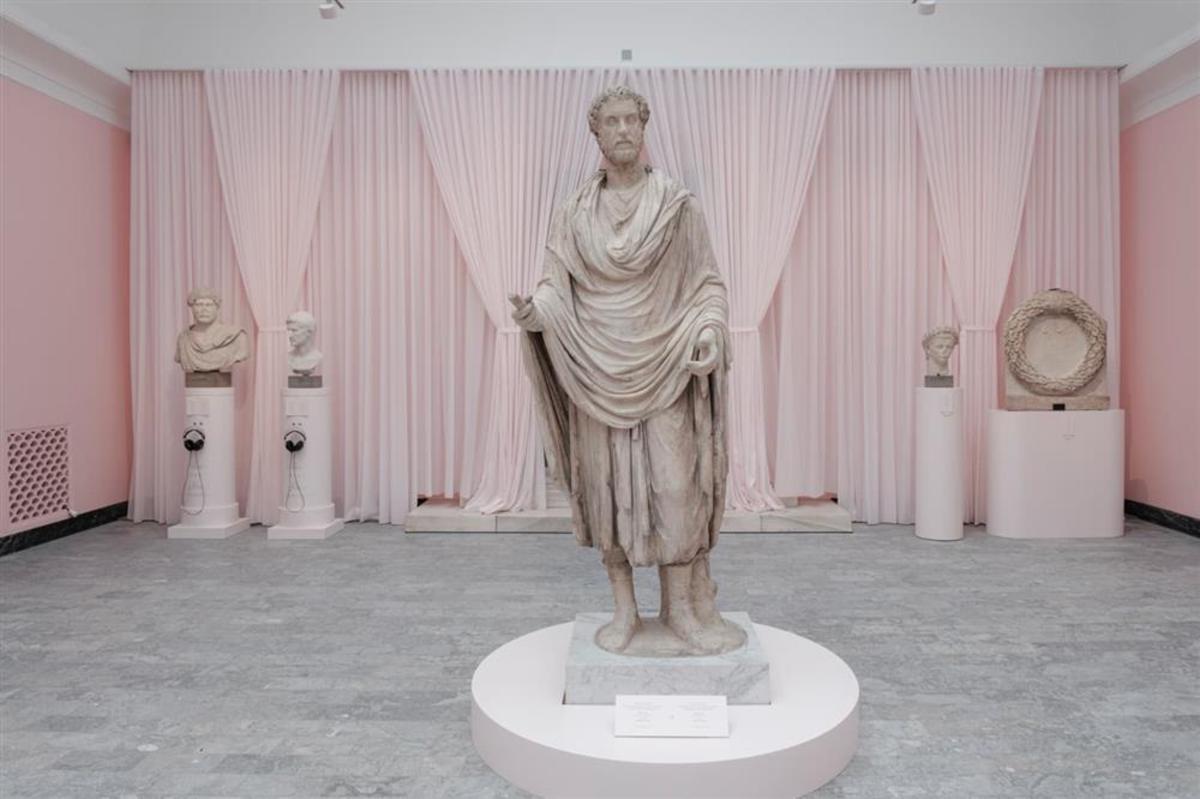
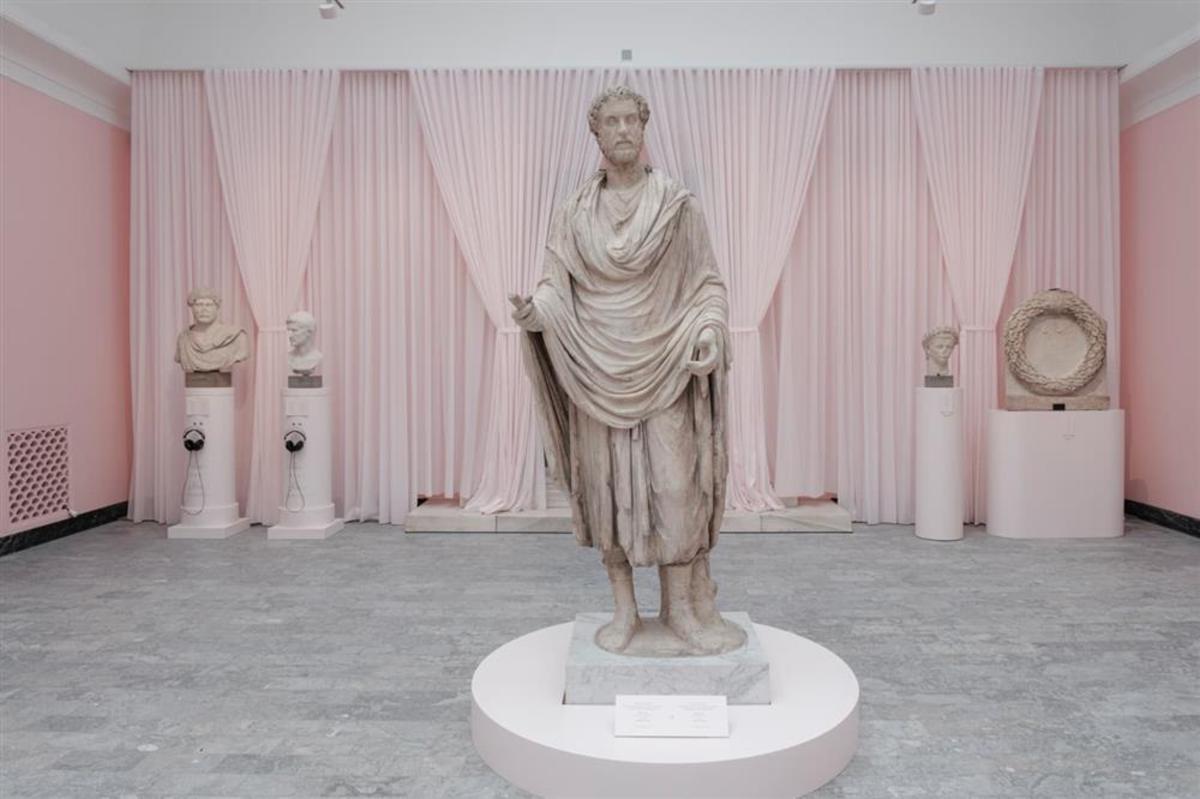
The centerpiece of the event was the “No Escape: Boubon” exhibition, a compelling testament to the fusion of technology, archaeology, and forensic science. It brings together four Roman imperial bronze statues—portraits of Marcus Aurelius, Lucius Verus, Septimius Severus, and Caracalla—that were once part of the Sebasteion, a grand ceremonial complex dedicated to the worship of Rome’s imperial family in the ancient city of Boubon. Located near İbecik village in Burdur’s Gölhisar district, Boubon was a significant religious and political center in the Roman province of Lycia.
In the 1960s, during a wave of unauthorized excavations, these sculptures were systematically dismantled and smuggled out of Turkey. Their heads, torsos, and limbs were dispersed through a clandestine trafficking route that passed through Switzerland, the United Kingdom, and ultimately reached major American institutions—including the Metropolitan Museum of Art, the Cleveland Museum of Art, and the J. Paul Getty Museum. For decades, their origins remained obscured behind forged provenance records.
That changed when Turkey deployed its multi-pronged investigative strategy. Three independent lines of scientific evidence converged to irrefutably prove the bronzes’ connection to Boubon:
-
Lead Isotope Geochemistry:
Every bronze object contains trace amounts of lead, either as an intentional alloy component or as an impurity from copper smelting. Over time, natural radioactive decay produces distinct isotopic ratios—specifically lead-206, lead-207, and lead-208—that are unique to particular ore deposits. These ratios act like geological fingerprints. Professor Ernst Pernicka of the Curt Engelhorn Center for Archaeometry in Mannheim, Germany—one of Europe’s foremost experts in ancient materials analysis—conducted mass spectrometry tests on the Boubon bronzes and compared them with soil samples collected directly from the excavation site. The results showed a perfect match between the isotopic signature of the statues and the local geology of Boubon. “There was no doubt whatsoever,” Pernicka stated, “that the Marcus Aurelius statue originated from that region.” -
Geometric Mold-Matching:
Ancient sculptors often used standardized molds to produce multiple copies of religious or imperial figures. By analyzing the subtle irregularities in casting patterns—such as mold seams, tool marks, and structural asymmetries—researchers were able to confirm that several fragments matched perfectly with others from the same archaeological context. This provided strong evidence that the scattered pieces belonged to a single, coherent monument. -
Digital Forensics via TraceART:
Prior to the physical recovery, the AI platform had already flagged multiple images of the bronzes circulating online—some posted by collectors, others listed in auction catalogs. These visual matches triggered further investigation, leading to diplomatic negotiations and eventual repatriation agreements.
Together, these methods created an unassailable chain of evidence. Falsified documents, once a common shield for traffickers, now hold no weight against the precision of modern science. The Boubon case stands as a blueprint for future restitutions—not just in Turkey, but globally.
The Power of Scientific Evidence in Cultural Repatriation
The return of the Marcus Aurelius statue to Turkey was not the result of diplomatic negotiations alone, but a culmination of rigorous scientific analysis and decades-long archival research. At the heart of this achievement lies an independent scientific institution’s conclusive assessment — a rare and powerful endorsement that carried significant weight with cultural authorities in Cleveland. Prior to this validation, the Cleveland Museum of Art had contested the seizure in court, arguing that the evidence presented by Turkey was insufficient. However, once the impartial scientific evaluation confirmed the statue’s origin through precise geometric comparisons, the museum chose to comply with the request for repatriation.
Geometric Foot-Mold Matching: A Precision Test of Provenance
One of the most compelling pieces of evidence came from a technique known as geometric foot-mold matching. When ancient statues were originally mounted on pedestals, their feet left behind distinct impressions in the stone — like natural molds. These imprints remained intact at the Boubon archaeological site, where the statue had once stood. Researchers meticulously measured the contours, angles, and dimensions of the foot castings found on the Marcus Aurelius statue and compared them against the recesses in the original pedestals still present at the site. In a stunning confirmation of authenticity, the match was exact — down to millimeter-level precision. This physical correspondence provided irrefutable proof that the statue had been part of the original installation at Boubon, anchoring its provenance firmly in Turkish soil.
Archival Triangulation: Reconstructing a Lost Heritage
Beyond physical evidence, the case relied heavily on historical documentation and scholarly continuity. Professor Tahsin Özgüç, a pioneering archaeologist who conducted excavations at Horoztepe in the 1950s, left behind detailed records of early Anatolian metalwork, including unique stylistic features and craftsmanship techniques specific to each site. His work laid the foundation for future research. Building upon his legacy, researcher Jale İnan undertook the monumental task of reconstructing the Boubon corpus using fragmented inscriptions, surviving statue bases, and sculptures scattered across foreign collections. Her efforts created a comprehensive database that enabled modern scholars to identify patterns and connections invisible to casual observers.
This meticulous reconstruction became the backbone of today’s successful repatriation claims. As Minister Ersoy emphasized during Monday’s ceremony, it was this scholarly groundwork — developed over generations — that made the current outcome possible. Journalist Özgen Acar played a critical role in keeping the Boubon story alive through years of investigative reporting, eyewitness interviews, and public advocacy. Meanwhile, international journalists Graham Bowley and Tom Mashberg brought the case to global attention through compelling articles in The New York Times, helping to generate public and institutional pressure for accountability.
Bronze Age Treasures: 4,300 Years After Their Creation
Among the most historically significant objects returned were 40 metal artifacts originating from Horoztepe, a Bronze Age burial site and settlement located in the Erbaa district of Tokat province in north-central Anatolia. Dating back to approximately 2300–2000 BC, these items represent one of the earliest examples of advanced metallurgical culture in Anatolia. The collection includes ceremonial musical instruments, ritual weapons, and intricately crafted metal vessels — all testaments to a society with sophisticated technical knowledge and rich spiritual traditions.
These artifacts were illegally excavated in 1953, four years before Özgüç’s official excavation began. Their removal from the site triggered a chain of illicit trafficking that saw them dispersed into private collections and international museums. It wasn’t until nearly seven decades later — thanks to cross-referencing between Özgüç’s published field notes and records of the unauthorized dig — that researchers were able to trace their journey. Ministry investigators followed the paper trail, identifying how the objects moved from Turkey to Europe and eventually to North America, before being recovered through legal and diplomatic channels.
Terracotta Plaques from Düver: A Global Effort
The second major group in the handover consisted of 44 terracotta architectural plaques from Düver village in Burdur province, dating to the sixth century BC. Originally used to decorate rooftops during the Archaic period, these intricate ceramic panels depicted mythological scenes and religious iconography. They were previously held by the J. Paul Getty Museum in Los Angeles — one of the world’s most influential art institutions, which has faced multiple repatriation disputes in recent years.
The return of the Düver plaques follows a growing trend of restitution. Earlier returns occurred in 2022 (from the United States), 2024 (Denmark), and 2025 (Virginia Museum of Fine Arts). Turkey now plans to reunite the newly returned pieces with those already housed in the Istanbul Archaeology Museums, forming a complete set for a forthcoming exhibition dedicated to ancient Anatolian architecture.
A 1976 Report That Changed Everything
Among the remaining artifacts is a portrait statue from Aphrodisias, the famed marble-working city in western Turkey. Tracing its history proved challenging until researchers uncovered a long-forgotten 1976 incident report buried in government archives. Cross-referenced with archaeological data and collection records, this document provided definitive proof of illegal removal. It revealed that artifacts beyond those officially documented had also been stolen — a revelation that strengthened Turkey’s legal standing. The prosecutor’s conclusion, based on this file, served as a pivotal moment in the repatriation process.
The Catalyst: An Auction in May 2026
What ultimately triggered Monday’s ceremony was not diplomacy, but commerce. In May 2026, a U.S.-based auction house listed several Anatolian antiquities for sale. Turkey’s Ministry of Culture quickly identified the items, compiled extensive scientific documentation, and shared the evidence with the Manhattan District Attorney’s Office and the U.S. Department of Homeland Security Investigations. The sale was immediately halted, and the artifacts were returned.
Bogdanos, who attended the ceremony in Istanbul, highlighted the success of his unit: the Manhattan Antiquities Trafficking Unit, established in 2017. Described as the world’s only law enforcement team dedicated exclusively to combating antiquities trafficking, it combines analysts, agents, and prosecutors in a single, coordinated effort. To date, the unit has recovered 6,452 looted antiquities, including 276 objects of Turkish origin.
A National Campaign with Global Impact
Monday’s handover is part of a broader, accelerating campaign led by Turkey’s Ministry of Culture under Minister Ersoy. In 2025 alone, the country secured 180 repatriations. Since 1980, more than 26,700 cultural objects have been recovered — a testament to sustained national commitment. Under Ersoy’s leadership, the ministry operates cutting-edge systems such as TraceART, an AI-powered scanning tool for artifact identification; DNA-tagging, a method of embedding microscopic markers into objects; and MUES, a centralized museum inventory database that integrates private collectors and institutions into a unified national registry.
These innovations are transforming the fight against illicit trafficking, ensuring that no artifact can disappear without a trace.
The Global Ripple Effect of Turkey’s Cultural Repatriation Efforts
The recent recovery of 100 ancient artifacts from the Cleveland Museum of Art — including the controversial Marcus Aurelius statue and other items tied to the archaeological site of Boubon — marks a turning point in the international fight against cultural looting. While the immediate victory lies in the return of these objects to Turkey, the broader implications extend far beyond Istanbul’s museums. This case signals a new era in which scientific rigor, digital surveillance, and cross-border legal cooperation are reshaping how museums, auction houses, and governments handle contested antiquities.
At the heart of this transformation is a growing realization: institutions can no longer rely on ambiguous or falsified provenance records to justify holding artifacts taken from their countries of origin. When an independent forensic body like Germany’s Max Planck Institute produces irrefutable evidence — as Professor Ernst Pernicka did with the lead isotope analysis confirming the Marcus Aurelius statue’s origins in Boubon — even powerful museum defenses crumble under scrutiny. The Cleveland Museum of Art’s eventual decision to return the statue, despite a pending court challenge, underscores a critical shift: the burden of proof has now shifted decisively toward the holder of the artifact.
This means that any museum or private collector holding ancient bronze sculptures from regions historically plagued by illicit excavation — such as Anatolia, Cyprus, Greece, or Italy — must now reckon with the possibility that their holdings could be scientifically traced back to specific archaeological sites. And once identified, the path to repatriation becomes increasingly difficult to avoid.
How Science Is Closing the Loopholes in Provenance Claims
Turkey’s approach to proving the origin of stolen artifacts relies on a three-pronged scientific methodology that leaves little room for doubt when all three lines of evidence converge:
-
Lead Isotope Analysis
Ancient bronzes were made from ores mined in specific geological regions, each with a unique isotopic signature. By measuring the ratios of lead isotopes in a bronze object and comparing them to a comprehensive reference database of known ore sources across Anatolia and surrounding areas, researchers can pinpoint the most likely region of origin. This method is particularly effective because it cannot be easily faked — unlike written documentation, which can be forged or lost over time. -
Geometric Foot-Mold Matching
Many ancient statues were originally placed on stone pedestals at their excavation sites. Over centuries, the feet of these statues left distinct impressions in the pedestal material. These imprints are preserved at many archaeological locations, including Boubon. By digitally scanning both the foot casting of a statue and the corresponding mold at the site, experts can perform a precise match. If the contours align perfectly, it provides physical, tactile proof of origin — a form of archaeological fingerprinting. -
Archival Cross-Referencing
This involves tracing the documented history of an artifact through excavation reports, published archaeological surveys, museum inventories, and private collection records. By triangulating data from multiple sources, investigators reconstruct the journey of an object from its discovery to its current location. When this historical trail leads directly to a known looted site, especially one with a documented export ban, the case becomes significantly stronger.
When all three methods produce consistent results — as they did in the Marcus Aurelius case — the conclusion becomes nearly unassailable in legal settings. As demonstrated by the Cleveland case, even institutions with deep resources and legal teams found themselves unable to contest such compelling evidence.
TraceART: The AI-Powered Watchdog of the Global Art Market
In 2025, Turkey launched TraceART, an artificial intelligence platform designed to act as a global early-warning system for looted cultural property. Unlike traditional monitoring efforts that rely on manual checks or delayed reporting, TraceART uses computer vision algorithms to continuously scan thousands of online platforms — auction websites, art dealer portals, social media posts, and e-commerce listings — for visual matches to a curated database of documented Turkish cultural assets.
The system doesn’t just identify similar-looking objects; it detects subtle stylistic, morphological, and compositional patterns that distinguish authentic pieces from forgeries or unrelated items. When a potential match is flagged, the item is routed to a team of expert archaeologists and conservators for human review. This hybrid model ensures high accuracy while maintaining speed and scalability.
TraceART played a pivotal role in the 2026 recovery of Iznik tiles from a private collection in the United Kingdom, where the AI detected a pattern matching known fragments from the Ottoman-era İznik kilns. The tiles had been dispersed through the international market and reassembled without proper documentation — but TraceART’s visual recognition caught the anomaly before the sale was finalized.
Equally groundbreaking is the parallel initiative involving invisible chemical markers. More than 600,000 state-held artifacts have been tagged with micro-scale, AI-generated chemical signatures — essentially “digital DNA” embedded into the surface or internal structure of the object. These markers remain undetectable to the naked eye but can be read using specialized equipment. Even after decades of laundering through multiple hands and borders, these markers allow authorities to verify an object’s Turkish origin with near certainty.
The Power of Partnership: Why the Manhattan Antiquities Trafficking Unit Matters
The success of Turkey’s repatriation efforts wouldn’t be possible without strategic alliances. One of the most significant is the collaboration with the Manhattan Antiquities Trafficking Unit (ATU), established in 2017 under Assistant District Attorney Matthew Bogdanos. The ATU is the world’s first dedicated task force that integrates forensic analysts, federal agents, and prosecutors into a single, coordinated unit — a model now being studied by law enforcement agencies worldwide.
New York City remains the epicenter of the global antiquities trade, making the ATU uniquely positioned to intercept looted artifacts before they enter major markets. To date, the unit has recovered 6,452 looted objects, many of which originated in the Middle East, North Africa, and the Balkans — but increasingly, from Turkey as well.
The partnership works like this: Turkey provides scientific evidence — such as isotopic data, footprint matches, or archival documents — that proves an artifact’s illegal origin. The ATU then uses that evidence to file seizure orders, halt auctions, or negotiate voluntary returns with museums. In May 2026, a listing on a U.S. auction site triggered a full investigation that led directly to today’s 100-object repatriation, illustrating how quickly and effectively this system can act.
The New Reality for Auction Houses and Collectors
While the 1970 UNESCO Convention remains the cornerstone of international cultural heritage law, its limitations persist. The convention sets 1970 as a baseline for acceptable provenance, but it does not apply retroactively. This means that countless artifacts in circulation lack verifiable pre-1970 documentation — a loophole that traffickers have long exploited.
Turkey, however, takes a more assertive stance. It invokes a 1906 Ottoman-era export ban, which predates modern international laws and asserts jurisdiction over all cultural property removed from Ottoman territory after that date. This legal position gives Turkey a broader claim than most nations, allowing it to pursue artifacts even if they were exported legally under older rules.
But the real game-changer isn’t the law — it’s enforcement. With TraceART monitoring the digital marketplace in real time and the ATU ready to intervene at a moment’s notice, the risk of selling or acquiring a looted artifact has skyrocketed. Auction houses that previously operated with minimal oversight now face intense scrutiny. Even if a piece lacks a clear pre-1970 provenance, the likelihood of detection has increased exponentially.
The message is clear: in today’s landscape, the absence of documentation is no longer a shield — it’s a red flag.
The Forensic Challenge: Linking Artifacts to Their Origins
At the heart of modern art and antiquities authentication lies a complex web of scientific inquiry, historical context, and ethical responsibility. While legal frameworks often define what is permissible in the trade of cultural artifacts, the real challenge for auction houses, collectors, and institutions alike is not always about legality—it’s about forensic certainty. Can a piece truly be traced back to a specific archaeological site? This question has become increasingly critical in an era where provenance is both highly scrutinized and frequently contested.
The Curt Engelhorn Center for Archaeometry stands at the forefront of this effort. As a leading scientific institution dedicated to the analysis of archaeological materials, it employs advanced techniques such as isotopic analysis, X-ray fluorescence (XRF), petrographic microscopy, and radiocarbon dating to examine the physical and chemical composition of artifacts. These methods go far beyond visual inspection or stylistic comparison; they provide measurable data that can reveal the geological origin of raw materials, the manufacturing processes used, and even the environmental conditions under which an object was formed or buried.
For instance, a ceramic shard may appear similar to others from a known region, but its mineral composition—determined through precise spectroscopic analysis—might match only a narrow set of soil samples from a particular excavation site. In such cases, the center can generate compelling evidence suggesting a direct link between the artifact and a specific dig location. This kind of forensic precision transforms abstract claims of provenance into verifiable scientific facts.
However, the limitations of these techniques are equally important to consider. Not every artifact yields clear results. Environmental degradation, centuries of handling, or reuse of materials can obscure or alter the original signatures embedded in an object. Moreover, some regions have been extensively looted over decades, making it difficult to establish a clean baseline of material composition for certain types of artifacts. Even with state-of-the-art equipment, there remains a margin of uncertainty—a gray zone where science cannot definitively confirm or deny a connection.
This ambiguity places immense pressure on auction houses and private collectors. When bidding on high-value antiquities, especially those from conflict zones or poorly documented excavations, the absence of definitive scientific proof becomes a red flag. Without a strong, traceable chain of custody supported by archaeometric data, the risk of acquiring stolen or illicitly traded items increases significantly. In recent years, several high-profile sales have been suspended or canceled after experts raised doubts about authenticity or provenance, underscoring how fragile the trust in the market really is.
Auction houses are responding by investing more heavily in pre-sale due diligence. Many now partner directly with institutions like the Curt Engelhorn Center to conduct independent analyses before putting objects up for bid. These collaborations help build credibility and reduce liability, especially when dealing with sensitive or disputed pieces. Still, the process is time-consuming and expensive—factors that can deter smaller dealers or limit access to such services for less wealthy collectors.
The broader implications extend beyond individual transactions. If forensic science can consistently tie artifacts to specific sites, it strengthens efforts to combat illegal trafficking and supports the repatriation of cultural heritage. Governments and museums can use this data to identify stolen artifacts and return them to their countries of origin. Conversely, if such links cannot be established, it raises serious concerns about the legitimacy of collections built on questionable foundations.
Ultimately, the debate isn’t just about whether an object is “real”—it’s about whether we can confidently say where it came from, when it was made, and how it left the ground. Scientific institutions like the Curt Engelhorn Center for Archaeometry play a pivotal role in answering these questions, offering tools that move the conversation from speculation to evidence-based inquiry. Yet, as long as gaps remain in our knowledge and technology, the forensic risk will persist—and so too will the need for vigilance, transparency, and collaboration across the global cultural heritage community.