
Interview: Claire Carter – BBC Presenter and Passionate Sports Enthusiast
A Journey from East London to the Heart of BBC Broadcasting
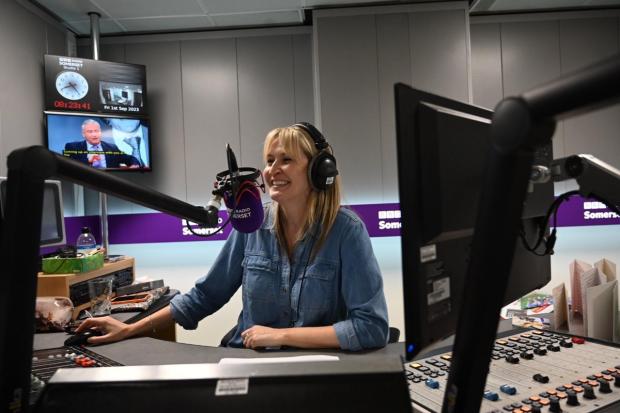
Claire Carter’s voice has become a familiar presence across the South West, weaving through morning commutes and afternoon drives with warmth, clarity, and an unmistakable authenticity. But behind the microphone lies a story far richer than any single broadcast could capture — one of resilience, reinvention, and quiet determination.
When journalist Phil Hill turned the spotlight on her, asking Claire to step into the role of interviewee rather than interviewer, she admitted to feeling a touch nervous. “It was strange,” she said, smiling. “I’m used to asking the questions, not answering them.” Yet, as soon as the conversation began, it was clear that Claire’s professionalism and instinctive storytelling ability remained intact — no matter which side of the booth she stood on.
Born and raised in East London, Claire recalls her childhood with fondness. “I had a really lovely upbringing,” she reflects. “It was full of laughter, family time, and a strong sense of community.” Her early passions were rooted in movement and competition — sport wasn’t just something she enjoyed; it was part of her identity.
She originally envisioned a future as a netball player representing England, even considering Loughborough University for its renowned sports programme. “I loved being outside, playing, watching games — it was everything to me,” she says. But the thought of spending long hours in lecture halls, immersed in theory, didn’t excite her. “Being in a classroom wasn’t my favourite thing.”
It was her mother who offered a pivotal suggestion: “You like watching sport — what about a job in sports media?” That simple question redirected the course of Claire’s life. She applied to the University of Gloucestershire without knowing much about the region beyond its name. “I had no idea where Gloucestershire was,” she laughs. But she was accepted, and for the first time, she left home.
Settling into a student hall in Cheltenham, Claire threw herself into her studies in broadcast journalism. Her academic journey included a work placement with the university press officer — a stepping stone that led to an unpaid summer internship as a sports apprentice at BBC Radio Gloucestershire. “Those two months were grueling, but they were also eye-opening,” she remembers. “I had no real grasp of how the industry worked, but I learned fast.”
The experience was transformative. “I didn’t have a day off for the first year and a half after I started,” she shares. “My friends were going back to their parents’ homes for financial support. I was sharing a flat with someone I’d only known a few weeks, paying rent, managing bills — all while juggling phone duties, live reporting, producing segments, and covering sport for eight weeks straight.”
There were moments when the pressure threatened to overwhelm her. “If something broke in the studio, you had to fix it — no excuses,” she recalls. “You weren’t allowed to say, ‘I don’t know.’ You had to figure it out.”
Her dedication paid off. Over time, Claire moved from covering sports to presenting the Saturday lunch show, then the Saturday breakfast show. By 24, she was entrusted with the weekday afternoon slot — a major milestone in her career.
But even with success came introspection. After ten years at BBC Radio Gloucestershire, Claire found herself questioning her path. “I was asking myself: Where am I going? What am I doing? Am I going to stay here forever?” The answer came unexpectedly — a chance to present the February half-term breakfast show.
That opportunity opened the door to a new chapter. She was “poached” by BBC Somerset to replace the beloved Emma Britton, who had moved to Bristol. “It was daunting,” Claire admits. “Getting up at 3:45am to prepare for the breakfast show was brutal. And walking into a brand-new audience, with zero familiarity — that was intimidating.”
Yet the response from listeners was nothing short of heartwarming. “They welcomed me with such kindness,” she says. “And I had an amazing team around me.”
Living in Wellington during her time at BBC Somerset proved challenging, especially as she navigated personal loss. “It was the most difficult period of my life,” she shares quietly. “Losing so many family members while trying to maintain a professional persona was incredibly hard.” But the town offered solace. “Wellington gave me peace when I needed it most.”
After taking a year away from broadcasting, Claire returned to find staff facing redundancy. “I knew I needed to protect myself,” she says. Rather than reapply for the breakfast show, she chose a different route — one that suited her current needs and priorities.
Today, Claire presents the afternoon programme from 2pm to 6pm, shared across BBC Somerset and BBC Bristol, and hosts Extra Time, the weekly sports show on Wednesdays. “I love working for the BBC,” she says. “It’s the only adult job I’ve ever had. I take my responsibility seriously. Being on air — that’s where I feel most alive.”
She still carries the fire of her youth, though now channeled differently. “I often wonder if I’d made it to the England pathway,” she muses. “If I’d been mentally stronger, if I’d run at 6am like some athletes do — maybe I would have tried. Back then, I was a goal shooter, and for four years, I did 250 shots a day. I could still hit eight out of ten with my eyes closed.”
Now, she plays squash occasionally, watches football, rugby, and the Olympics — from elite competitions down to grassroots matches. “I still love sport,” she says. “It’s just evolved.”
For Claire Carter, the microphone isn’t just a tool — it’s a vessel for connection, purpose, and joy. And after decades in the industry, she shows no signs of slowing down.