
Target 7: A Roanoke Crime Lab Failure Sparks National Scrutiny of Ballistics Science
A Crisis in the Lab: The Fallout from a Failed Forensic Test
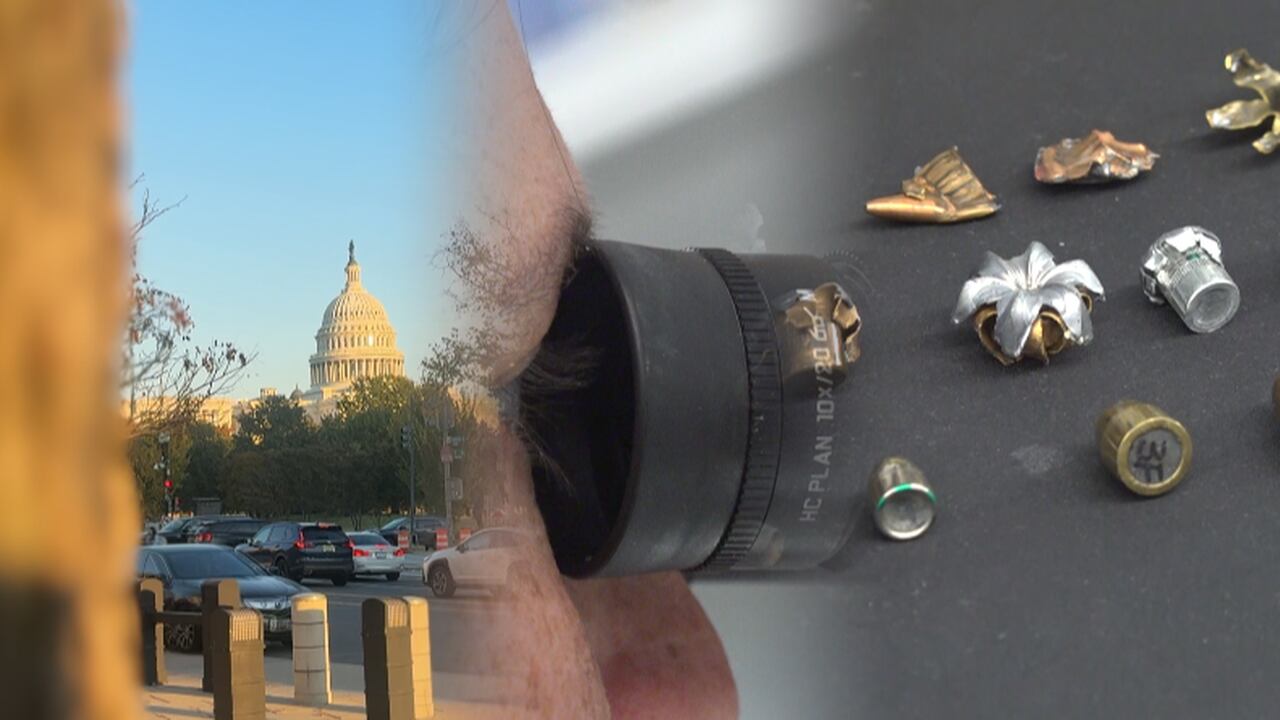
In the quiet city of Roanoke, Virginia, a single failed proficiency exam has sent shockwaves through the state’s criminal justice system. At the Western Regional Department of Forensic Science, what began as a routine assessment for a forensic analyst spiraled into a comprehensive investigation that now threatens to unravel thousands of criminal convictions across Virginia. The case centers on Laura Hollenbeck, a former forensic scientist whose inability to pass a standard ballistics comparison test triggered an internal audit that uncovered potential errors spanning years of casework.
The audit revealed approximately 2,600 cases—ranging from violent crimes to property offenses—where Hollenbeck had provided testimony linking firearms to bullets based on microscopic markings. These findings have prompted a statewide reevaluation of evidence, raising urgent questions about the reliability of ballistics analysis and its role in securing convictions. As legal experts, defense attorneys, and forensic scientists scramble to assess the implications, one core issue remains at the heart of the controversy: Can the human eye truly determine with certainty whether a bullet came from a specific gun?
The Science Behind the Bullet Marks
Inside a high-tech laboratory at Virginia Commonwealth University in Richmond, forensic science assistant professor Stephanie Walcott is training the next generation of crime scene analysts. With nearly 15 years of experience examining firearm and toolmark evidence in Virginia and North Carolina, Walcott brings both deep expertise and a nuanced perspective to the field.
She firmly believes that ballistic comparison is rooted in scientific principles. For decades, forensic experts have operated under the assumption that no two gun barrels produce identical microscopic striations—those tiny, unique scratches left on a bullet casing when it fires. This concept, known as “individuality,” forms the foundation of firearm identification. According to Walcott, this theory has been tested repeatedly and remains unchallenged by empirical evidence.
“Ballistics comparison is based on empirical testing,” she explains. “It’s grounded in theories that have yet to be refuted, and it follows the scientific method.” Yet even she admits that the process is not without flaws.
The Human Element in Forensic Analysis
While the underlying science may hold merit, the execution of ballistics analysis relies heavily on human judgment. Unlike DNA profiling or digital forensics, which rely on quantifiable data, comparing bullet marks involves visual interpretation under a microscope. Examiners must decide where matching patterns begin and end—choices that are subjective and open to error.
“It’s one of the few fields in pattern analysis where, at the end of the day, deciding whether or not this bullet came from this gun is my opinion,” Walcott says candidly. This admission underscores a critical vulnerability: if an examiner makes a mistake, the consequences can be irreversible. Innocent individuals may be wrongfully convicted, while guilty parties may walk free.
When Hollenbeck failed her proficiency test, the department did not dismiss it as an isolated incident. Instead, they launched a full root-cause audit—an exhaustive review of her entire caseload. The goal was not just to identify mistakes but to understand how they occurred and whether systemic issues were at play. “I don’t believe it would be fair to simply write off the test,” Walcott warns. “Everyone involved needs to conduct a full root cause analysis to ensure there isn’t a deeper problem.”
Challenging the Expert Witness
This scrutiny has intensified long-standing legal debates over the admissibility of toolmark evidence in courtrooms. Defense attorneys argue that the lack of standardized measurements, statistical models, or replicable procedures undermines the credibility of ballistic testimony.
Benjamin Schiffelbein, a public defender in Washington, D.C., has spent years pushing back against the use of such evidence. During his time as an assistant federal public defender in Roanoke in 2024, he formally requested that Judge exclude Hollenbeck’s testimony, citing the shaky scientific foundation of the discipline.
“I’ve challenged both generally and specifically whether firearm and toolmark examiners can serve as expert witnesses,” Schiffelbein states. “Their conclusions are often based on visual inspection alone—no counting, no measuring, no objective standards.”
He describes the practice as “image comparison dressed up as pseudoscience.” According to Schiffelbein, there is no way for another expert to verify or replicate an examiner’s decision. “There’s no transparency. No reproducibility. And yet, juries are asked to place absolute trust in these assessments.”
A Trial That Exposed the Limits of Ballistics
The debate reached a boiling point during the 2023 murder trial of Todd Manns in Roanoke. In a dramatic courtroom exchange, defense attorney questioned Hollenbeck’s methodology directly:
Defense Attorney:
“There is no mathematical formula that you have to use?”
Hollenbeck:
“There is no mathematical formula that I have — that I have to use.”
Defense Attorney:
“And this toolmarking — whatever we want to call it — is a field that’s been around a while?”
Hollenbeck:
“It has, over a hundred years.”
Defense Attorney:
“Okay. And I was doing some research myself and seems like this started maybe back with Al Capone. Is that your understanding?”
Hollenbeck:
“I think maybe prior to that.”
The exchange laid bare the fundamental tension between tradition and scientific rigor. While the field of ballistics has existed for over a century, modern forensic science demands more than historical precedent—it demands verifiable, repeatable, and statistically sound methods. As the fallout from Hollenbeck’s failed test continues to unfold, the nation is being forced to confront a difficult truth: the tools used to convict people may not be as reliable as once believed.
The Weight of Expert Testimony: When Science Meets Justice
The revelations surrounding the Roanoke laboratory’s firearm examination practices have ignited a broader conversation about the reliability and integrity of forensic science in the American criminal justice system. At the heart of this debate lies a fundamental question: How much weight should be given to expert testimony that relies heavily on visual comparisons—often described as little more than “looking through a microscope and comparing two images”?
For Virginia Department of Forensic Science Director Alka Lohmann, the answer is clear: the system must adapt. “Certainly situations like this are concerning,” she acknowledged. “And as I said, we take them very seriously. We need to look at our process. We need to see what is happening and see how we can improve it.” Her statement reflects not just institutional accountability but a growing awareness that forensic science, once perceived as infallible, is subject to human error, bias, and methodological limitations.
In response to the findings, the department took decisive action. Incoming firearm casework from the Roanoke lab was immediately reassigned to other regional facilities. This move ensures that new cases are handled under more rigorous oversight while the current issues are investigated. Equally important, all relevant parties—including prosecutors, defense attorneys, and defendants whose cases may have been impacted—were formally notified. “We’ve informed everyone involved,” Lohmann emphasized. “If anyone requests a re-examination of their case, and if the evidence remains available, we will do so.”
Yet the implications stretch far beyond procedural adjustments. The potential for wrongful convictions looms large when forensic matches are treated as definitive proof. While Lohmann stressed that toolmark identifications should never stand alone as the basis for conviction, real-world courtroom dynamics often tell a different story. Jurors, lacking technical expertise, tend to view forensic testimony as near-absolute truth. “Often testimony from a firearm examiner can be critical in a case, particularly a murder case,” said John Fishwick, a seasoned Roanoke defense attorney and former U.S. Attorney. “Because juries really rely on matches to either casings, to bullets, or to the firearm that was used.”
This reliance creates immense pressure on examiners—and raises serious ethical concerns. For individuals like Walcott, who have spent years in the field, the responsibility is personal and profound. “I’ve always treated every case as if somebody’s life depended on it,” he said. “If I’m not sure about a decision, that’s what I come back to: Is this something that I would put somebody behind bars over? Would I take away their freedom over this decision?” His reflection underscores a moral compass that many believe should guide forensic work—but one that cannot compensate for systemic flaws.
Critics argue that without standardized, objective criteria for visual comparisons, the risk of error remains unacceptably high. “I think these people believe that what they are doing is helpful to the community at large,” said Schiffelbein. “But what it might be doing is, in fact, putting people behind bars for crimes that they did not commit.” This sentiment echoes across legal circles, where experts warn that flawed forensic methods can erode public trust in the justice system—especially when those methods are presented with unwavering confidence in court.
With thousands of files now under review, defense attorneys throughout Southwest Virginia are assessing which cases warrant new trials or evidentiary hearings. The scale of the task is staggering. “I don’t think 2,600 cases are going to start over,” Fishwick noted. “But a fair number of them will, it looks like.” That number, though uncertain, promises to strain already overburdened courts, prosecutors’ offices, and correctional systems.
As the state grapples with these consequences, the broader national conversation continues to evolve. The need for reform isn’t limited to one lab or one jurisdiction—it’s a systemic challenge requiring transparency, independent oversight, and scientific rigor. Until then, the balance between justice and accuracy remains fragile, resting not only on data and procedures but on the integrity of those who interpret them.