
Tesco Recalls Salad: Deadly Allergen Found
Crucial Product Recall: Tesco Salad Poses Allergy Risk
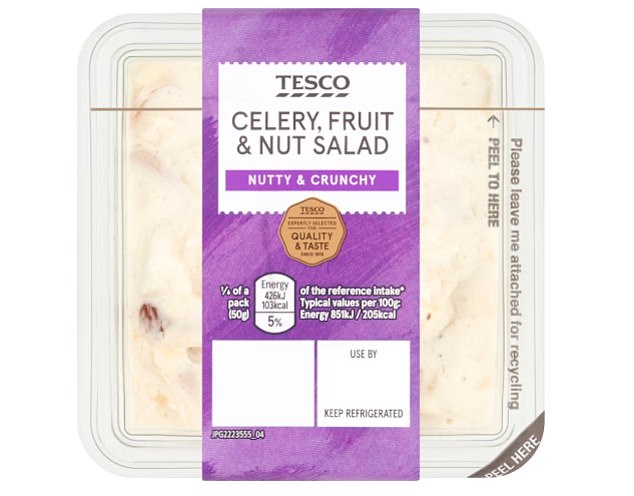
Tesco, a prominent supermarket chain, has issued a significant product recall for its Celery, Fruit and Nut Salad, specifically the 300g pack with a use-by date of December 2, 2025. This precautionary measure has been enacted due to the discovery of undeclared mustard within the product's mayonnaise component, a serious concern for individuals with mustard allergies.
The Food Standards Agency (FSA) confirmed the recall, highlighting that the presence of an unlisted allergen renders the product a potential health hazard for those sensitive to mustard. Customers who have purchased this specific product and have a mustard allergy are strongly advised against its consumption. They are encouraged to return the item to any Tesco store for a full refund.
Tesco has released a statement apologising for any inconvenience caused. "We are recalling a specific date code of Tesco Celery and Nut Salad 300g, due to the presence of mustard in the mayonnaise element of the product," the supermarket stated. "Mustard was not mentioned on the product label, which may pose a health risk to anyone with an allergy or intolerance to mustard. No other Tesco products are affected by this recall."
The FSA plays a vital role in consumer safety by issuing recalls when there is a risk due to missing or incorrect allergy labelling, or any other food allergy-related concern that necessitates a product being removed from sale. In line with these protocols, point-of-sale notices will be displayed in all affected retail stores. These notices will inform customers about the reasons for the recall and provide guidance on the necessary steps to take if they have already purchased the product. For further details, customers can visit the supermarket's contact page on its official website.
Understanding Mustard Allergy Reactions
Mustard allergy reactions can range from mild to severe and life-threatening.
-
Mild to Moderate Symptoms: These can include:
- Hives (skin rash)
- Swelling of the face, lips, or eyes
- Tingling or itching of the mouth
- Mild throat tightness
- Stomach pain
- Vomiting
- Diarrhoea
-
Severe Reactions (Anaphylaxis): In more critical cases, mustard can trigger anaphylaxis, a serious and potentially fatal allergic reaction. The charity Anaphylaxis UK outlines the warning signs for anaphylaxis using the acronym ABC:
- Airway: Symptoms include swelling in the throat or tongue, a hoarse voice, and difficulty swallowing.
- Breathing: This can manifest as sudden onset wheezing, shortness of breath, noisy breathing, and a persistent cough.
- Circulation: Signs of circulatory problems include dizziness, feeling faint, sudden sleepiness, confusion, pale and clammy skin, and potentially loss of consciousness or collapse.
Mustard as a Major Allergen
While the precise number of individuals with a mustard allergy in the UK remains unknown, mustard is recognised as one of the 14 major allergens. According to the charity Allergy UK, when mustard is used as an ingredient in any food product, it must be clearly indicated either on the product label or through accompanying information, such as a menu.
Recent government statistics indicate that approximately 2.4 million adults in the UK live with a food allergy. Over the past two decades, hospital admissions for severe allergic reactions have more than tripled, with an estimated ten Britons succumbing to food-related allergic reactions annually, and around 5,000 individuals being hospitalised for severe reactions.
This stark reality was tragically highlighted by the case of 13-year-old Hannah Jacobs from East London, who passed away in 2023. Her death followed a reaction to a hot chocolate from Costa Coffee, which had been mistakenly prepared with cow's milk instead of the soya milk her mother had ordered. An inquest into her death revealed that Hannah, who had severe allergies to dairy, egg, fish, and wheat, died due to a "failure to follow processes" and a "failure of communication" between staff and her mother.
Post a Comment for "Tesco Recalls Salad: Deadly Allergen Found"