
AI Halts Unnecessary Chemotherapy for Cancer Patients
The integration of artificial intelligence (AI) into medical diagnostics is poised to revolutionise cancer treatment, offering the potential for more precise chemotherapy decisions and even the avoidance of the debilitating therapy for certain patients. For decades, the examination of cancer biopsies under a microscope has been a cornerstone of diagnosis. However, this traditional method can sometimes overlook subtle patterns within tumour tissues that are crucial indicators of a cancer's aggressiveness and potential for spread.
A pioneering Norwegian start-up, DoMore Diagnostics, is at the forefront of this transformative shift, specifically focusing on colorectal cancer. They are developing cutting-edge AI technology designed to analyse tissue samples with a level of detail far exceeding the capabilities of the human eye. This enhanced analytical power aims to provide more accurate assessments, thereby reducing the likelihood of patients undergoing potentially unnecessary and harmful treatments like chemotherapy.
Torbjørn Furuseth, CEO of DoMore Diagnostics, articulated the company's vision, stating, "We personalise cancer treatment by utilising the power of AI." He further highlighted a persistent challenge in current oncology: "While there have been great improvements in cancer care over the last years, there are still a lot of patients that receive toxic treatment with no benefits." This sentiment underscores the urgent need for more refined diagnostic tools.
Colorectal cancer itself presents a significant global health challenge. The World Health Organisation identifies it as the third most common and second deadliest cancer worldwide. In Europe alone, the European Commission’s estimates for 2022 indicated 2.74 million new cancer cases registered. Furuseth explained the sophisticated nature of their AI development: "With AI and large data, thousands of slides, we have super-specialised an algorithm."
A New Benchmark in Pathological Analysis
The innovative technology developed by DoMore Diagnostics is not merely an incremental improvement; it represents a potential paradigm shift. The company is a spin-out from a significant research collaboration involving prestigious institutions such as Oxford University, Oslo University Hospital in Norway, and University College London (UCL). This academic partnership laid the groundwork for the foundational research that underpins their AI-based prognostic technology.
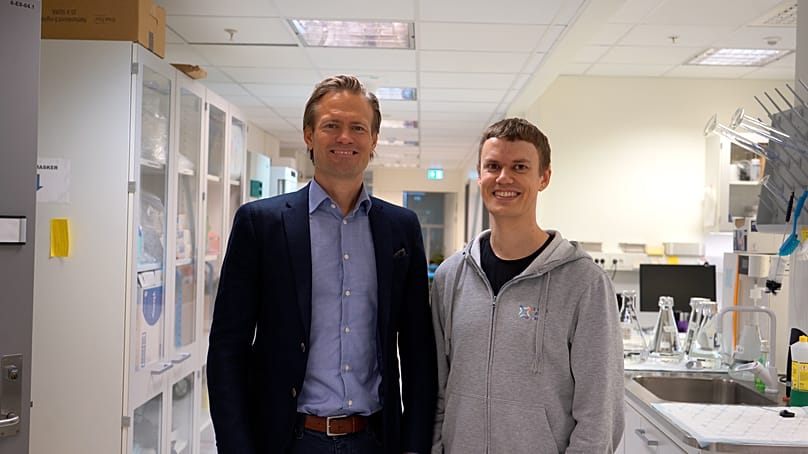
DoMore Diagnostics asserts that its AI-driven tool has demonstrated superior accuracy in predicting patient outcomes compared to human pathologists. Andreas Kleppe, a research director at Oslo University Hospital Research, offered insight into the AI's mysterious capabilities: "We don't really know what the AI is looking for. But we have afterwards correlated [AI outcomes] with pathologist evaluation and seeing that it makes sense." He elaborated on the AI's multifaceted approach, noting that "It [the AI] picks up many of the features that pathologists also look at, but it of course also combines this and looks at things that pathologists may not know."
 This enhanced predictive accuracy is of paramount importance for clinical decision-making. It can guide clinicians in identifying which patients truly require aggressive treatments like chemotherapy and, conversely, which patients can safely forgo such therapies without compromising their prognosis.
Refining Prognostic Assessment Post-Surgery
Prognostic analysis plays a critical role in the patient journey, particularly after surgery to remove a tumour. Even after successful resection, there remains a possibility that microscopic metastases – secondary cancer growths that have spread from the original site – may still be present. While the majority of colorectal cancer patients are effectively cured by surgery alone, chemotherapy is frequently administered as a standard follow-up. DoMore Diagnostics points out that this "one-size-fits-all approach" often benefits only a small fraction of patients, while exposing a larger percentage to the debilitating short- and long-term side effects of chemotherapy without improving their outcomes. The company highlights concerning statistics: between 96% and 98% of stage two patients, and 80% of stage three patients, experience these adverse effects without any demonstrable improvement in their prognosis.
Furuseth summarised the inherent difficulty in human assessment: "Exactly understanding what represents high risk of metastasis and low risk is difficult for a human to judge because it's so complex." This complexity is precisely where AI can offer a significant advantage.
The Mechanics of AI-Powered Diagnostics
The DoMore Diagnostics system operates by being trained on an extensive dataset comprising thousands of digital images of cancer tissue samples. According to Kleppe, this vast exposure equips the AI with a superior ability to identify high-risk features associated with cancer recurrence and mortality.
The AI tool meticulously scans digital images of the same tissue samples that human pathologists examine. However, its analytical process goes deeper, enabling it to assess the likely speed of cancer growth and its overall risk profile. Kleppe explained the training methodology: "When we develop the AI solutions, we feed in these images directly, and then the outcome of the patients several years after surgery. And then we make the computer see the relationship between those. So we don't rely on the pathologist's evaluation directly, we just rely on the outcome."
This outcome-driven approach allows the AI to establish correlations between microscopic tissue features and actual patient survival and recurrence data, providing a more objective and precise understanding of cancer aggressiveness. The company states that this yields a more precise understanding of a patient’s cancer.
Currently, DoMore Diagnostics’ colorectal cancer test is being utilised in Europe, the United States, Japan, and Mexico to validate prognostic analyses in clinical settings, marking a significant step towards broader adoption and impact in cancer care.
Post a Comment for "AI Halts Unnecessary Chemotherapy for Cancer Patients"