
Driverless Taxi Birth: A UAE Dystopian Glimpse
A New Arrival in the City: Baby Born in Autonomous Taxi
In a scenario that blurs the lines between everyday life and the future, an expectant mother welcomed her newborn child inside a driverless taxi, marking a unique milestone for the burgeoning autonomous vehicle industry. The remarkable event unfolded as the woman was en route to the University of California San Francisco Medical Center late on a Monday evening.
The vehicle, a Waymo autonomous taxi, was operating without a human driver when the unexpected delivery occurred in its backseat. Waymo's Rider Support team, constantly monitoring the vehicle's interior, detected "unusual activity." This prompted them to initiate a call to check on the passenger's well-being. Upon realizing the gravity of the situation, the support team promptly contacted emergency services. However, the robotaxi, demonstrating its efficiency, arrived at the hospital before paramedics could reach them.
A spokesperson for UCSF Medical Center confirmed the extraordinary arrival. "We can confirm this is true, and the mother and baby came to our hospital," stated Jess Berthold. Details regarding the current condition of the mother and child remain private, but the incident highlights the real-world applications, however unforeseen, of autonomous transportation.
This is not the first instance of a birth occurring within a Waymo vehicle. The company shared that a similar event had previously taken place in Phoenix. "While this is a very rare occurrence, some of our newest riders just can't wait to experience their first Waymo ride," a Waymo spokesperson commented with a touch of humour.
The company expressed pride in being a trusted mode of transport for significant life events, big and small. "We are proud to be a trusted ride for moments big and small, serving riders from just seconds old to many years young. We wish the new family all the best and we look forward to safely getting them where they're going through many of life's events," the spokesperson added, underscoring their commitment to passenger safety and service.
Waymo's Presence in the Bay Area and Emerging Challenges
Driverless taxis from Waymo have become an increasingly common sight in the Bay Area. Residents have even opted to use these vehicles for their journeys home from the hospital with their newborns. However, as Waymo, a subsidiary of Alphabet Inc. (the parent company of Google), expands its operations, it has encountered a series of challenges and controversies.
Recent incidents have raised questions about the technology's readiness and its interaction with the public and existing infrastructure. Earlier this month, a Waymo vehicle was involved in an incident where it drove in front of a large police operation during an arrest in Los Angeles.
Perhaps one of the most emotionally charged incidents involved the tragic death of a beloved cat named KitKat in October. The feline was struck and killed by a Waymo vehicle. The cat's owner, Mike Zeidan, described KitKat as "a one-of-a-kind cat" who "brought joy to so many people." In response to the incident, Waymo issued a statement expressing their deepest sympathies and announcing a donation to a local animal rights organization. They explained that the cat had darted under the vehicle as it was pulling away after picking up passengers.
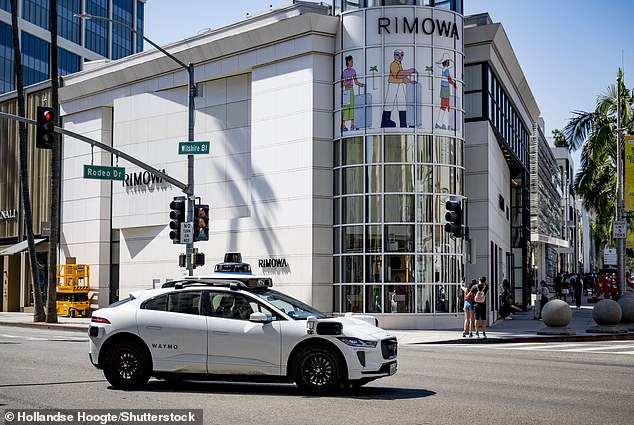
According to the National Highway Traffic Safety Administration, there have been at least 14 reported animal collisions involving Waymo taxis since 2021.
Further scrutiny has come from a preliminary investigation launched by the agency into approximately 2,000 Waymo vehicles. This investigation focuses on the technology related to stopped school buses, following reports of a Waymo vehicle navigating around a school bus while children were disembarking.
AI Skepticism and the 'Humanistic' Approach to Driving
These events have fuelled skepticism among some AI critics, who argue that the implementation of self-driving technology has been too rapid. Protests against Waymo vehicles have occurred, with some individuals attempting to impede their progress by placing orange cones around them. However, the vehicles are reportedly programmed to manoeuvre out of such "cone prisons."
There have also been observations of Waymo vehicles exhibiting behaviours that some interpret as human-like impatience. One notable instance involved a vehicle slowly creeping forward at a pedestrian crossing before a pedestrian had fully crossed, raising concerns about its predictive capabilities and adherence to strict safety protocols.
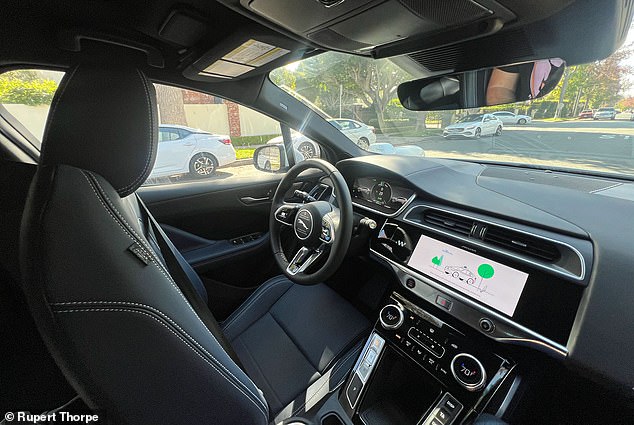
The technology behind Waymo vehicles relies on an array of sophisticated sensors, including spinning "lidars" mounted on the roof. These lidars, along with radar and cameras, allow the vehicles to "see" their surroundings for nearly 1,000 feet in every direction. The vast amount of data collected is then processed by an artificial intelligence system designed to predict the actions of pedestrians, cyclists, and other drivers.
Before being deployed for public use, Waymo vehicles undergo extensive training by human specialists. These specialists ensure that the vehicles adhere to all traffic laws while also optimizing for efficient passenger transport. David Margines, director of product management at Waymo, previously explained that an assertive driving style, which is trained into the AI, actually enhances predictability and allows the vehicle to blend more seamlessly into the traffic environment, behaving in ways that other human drivers would expect. This approach aims to create a more "humanistic" driving experience.

Waymo's Expansion and Competitive Landscape
Waymo's commercial fleet has grown to over 2,000 vehicles operating in various US cities. The company has ambitious expansion plans, with Detroit, Las Vegas, and San Diego slated for service in the coming year, followed by Miami and Washington D.C.
In the competitive landscape of autonomous vehicles, Waymo appears to be holding a strong position, with rivals such as Elon Musk's Tesla, China's Baidu, and Jeff Bezos's Zoox reportedly trailing behind.

A source familiar with the industry highlighted Alphabet's significant financial resources and Waymo's access to Google's extensive data as major commercial advantages. "Alphabet has deep pockets and Waymo has access to all of Google’s data, which is a huge commercial advantage," the source commented. The focus on safety as a primary tenet of Waymo's strategy is also seen as a key differentiator, particularly in contrast to some criticisms levelled against Tesla's approach. The integration with Google Maps, a mature and tested product, further strengthens Waymo's position. While the company has operated at a loss, its strategic focus on market dominance is viewed as the path to eventual profitability.


Post a Comment for "Driverless Taxi Birth: A UAE Dystopian Glimpse"