
Book review: The Burning God brings The Poppy War trilogy to a bitter conclusion
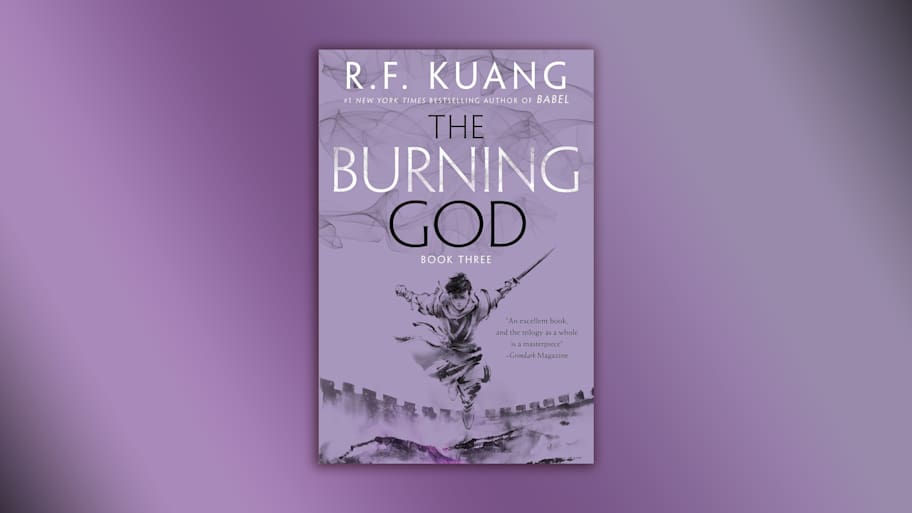 R.F. Kuang's "The Burning God" stands as the climactic conclusion to her acclaimed "The Poppy War" trilogy. Kuang masterfully weaves historical parallels into a richly imagined fantasy world, creating a narrative tapestry that feels both epic and intimately familiar. This trilogy, her debut work, showcases a remarkable evolution in her craft. With each subsequent novel, her writing deepens, particularly in the nuanced development of her characters, the intricate construction of her world, and the compelling momentum of her plot.
Kuang's storytelling is unflinching, direct, and emotionally resonant. It is a narrative that does not shy away from the brutal realities of war and its aftermath. While moments of light are scarce, the series captivates through its sheer originality within the fantasy genre. Kuang possesses a distinct authorial voice, one that is instantly recognizable and sets her apart. This individuality is a significant strength.
A Fittingly Grim Conclusion
"The Burning God" delivers a powerful and fitting end to a story that has captivated readers. As the second book, "The Dragon Republic," drew to a close, a fragile hope flickered for the protagonist, Rin, suggesting a potential for a kinder world. However, the events that transpired shattered this optimism, and the repercussions for Rin are immediate and profound.
From the latter half of the first book onwards, Rin rarely embodies the traditional heroic archetype. Instead, she emerges as a compelling antihero, her experiences forging her into a deeply scarred and flawed individual. Kuang makes it clear from the outset of "The Burning God" that Rin will not soften her resolve.
The Weight of Power and Violence
Early in "The Burning God," Rin commits an act of murder, which she views as a necessary step to consolidate her authority over Southern Nikaran warriors engaged in conflict against the Republic and the foreign Hesperians. The Republic itself serves as a clear parallel to Chiang Kai-shek's Nationalist government in 1930s and 1940s China, while the Hesperians mirror the influence of Western powers on China during the pre-World War II era.
Throughout the series, Rin's impulsiveness has been a defining trait, and her acquisition of divine powers has only amplified this tendency. She consistently believes she knows best and struggles to collaborate effectively with others. These character traits ultimately lead to significant consequences for her. Although her intentions are often rooted in a desire for what is right, she finds herself unable to steer events precisely according to her vision. Despite these setbacks, she demonstrates remarkable resilience, rebounding from personal failures to help rally the beleaguered southern army.
Echoes of History and the Corrupting Nature of Power
The narrative of "The Burning God" draws heavily from the tumultuous period of the 1940s and 1950s in China. Rin's journey from obscurity to immense power through warfare and upheaval bears a striking resemblance to the rise of Mao Zedong. Kuang, however, uses this parallel to explore the immense challenges of effective governance once power has been attained. Rebuilding a war-ravaged nation plagued by famine, poverty, and mass displacement is an undertaking of staggering difficulty.
The novel serves as a potent examination of how easily power can corrupt, and how possessing power does not automatically equate to the capacity for effective leadership. Warlords, by their very nature, often prove ill-suited to the demands of peacetime leadership.
Foreshadowing and Character Arc
The conclusion of the series, while moderately surprising, was subtly foreshadowed throughout. Even when stripping away the direct historical parallels, Kuang embedded hints within "The Poppy War" that pointed toward the trilogy's eventual ending. These clues were subtle enough at the time to avoid overt predictions but appear strikingly obvious in retrospect.
The ending feels earned, intrinsically linked to the overarching narrative and Rin's profound character development. She transforms from a driven yet naive overachiever at the series' inception into a brutal, battle-hardened warlord by its close. The story is not one of saccharine endings or nostalgic reflections, but rather a stark portrayal of a painful and abused history.
 Despite the grim subject matter, Kuang's storytelling remains exceptionally strong. Her aim was not to provide readers with comfort, but to craft a fantasy narrative deeply informed by historical context. The result is an original, epic, and thought-provoking trilogy that is undoubtedly a rewarding read.
Post a Comment for "Book review: The Burning God brings The Poppy War trilogy to a bitter conclusion"