
The 'three norths' leave England! Once-in-a-lifetime alignment moves into the North Sea
The 'Three Norths' Confluence Departs England, Marking a Rare Geospatial Event
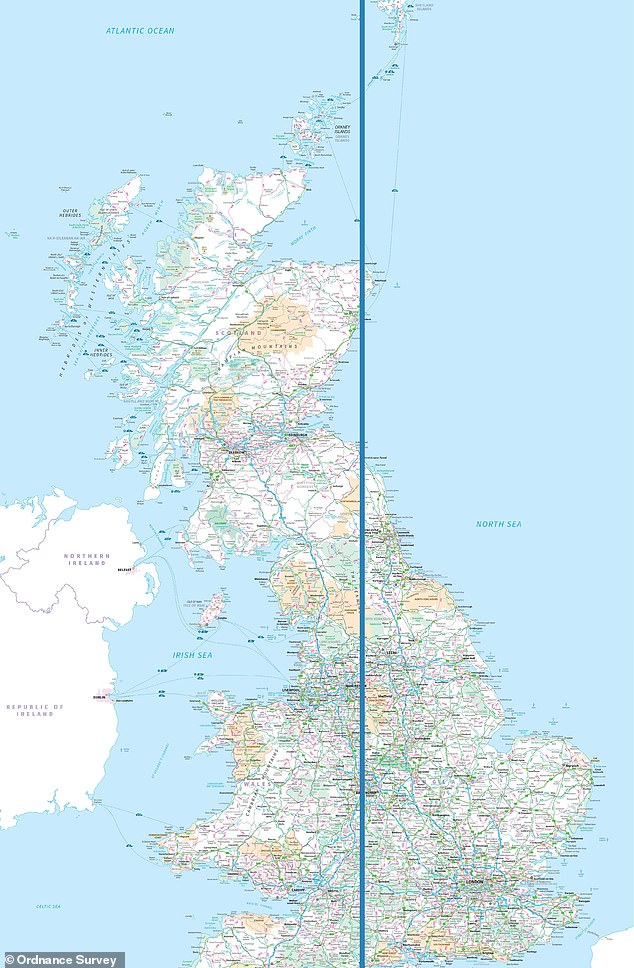
For over three years, a unique and historic convergence of the Earth's directional references – the 'three norths' – has traversed the United Kingdom. This extraordinary alignment, where true north, magnetic north, and grid north have coincided at a single point, has now left the shores of England. Experts from the British Geological Survey (BGS) confirm that this significant geospatial phenomenon departed England on December 13, 2025, entering the North Sea at Berwick-upon-Tweed. Its journey is far from over, with a projected arrival in Scotland in the coming months, before eventually moving beyond the British National Grid, though for how long remains uncertain.
This alignment, the first of its kind since records began, is being hailed as a "once-in-a-lifetime occurrence." It is estimated that it may take several hundred years before such a confluence graces British shores again. Dr. Ciarán Beggan, a geophysicist at the BGS, expressed his sentiment, stating, "It's been a privilege to be able to observe this phenomenon over the past few years. Although part of geospatial history, there is no impact for navigators, pilots and captains once the alignment leaves."
Understanding the 'Three Norths'
While the concept of 'north' might appear simple, it is, in fact, defined by three distinct interpretations:
-
True North: This refers to the direction pointing towards the geographic North Pole, the northern end of the Earth's axis of rotation. It's a fixed point on the globe.
-
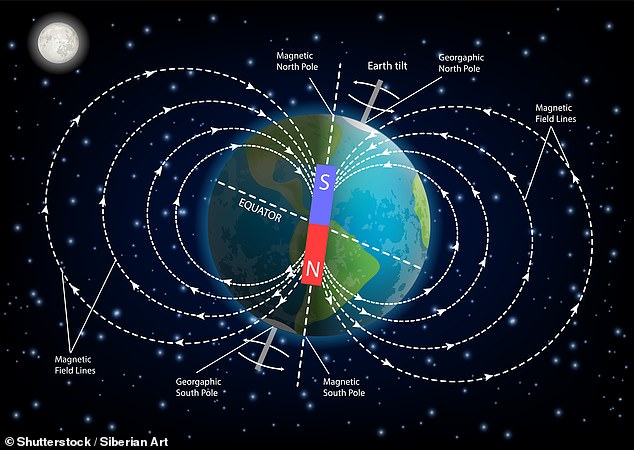
Magnetic North: This is the direction indicated by a compass needle, which aligns itself with the Earth's magnetic field. This field is generated by the dynamic movement of molten iron deep within the Earth's core. Unlike true north, magnetic north is not static and constantly shifts.
-
Grid North: This is the direction represented by the vertical lines on maps, specifically those used by mapping agencies like Ordnance Survey (OS) in the UK. These lines converge at the top of a map, providing a consistent reference for navigation on paper.
For a period exceeding three years, a specific location within England served as the meeting point for these three directional definitions. At this precise spot, a compass, an Ordnance Survey map, and the Earth's axis were all in perfect agreement, pointing unequivocally north.
The 'Three Norths' Journey Across England
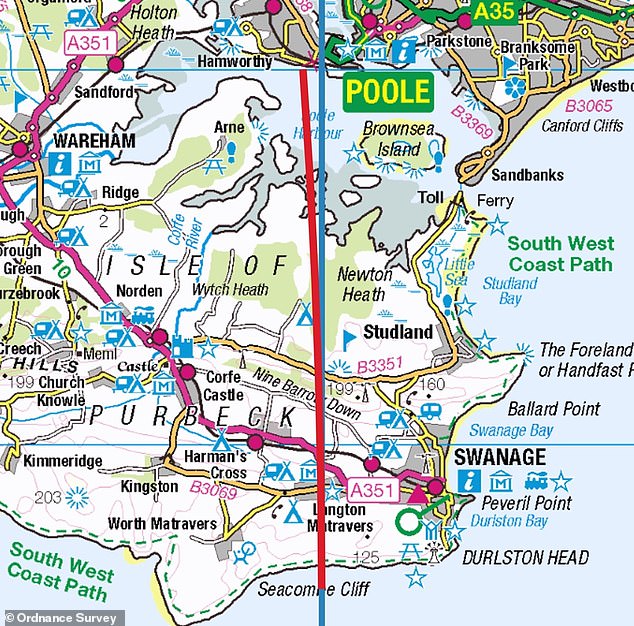
The historic alignment commenced its traverse of England in November 2022 at Langton Matravers, a village located west of Swanage in Dorset. From there, it embarked on a northerly progression:
- November 2022: Langton Matravers, Dorset
- May 2023: Devizes, Wiltshire
- September 2023: Lower Dowdeswell, Gloucestershire
- January 2024: Woodgate Valley Country Park, Birmingham
- May 2024: Leek, Staffordshire
- October 2024: Hebden Bridge, West Yorkshire
- April 2025: Eggleston, North Pennines
- August 2025: Flotterton, Northumberland
- December 2025: Berwick-upon-Tweed, Northumberland (England's northernmost town)
The Road Ahead: Scotland and Beyond
The alignment's passage through the British Isles is not yet complete. After its departure from England, it is expected to make landfall again in Scotland at the end of October 2026. Its anticipated route includes:
- Late October 2026: Drums, south of Newburgh, Scotland
- Mid-December 2026: Fraserburgh, Aberdeenshire (its final confirmed stop in Scotland)
Following its Scottish sojourn, the 'three norths' will re-enter the North Sea. Experts predict they will continue their northward trajectory before eventually leaving the Ordnance Survey National Grid. The alignment is expected to persist for a further couple of years before magnetic north begins to diverge from true north and grid north, marking the end of this rare coincidence.
A Slow but Steady Drift
Interestingly, the progress of this alignment has been slightly slower than initially predicted in 2022. Upon reaching Berwick-upon-Tweed, the alignment had covered approximately 358 miles (576 km) over 1127 days. This translates to an average daily movement of about 1,676 feet (511 metres), or roughly 0.23 inches (5.9 mm) per second, equivalent to about 0.013 miles per hour.
Dr. Beggan attributes the rarity of this event primarily to the unpredictable nature of magnetic north's drift. "Magnetic north moves slowly – about 30 miles per year – so it may be several hundred years before this alignment comes around again," he explained.
The Dynamic Nature of Earth's Magnetic Field
The Earth's magnetic field, the force that guides magnetic north, originates from the ceaseless movement of liquid iron in the planet's outer core, situated approximately 1,800 miles beneath our feet. This superheated liquid iron, with a temperature exceeding 5,432 degrees Fahrenheit and a consistency akin to water, flows with remarkable ease. This fluid motion acts like a dynamo, dragging the magnetic field along with it. Consequently, both the magnetic north and south poles are in a perpetual state of drift.
This phenomenon has had practical implications in the past. The alignment began its historical shift in 2014, when magnetic north shifted to the east of grid north for certain locations in Britain – a deviation not seen in over 350 years. This change necessitated adjustments for navigators relying on compasses, requiring them to alter their calculations for magnetic declination.
Post a Comment for "The 'three norths' leave England! Once-in-a-lifetime alignment moves into the North Sea"