
Unveiling the Magic: Prime Spots for Aurora Viewing Across the UK
As the longer nights of February descend, the United Kingdom presents an unexpected yet thrilling opportunity for residents to witness the captivating Aurora Borealis – the Northern Lights – without the need for extensive travel. While this celestial spectacle is most famously observed in regions closer to the Arctic Circle, the period between September and March offers a window for sightings much further south.
Recent surges in solar activity, coupled with the crisp, clear winter skies and extended hours of darkness, have already led to a flurry of reported sightings throughout January. These dazzling displays have illuminated the skies across Scotland, Northern Ireland, Wales, and various parts of England, sparking widespread excitement.
Recognising this burgeoning interest, travel specialists Japan-101 embarked on an in-depth analysis of 100 towns and cities across the UK. Their objective was to pinpoint the optimal locations for experiencing the Aurora Borealis. The methodology involved evaluating each locale based on key factors influencing visibility: artificial light pollution, air quality, and cloud cover. Each town and city was then assigned a score out of 100, culminating in a comprehensive index score to determine the ultimate viewing destinations.
Top Ten Havens for the Northern Lights
The study crowned Dundee as the premier location for aurora spotting, achieving an impressive score of 73.1 out of 100. The Scottish city's success is attributed to its remarkably low levels of air pollution and relatively dark skies, positioning it a significant 28 per cent above the national average for favourable viewing conditions.
Following closely in second place is Eastbourne, with a score of 72.1 out of 100. The coastal town benefits from its exposed seaside location and reduced light pollution, which contribute to clearer night skies. This score places it 26 per cent higher than the national average.
Chelmsford secured the third spot, demonstrating the power of limited cloud cover and minimal artificial light in enhancing aurora visibility, even outperforming larger urban centres.
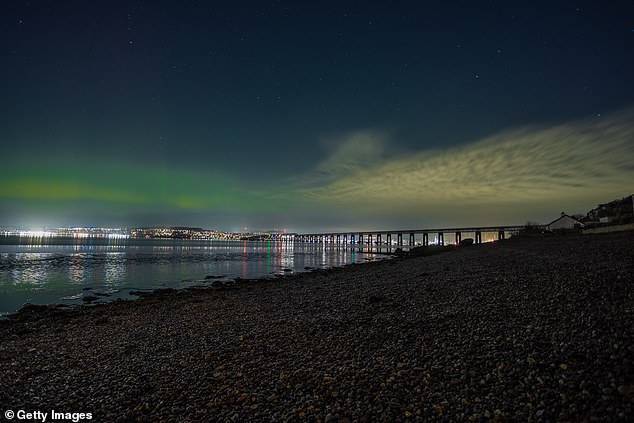
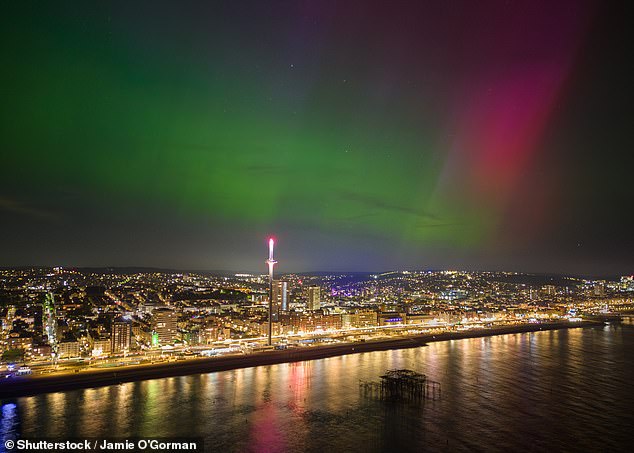
Further down the esteemed list, Worthing claimed fourth place, lauded for its expansive seaside vistas that offer unobstructed views of the night sky. Colchester followed in fifth, achieving a score of 71.3 out of 100, which is 24 per cent better than the national average of 57.3 out of 10.
Hastings ranked sixth, a testament to its low cloud cover and diminished light pollution. Brighton secured seventh place, performing admirably despite its size with an index score of 70.2. Its neighbour, Hove, closely followed in eighth. Cambridge earned ninth position with a score of 68 out of 100, benefiting from the comparatively dark countryside surrounding the city. Rounding out the top ten is Harlow, whose exceptionally low levels of artificial brightness contributed to its score of 67.4.
Maximising Your Chances of Witnessing the Lights
According to the researchers behind the study, strategic positioning can significantly amplify the likelihood of spotting the aurora. Heading towards elevated areas or coastal regions, and crucially, moving away from the glare of street lighting, can dramatically improve your chances, especially if solar activity continues to be robust in the coming weeks.
Nozomi Kato, a writer at Japan-101, highlighted the accessibility of this natural wonder. "Brits spend thousands travelling all the way to Iceland or Norway to see the Aurora Borealis, but it’s possible to see the dazzling show in the comfort of your own home," she commented. "This study reveals the best places to see the Northern Lights in the UK, with Dundee taking the top spot. But no matter where you are, take an opportunity to try to catch a glimpse of the magical phenomenon this week."
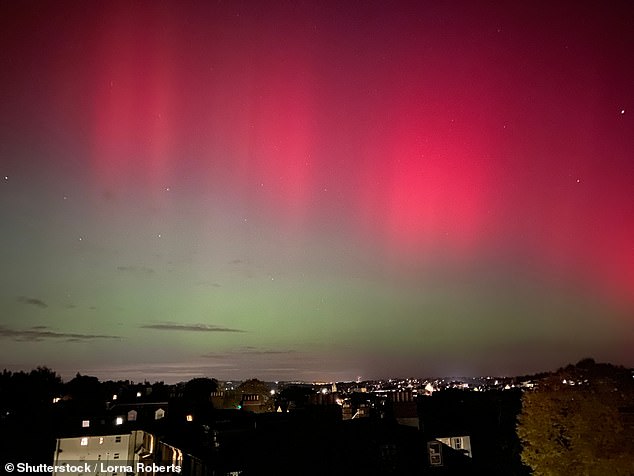
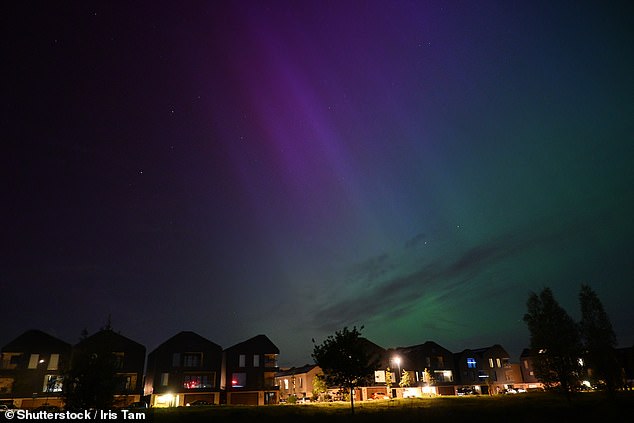
The Ultimate UK Aurora Viewing Hotspots: A Ranked List
Based on the Japan-101 analysis, here are the prime locations for experiencing the Northern Lights:
- Dundee
- Index Score: 73.1%
- Eastbourne
- Index Score: 72.1%
- Chelmsford
- Index Score: 72.09%
- Worthing
- Index Score: 71.8%
- Colchester
- Index Score: 71.3%
- Hastings
- Index Score: 70.6%
- Brighton
- Index Score: 70.2%
- Hove
- Index Score: 68.4%
- Cambridge
- Index Score: 68.0%
- Harlow
- Index Score: 67.4%
This revelation comes at an opportune time, following insights from a leading meteorologist who previously identified prime viewing locations and predicted that 2026 will witness the strongest auroral displays in over a decade.
British meteorologist John Griffiths elaborated on the science behind the aurora, explaining that the phenomenon is triggered by "solar storms coming off the sun that travel through space." He further noted, "When it hits our magnetic field, we get very good auroras. The stronger those flares are from the sun, the stronger and the further south the aurora is seen. We're currently in the midst of 'a peak time' of solar activity, which equals more or better Aurora Borealis." This confluence of factors suggests that the UK may be in for a spectacular season of celestial light shows.


No comments:
Post a Comment