
ISS Medical Crisis: NASA's High-Stakes Astronaut Evacuation Plan
NASA Initiates Historic Medical Evacuation from International Space Station
In an unprecedented move, NASA is preparing to execute its first-ever medical evacuation from the International Space Station (ISS). This operation, a contingency plan developed decades ago for dire emergencies in space, has never before been activated during a mission aboard the orbiting laboratory. Agency officials confirmed that the plan, designed for situations where a crew member's medical condition cannot be adequately managed in microgravity, is now being implemented to bring a portion of the Crew-11 mission back to Earth.
The mission's return will follow a meticulously planned procedure. The affected astronaut, along with designated crewmates, will seal themselves within the capsule. Following undocking from the ISS, the spacecraft will execute a controlled departure from the station. Several hours later, it will perform a deorbit burn, initiating its descent back to Earth. The capsule is slated for a parachute-assisted splashdown in the Pacific Ocean, off the coast of California.
Upon splashdown, a dedicated recovery ship, equipped with medical personnel, will be on standby. They will retrieve the capsule and conduct immediate health evaluations at sea. Subsequently, the astronauts will be transported via helicopter and jet to NASA's Johnson Space Center in Houston for comprehensive medical care and further assessment.
The decision to initiate this early return was prompted by a medical issue experienced by an astronaut aboard Crew-11. This condition, which could not be fully treated in the microgravity environment, led NASA flight surgeons to recommend an immediate return to Earth. While the American space agency has maintained strict privacy regarding the identity of the individual and the specific nature of the medical condition, NASA Administrator Jared Isaacman acknowledged on Thursday that it represents a "serious medical condition" necessitating the first-ever crew evacuation. He indicated that an updated return timeline would be provided within 48 hours as mission managers finalise the landing parameters.
Dr. James Polk, NASA's Chief Medical Officer, assured the public on Thursday that the astronaut is not in immediate danger and is receiving care from their fellow crew members. "This is not related to a spacewalk or station operations," Dr. Polk clarified. "It's primarily a medical issue made more complex by the challenges of microgravity."
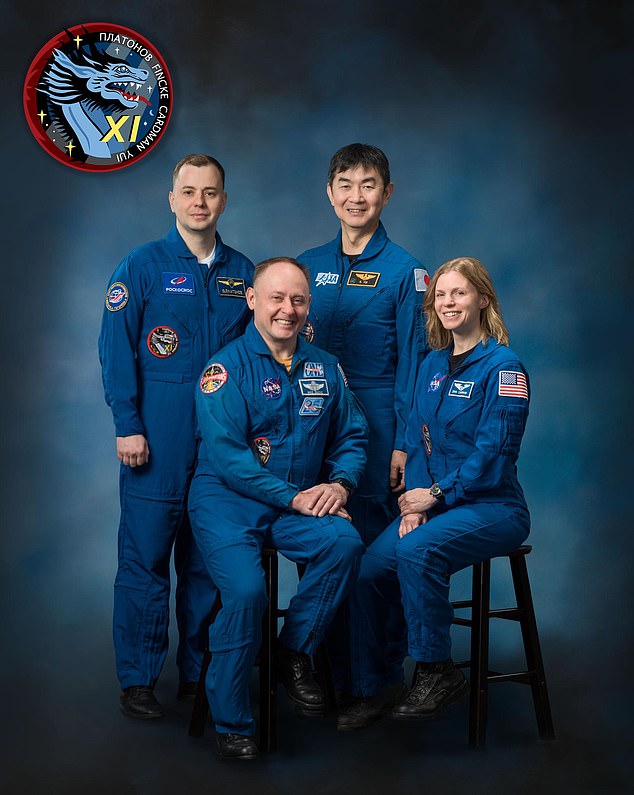
The current Crew-11 mission comprises NASA astronauts Zena Cardman and Mike Fincke, Japanese astronaut Kimiya Yui, and Russian cosmonaut Oleg Platonov. While a Japan-based news outlet reported that Kimiya Yui is in good health, the focus of concern naturally narrows to the remaining crew members.
Pre-Departure Procedures and Return Trajectory
Before commencing the evacuation, the crew will undertake several critical pre-departure procedures. These include thorough vehicle health checks to ensure the capsule's operational readiness, securing all essential cargo, sealing hatches to maintain internal pressure, and depressurizing the docking vestibule. Throughout this process, mission control will diligently verify the spacecraft's readiness for departure and re-entry.
Once the Crew Dragon capsule has safely undocked from the ISS, it will perform a series of precise separation burns to move away from the station. This manoeuvre is crucial for ensuring a safe distance before the deorbit burn, which will initiate its journey back to Earth. Following atmospheric re-entry, the capsule will deploy its drogue parachutes, followed by its main parachutes, guiding it to a controlled splashdown at sea.
Maintaining Continuous Presence in Orbit
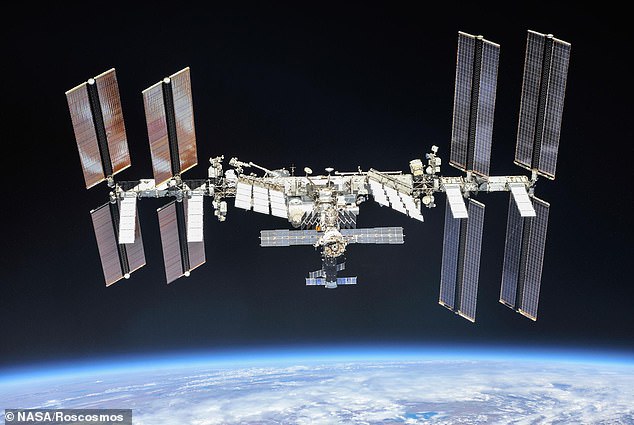
The ISS is slated to maintain its continuous human presence in orbit. Japanese astronaut Koichi Wakata and NASA astronaut Chris Williams, who arrived aboard a Russian Soyuz spacecraft in November 2025, will remain on the station. Administrator Isaacman confirmed that Williams will stay with the Soyuz crew to uphold the United States' commitment to uninterrupted occupancy of the ISS.
Precedent and Contingency Planning
This historic evacuation follows NASA's Spaceflight Human-System Standard, which mandates contingency return procedures whenever onboard medical resources are deemed insufficient to manage a critical situation. Although statistical models have long predicted the possibility of such an event, occurring approximately once every three years, this marks the first time the plan has been invoked.
The Crew Transportation System Design Reference Missions explicitly outlines potential emergency scenarios, stating: "Emergencies could result from ISS system failures, an uninhabitable crew environment, or a medical event requiring the return of the crewmembers. The crew will return to Earth within 24 hours of a declaration of an intention to return early."
Crew-11 originally arrived at the ISS on August 1, 2025, with their scheduled departure anticipated for late February. Their return was planned to occur after the arrival of Crew-12, which is expected on a SpaceX Dragon capsule no earlier than February 15.
Administrator Isaacman also addressed potential impacts on future missions, stating that any decision to potentially advance the launch of Crew-12 would not affect the upcoming Artemis II mission, scheduled for February 2026. He characterised the two launches as "totally separate campaigns," indicating no anticipated issues with the Artemis timeline. Artemis II is set to be the first manned spaceflight to orbit the Moon since 1972.
The Critical Role of Onboard Astronauts
The ongoing presence of astronauts aboard the ISS is paramount. They are indispensable for crucial tasks such as maintenance, repairs, operating complex scientific experiments, managing life support systems, and conducting spacewalks. These responsibilities extend beyond the capabilities of automation, necessitating constant human oversight for both safety and scientific productivity.
Previous Incidents and Cancellations
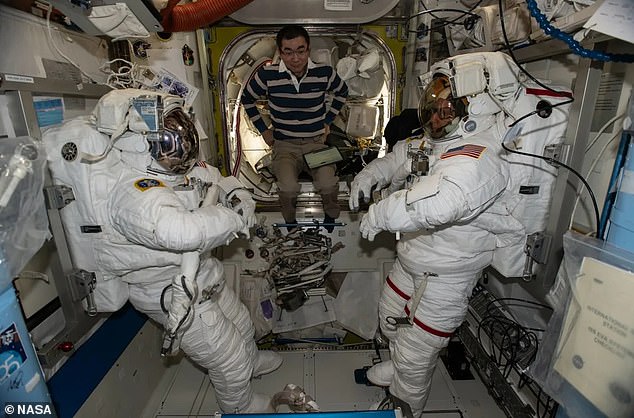
Until this medical evacuation, there had never been a crew sent back from the ISS ahead of their scheduled departure. However, the ISS has experienced mission adjustments due to health-related issues. Two spacewalks were recently cancelled due to various health concerns among astronauts. In 2021, a mission was altered when astronaut Mark Vande Hei experienced a pinched nerve that prevented him from travelling outside the ISS. More recently, in 2024, a spacewalk was called off at the last minute due to an astronaut experiencing "spacesuit discomfort."
Post a Comment for "ISS Medical Crisis: NASA's High-Stakes Astronaut Evacuation Plan"