
Disability Group Fights Transit Accessibility Ruling
Advocates Launch Appeal in Fight for Accessible Public Transit in Quebec
A prominent advocacy group for individuals with mobility challenges is taking its fight for equitable public transportation to a higher court. The Regroupement des activistes pour l’inclusion au Québec (RAPLIQ) has filed a notice of appeal following a Superior Court decision that favoured Quebec's transit agencies. This move comes after a class-action lawsuit heard in 2023, which alleged systemic discrimination against people with disabilities due to inadequate accessibility provisions.
The lawsuit highlighted critical shortcomings across various transit networks, including:
- Suburban Train Network (Exo): A pronounced lack of investment in making stations universally accessible.
- Montreal Metro Network (STM): A slow and inconsistent pace in the installation of much-needed elevators.
- Paratransit Services: Unacceptably long waiting times for booking essential trips.
The class-action suit was open to any Quebec resident who, after April 15, 2012, encountered barriers to accessing métros, city buses, commuter trains, or paratransit services due to physical disabilities. RAPLIQ had sought significant damages, requesting $50,000 in moral damages and $25,000 in punitive damages for each member of the class.
Court Ruling and Advocacy Group's Rebuttal
Last month, the Superior Court ruled against RAPLIQ, stating that transit agencies had acknowledged the accessibility issues and were investing to the best of their capacity within budgetary constraints. However, RAPLIQ strongly contests this assessment, arguing that accessibility projects are consistently deprioritized. This, they contend, is evident in the substantial cuts made to the capital programs of both the STM and Exo. These cuts have effectively eliminated nearly all future plans for universal accessibility at train and métro stations due to perceived funding shortages.
Steven Laperrière, the Director General of RAPLIQ, expressed his deep disappointment in a recent interview. "As soon as there is a budget cut to be made, it is done on the backs of people with disabilities," he stated. "But what also shocks me is the 'who cares' attitude. This attitude really pisses me off." He anticipates that the situation will likely deteriorate further before any meaningful improvements are made.
Cost-Saving Measures and Their Impact on Paratransit
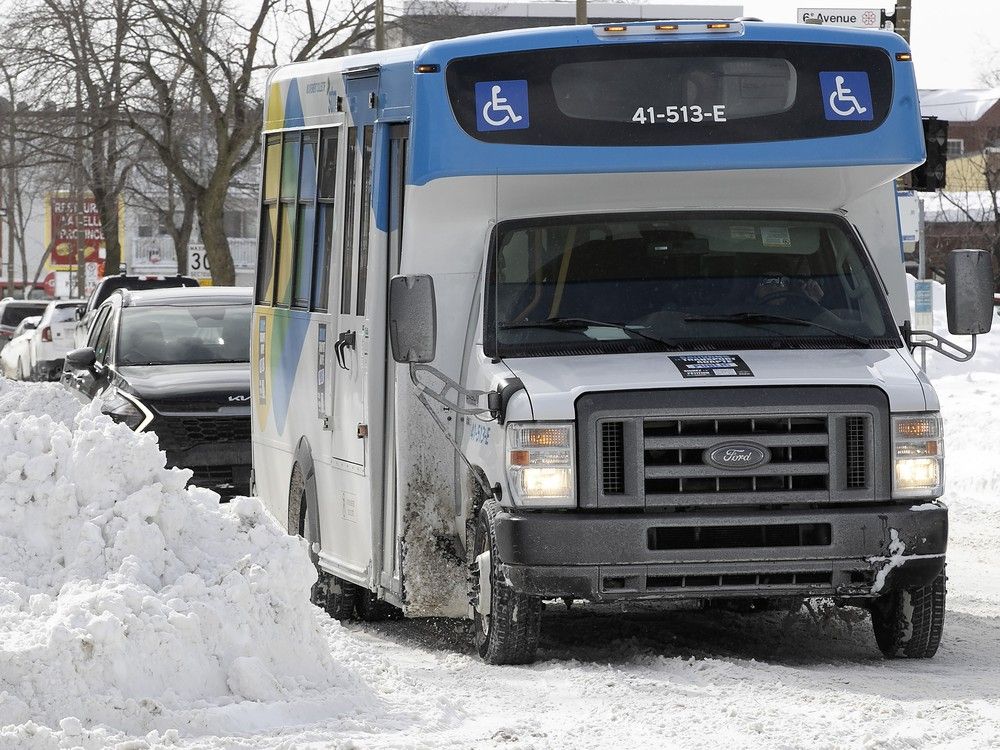
Adding to the concerns, the STM has recently implemented a cost-saving measure by discontinuing its minibus fleet and subcontracting paratransit services to the private sector. This initiative is projected to save $8 million, a move justified by the fact that 90 percent of paratransit rides were already being handled by private taxis.
Laperrière explained that the STM attributes this measure to cost-cutting directives from the provincial government. With provincial transit funding at an all-time low, the STM has indicated that it cannot guarantee its policy of zero refusals for paratransit requests beyond 2027. RAPLIQ fears that the anticipated cost savings will not remain within the paratransit budget, leading to its reduction in 2027.
"They are predicting an increase in adapted transit by five per cent, and there is no increase predicted in the budget, so for sure the service is going to be cut for adapted transit, and nobody seems to care," Laperrière warned. He painted a stark picture of the potential consequences: "It means that if you want to go see a show at the Bell Centre, then maybe you’ll be able to get there, but there will be no way to come back, so you won’t be able to attend at all."
Unfulfilled Accessibility Goals for Stations
The STM has also fallen significantly short of its own targets for equipping métro stations with elevators. Currently, only one elevator project is underway at the Édouard-Montpetit station. Following its completion, there are no further elevator projects on the immediate horizon. Out of a total of 68 métro stations, only 29 are currently equipped with elevators. The STM had initially set a goal to equip 41 stations by 2025, a deadline that was later extended to 2030. However, based on the most recent capital project plans, there are no new elevator installations scheduled for the next decade.
Challenges with Regional Transit and the ARTM's Response
Similarly, Exo has seen its plans to enhance the accessibility of its train stations cancelled over the years. Many regional buses are operated by private companies, and their coach-style design makes it difficult, if not impossible, for wheelchairs to board. Even parents with strollers face restrictions, often being required to store them in cargo holds when boarding regional buses.
In response to these ongoing issues, the Autorité régionale de transport métropolitain (ARTM), which oversees and allocates funds to regional transit authorities, issued a statement affirming its commitment to "provide the best service possible with the available resources."
Maxime Duchesne, a spokesperson for the ARTM, highlighted forthcoming initiatives. "For example, the four adapted transit services are going to be united under one unified metropolitan agency," he said. "A working group will be established in the coming weeks to come up with a road map with public transit agencies and the non-profit sector."
Duchesne added, "Despite (funding challenges), universal accessibility remains integrated in the planning of large projects, notably the SRB Pie-IX, the extension of the métro’s Blue Line and the REM." While these large-scale projects may incorporate accessibility features, advocates like RAPLIQ remain concerned about the immediate impact of funding cuts on existing services and essential station upgrades.
Post a Comment for "Disability Group Fights Transit Accessibility Ruling"