
AI is not eating up China’s software market but turbocharging it: HSBC analyst
China's artificial intelligence model companies are unlikely to "eat up" the domestic software market because they lack the deep industry know-how and experience to meet enterprise needs, according to an HSBC analyst.
Unlike the US, China's less developed software-as-a-service (SaaS) market stands to gain even as AI models continue to improve, with the most likely outcome being a collaborative approach where model companies and legacy software firms serve enterprises in tandem, said Yiran Liu, head of A-share IT software research at HSBC Qianhai Securities.
The analysis comes as continued AI progress sparked a "SaaSpocalypse" earlier this year in the financial markets, as investors turned away from traditional SaaS giants amid fears that new agentic AI products such as Anthropic's Claude Cowork and OpenAI's Codex would eliminate the need for traditional software firms.
Do you have questions about the biggest topics and trends from around the world? Get the answers with SCMP Knowledge, our new platform of curated content with explainers, FAQs, analyses and infographics brought to you by our award-winning team.
Notable US software giants including Salesforce and Adobe are both down around 30 per cent this year. The slump has extended to China, with the Hang Seng China A Software & Services Index down 19 per cent from a high in mid-January.
However, there was a gulf between investor sentiment and what was happening on the ground in China, said Liu, who is based in Beijing. Rather than being eaten up by new AI products, legacy Chinese SaaS firms are integrating AI into their offerings and seeing "significant robust growth" as a result, she said.
Shenzhen-based Kingdee International Software Group, one of China's largest SaaS providers, last month announced revenue guidance of 1 billion yuan (US$146 million) this year for its AI products, a 180 per cent jump.
The company turned a profit last year after five consecutive years of losses, as it launched a suite of AI-native products covering financial analysis, recruitment and contract review. Its financial tool had already amassed almost 400,000 registered users and 35 enterprise clients, the firm said.
Such accelerated growth reflects legacy software firms' early monetisation of AI, according to Liu, as they already have the industry know-how and accumulated knowledge to provide value to downstream users at this early stage of AI-driven industry transformation.
"The large language model companies provide the model infrastructure but they don't have the vertical data or experience," she said. "[Legacy] software companies have years of experience doing that."
The US "big three" AI model developers - OpenAI, Anthropic and Google - are not available in China. Instead, Chinese enterprises are experimenting with domestic models from the likes of DeepSeek and ByteDance to increase internal efficiency and productivity.
However, the capabilities of such models remain limited, said Liu. AI model providers have yet to develop enterprise applications of their own that are good enough to see widespread adoption.
"We don't have enough computational resources and the AI application development is not mature enough yet, so we're just not seeing very good products ... at this very early stage," she said.
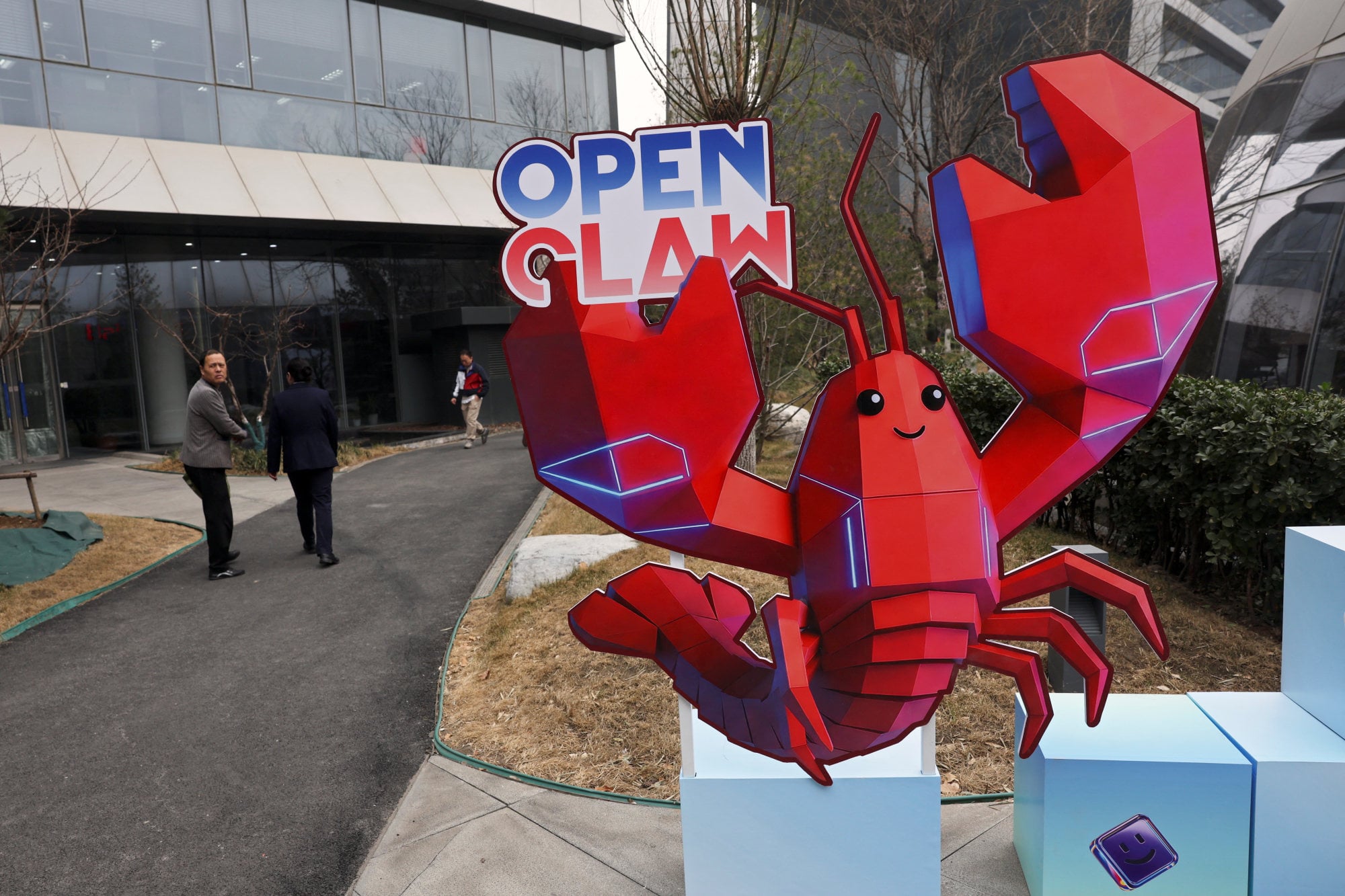
Instead, legacy software companies are capturing early AI demand by developing applications on top of AI models. The frenzy over OpenClaw at the start of the year has also instilled a sense of "FOMO" (fear of missing out) among Chinese enterprises, presenting opportunities for software companies to push their clients to raise their IT budgets, Liu said.
There has been significant excitement about the growth potential of pure-play AI start-ups globally. Two of China's leading players, Beijing-based Zhipu AI and Shanghai-based MiniMax, have seen their stocks soar in Hong Kong since their January listings, even surpassing the market caps of big tech giants such as Baidu and JD.com at times.
However, these start-ups still need to rely on China's legacy software firms if they want to penetrate different industries, said Liu. Kingdee, for instance, ramped up its penetration of China's manufacturing industry last year, inking deals with major enterprises including Liuzhou Iron & Steel, the largest iron and steel conglomerate in South China.
AI start-ups themselves also use traditional SaaS products internally. On Thursday, Kingdee said in a WeChat post that it helped MiniMax upgrade its internal research and development expenses management system before its January IPO, which resulted in a 30 per cent improvement to its accounting efficiency.
"[For example], if MiniMax wants to put their model in the manufacturing industry, they need suppliers but they don't know them," Liu said. "So they need to work together [with legacy companies] to help downstream clients use more AI. [Market] sentiment changes all the time, but we are more focused on changes in fundamentals, such as real results and products."
More Articles from SCMP
The rupture: how Europe fell out of love with America
K-drama casting news about Lee Hye-ri, Choi Hyun-wook, Kim Da-mi and more
Hong Kong watchdog monitoring potential merger of city’s top 2 supermarket chains
Hong Kong’s Mirror star Keung To urges public to learn from his driving mistakes
This article originally appeared on the South China Morning Post (www.scmp.com), the leading news media reporting on China and Asia.
Copyright (c) 2026. South China Morning Post Publishers Ltd. All rights reserved.
Post a Comment for "AI is not eating up China’s software market but turbocharging it: HSBC analyst"