
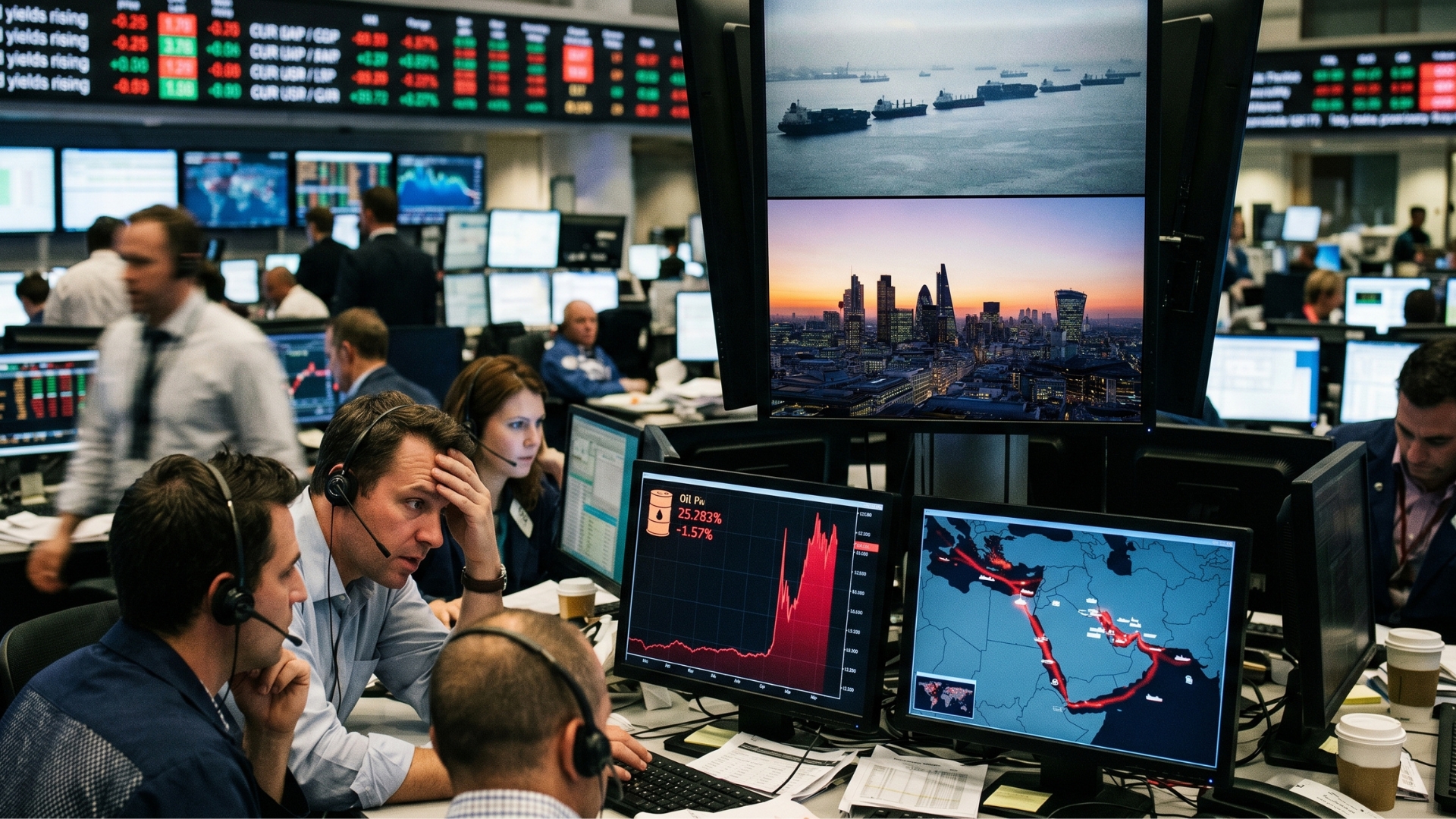
 The ripple effects of global conflicts are increasingly being felt in financial markets, and it's not just the outbreak of hostilities that triggers concern. Instead, it's the market's perception of how violence might disrupt vital energy supplies, fuel inflation, stifle economic growth, or force difficult decisions upon central banks and governments. The International Monetary Fund (IMF) has indicated that these very dynamics are already at play due to the current Middle East conflict. We're witnessing a downturn in equity prices, a rise in sovereign bond yields, and a surge in market volatility, all exacerbated by energy prices feeding into inflation expectations.
What begins as a market narrative quickly translates into everyday concerns for households. Increased costs for oil, gas, and fertilisers inevitably lead to more expensive transport, electricity, food, and air travel. Energy-importing nations, particularly those with fewer resources, bear the brunt of these economic pressures. The gravity of the situation was underscored by a warning from the International Energy Agency (IEA) chief, Fatih Birol, who, in an interview, highlighted the precarious state of jet fuel supplies in Europe, suggesting a potential shortage within approximately six weeks if blockades persist. This starkly illustrates how geographically distant conflicts can profoundly influence daily life across numerous regions.
The Critical Role of Energy in Market Reactions
The most immediate and significant trigger for global market movements during a conflict is typically a threat to major energy routes or essential infrastructure. The IMF has outlined the conflict's economic trajectory, predicting higher prices and decelerating growth. Similarly, a joint assessment by the World Bank, IMF, and IEA has cautioned that any disruption to vital shipping lanes, such as the Strait of Hormuz, has already led to increased prices for oil, gas, and fertilisers. Furthermore, these disruptions could mean that supply levels remain below pre-conflict levels for an extended period. When financial markets perceive these supply shocks as enduring rather than temporary, asset prices undergo a more substantial and aggressive repricing.
How Inflation Expectations Drive Market Sentiment
Financial markets are generally capable of absorbing an initial shock, especially if investors believe the conflict will remain contained. However, a more significant shift occurs when inflation expectations begin to escalate. The IMF's analysis reveals that elevated energy prices have already contributed to a rise in breakeven inflation rates and bond yields across both advanced and emerging economies. This has led to a flattening of yield curves, where short-term interest rates increase more significantly than long-term rates. This development is crucial as it signals that markets are no longer merely reacting to headlines but are anticipating a tightening of monetary policy and a potential slowdown in future economic growth.
Differentiated Responses Across Asset Classes
Equities are often the first asset class to experience a downturn. This is primarily due to the immediate impact of higher input costs and reduced consumer demand, which directly threaten corporate profitability. Bond markets, on the other hand, react with rising yields. Investors demand greater compensation for the increased risks associated with inflation and fiscal instability, particularly in countries already burdened by substantial debt. While the IMF has noted that market functioning has remained orderly thus far, it also cautions that the current, seemingly modest adjustments might indicate that investors have not yet fully factored in more severe potential outcomes. Consequently, the apparent calm observed in certain market segments may be less reassuring than it initially appears.
Emerging Markets: The Early Warning System
The impact of geopolitical events is not uniform across all nations. The IMF's World Economic Outlook, released in April 2026, projects that the slowdown in economic growth and the rise in inflation will be particularly pronounced in emerging market and developing economies. This is especially true for commodity importers that were already grappling with pre-existing economic vulnerabilities. A joint statement from the World Bank, IMF, and IEA reinforces this point, bluntly stating that the shock is highly asymmetric, disproportionately affecting low-income energy importers. In practical terms, this means that the initial signs of market distress may manifest as increased sovereign borrowing costs, capital outflows, or exchange-rate pressures in economies outside the major global powerhouses.
The Amplification Stage: From Shock to Systemic Risk
A conflict escalates into a more profound financial market problem when the initial wave of repricing begins to interact with existing economic fragilities. The IMF identifies the primary risks not solely in the immediate shock but in the amplification channels. These include leverage within segments of the nonbank financial sector, concentrated equity markets, and tight credit spreads. These factors can rapidly transform market volatility into forced selling and sudden liquidity crises. It is at this juncture that a geopolitical event transcends being a mere commodities-related story and begins to pose a threat to broader financial stability.
Duration and the Sustained Impact of Conflict
Markets can often weather a short-lived and intense period of uncertainty if energy flows quickly normalize and policymakers demonstrate robust credibility. However, markets become significantly more fragile when a conflict persists, damages critical infrastructure, or expands its geographical reach. The IMF's current outlook is predicated on a limited conflict scenario, projecting global growth to slow to 3.1 percent in 2026. However, the fund also issues a stark warning that a protracted or broader war could substantially weaken global growth and destabilise financial markets. In essence, the crucial dividing line is not the mere outbreak of violence but the moment investors conclude that the economic shock will be a long-term reality.
The Path Forward: From Shock to Stability
Conflicts begin to exert a tangible influence on global financial markets when they transition from being perceived as isolated security incidents to being viewed as persistent economic disruptions. The current evidence, as reported by the IMF, World Bank, IEA, and news agencies, suggests that this threshold has already been crossed in the Middle East. This is evidenced by energy supply disruptions, escalating inflation expectations, tightening financial conditions, and evident pressure on transportation and supply chains. The paramount question for markets now is not whether conflict matters, but rather whether policymakers and global supply systems can effectively contain the damage before an orderly repricing of assets morphs into a more severe financial crisis.


No comments:
Post a Comment