
Why video reviews are making our game worse
At last Friday night’s Geelong-Bulldogs game, yet another ball that sailed over the point post was referred to the AFL review centre.
Gerard Whateley could not contain his frustration in the commentary box. “Look where the goal umpire is, look where the boundary umpire is, just make your call!”
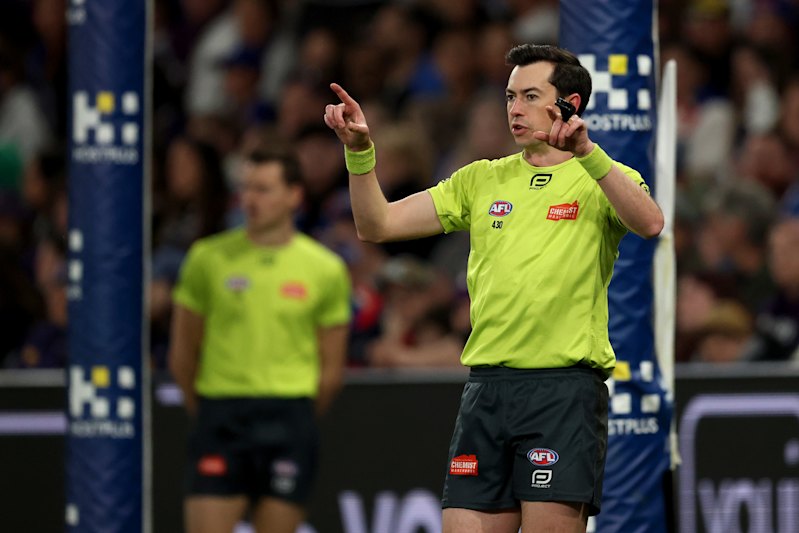
I, too, have been frustrated since the introduction of this technology. It came in soon after Tom Hawkins hit the post in the 2009 grand final, which we were broadcasting at Ten. It was ruled a goal, the deflection not picked up until later.
How would you like to be the umpire smashed on live TV and watched by hundreds of thousands of people last Friday night?
In my view, the simple reason umpires in that position don’t want to decide is because they’re scared of making a mistake.
The goal umpire knows if he or she gets it wrong, they could be talked about for days and face the prospect of being dropped. Get it wrong, get smashed for days in the press. Don’t decide, get smashed for days in the press. Great fun!
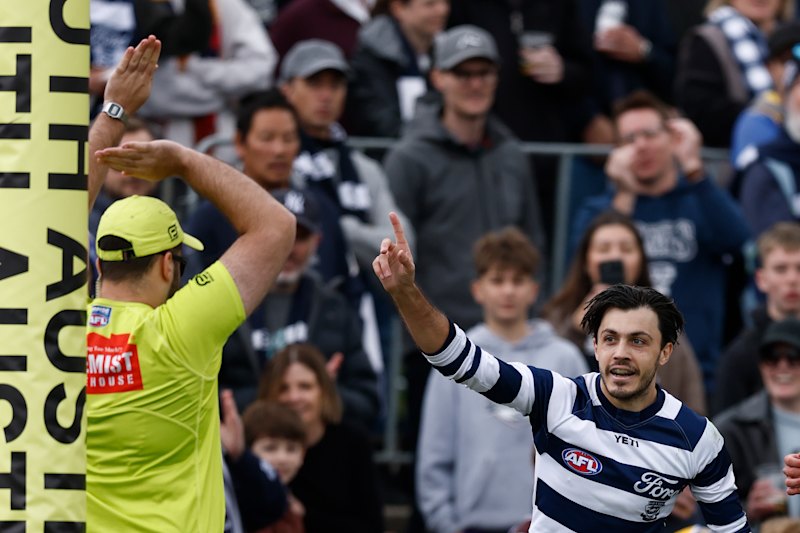
Video reviews have not made our game better. In my view, they have made it much worse. Here’s why.
Umpires are now judged against unrealistically high standards, which no one else in the game is subjected to. Split-second decisions are looked at in extreme slow motion, several times, and then a commentator says they got it wrong.
Umpires have microphones on them that allow commentators to hear their thinking on the run.
They are now regularly overruled and embarrassed in real time in front of large crowds and television audiences by video replays from the ARC.
We have diminished their authority and, with that, the respect they deserve for doing the hardest job in the game.
The AFL talks a good game about umpire respect, but introducing the ARC, while well-meaning, is having the opposite effect.
The technology is flawed because of the way it is used.
When filming anything, the position of the camera and the size of the lens is crucial. Here is an example.
Remember the TAC ads showing a little kid who looks as if they are running out in front of a fast-approaching truck? It is a scary scene. However, the filming of it is very safe.
The camera is a long way from where the kid runs across the road, and the truck is a long way away from the kid. However, when you zoom in on a very long lens, everything is compacted, and it looks close.
By zooming in, you lose all sense of how far away anything is. It flattens the entire scene. It shortens the depth of field; everything is out of perspective.
In AFL, every camera around the ground has a zoom lens.
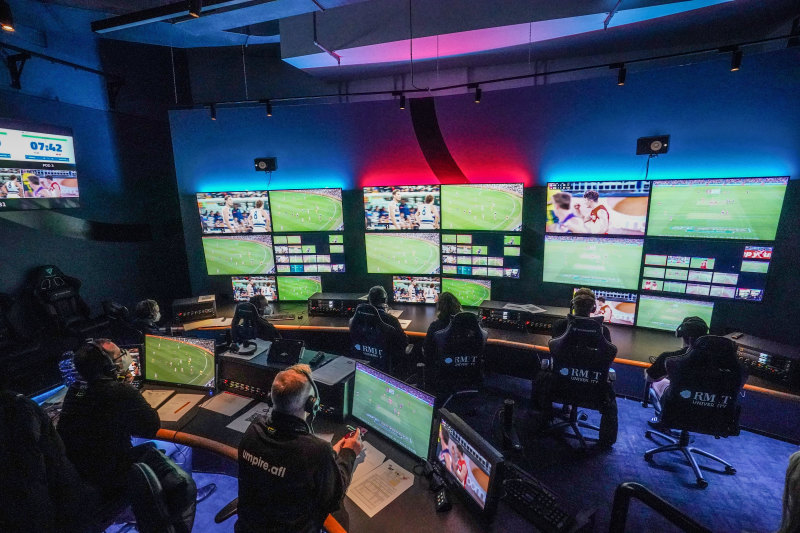
As Whateley pointed out, there is no way any image shown by a camera at the ground will accurately tell you which side of a post the ball has gone when it is above the post, no matter how many times you slow it down. In fact, it can be distorted, creating more confusion.
The late, great Ron Barassi suggested two goal umpires at each end, one on each post, back in the 1980s. We should have done it then, and we should do it now. That would give us the best chance of getting decisions right.
At Ten, we introduced cameras in goal posts for the 2011 grand final. Provided they are placed correctly, they can provide reliable information about whether a ball has crossed the line. This works well.
I have spent most of my life looking at AFL matches from multiple camera angles across nearly 30 years in TV. The only use of technology we should have is for balls crossing the line, and for balls significantly deflecting off the post. The rest is subject to so much possible distortion that we should not use it.

Balls that are out of bounds depend on which camera picks them up and on what angle. Given the ground is oval, you will never be on the line, looking straight down at it.
If it’s not clear enough for the umpire to see whether the ball was out on the full, throw it back in. Stopping the game for deflections off knees is wasting time and not in the spirit of the rule or why it was introduced, which was to keep the game moving.
For touched decisions, I refuse to accept we can judge something off a blurry picture of fingers allegedly bending backwards. Again, how much foreshortening has the lens given us? What is the camera angle? You can’t hear the touch, which must be a factor.
The premise for the technology is a desire to get everything right. But it’s a ridiculous, unachievable and foolish objective in a game with an oval ball, played on different-sized grounds, in all sorts of weather conditions, with some games under a roof.
Occasionally, things go against you through bad luck or a mistake. It builds resilience, understanding and compassion, something this game is a bit short on right now.
All we are doing is turning people away from umpiring, or damaging their confidence.
Our constant desire to criticise, highlight mistakes, castigate people and create drama is dangerous in a game that has this week seen a player go to hospital for mental health issues.
We are slowing up a fast-moving game, and it is annoying everyone.
On the weekend, the ARC dragged an Essendon player from the ground for a concussion test, which he’d passed with a club doctor at the ground. The AFL has since acknowledged the error, but it raises the question, how far will the ARC go?
Will the fifth umpire be AI?
David Barham is a former television executive for Seven and Ten, who was also president of Essendon Football Club.
Keep up to date with the best AFL coverage in the country. Sign up for the Real Footy newsletter.
Post a Comment for "Why video reviews are making our game worse"