
Australia's Teen Social Media Ban Begins
Australia has enacted a groundbreaking law, becoming the first nation to prohibit social media access for individuals under the age of 16. This significant legislative move, which took effect at midnight on Wednesday, targets ten of the largest social media platforms, including TikTok, Alphabet's YouTube, and Meta's Instagram and Facebook. Failure to comply with the new regulations could result in fines of up to A$49.5 million (approximately $33 million USD) for these companies. The law is being closely monitored by regulatory bodies around the globe, signaling a potential shift in how governments approach online child safety.
Prime Minister Anthony Albanese hailed the legislation as a "proud day" for Australian families, emphasizing that it demonstrates policymakers' ability to address online harms that have outpaced existing safeguards. He described the reform as a "profound reform which will continue to reverberate around the world," suggesting its far-reaching implications. Ahead of Australia's summer school break, Albanese encouraged young people to engage in alternative activities, such as sports, learning a musical instrument, or reading, as a way to adapt to life with reduced social media use.
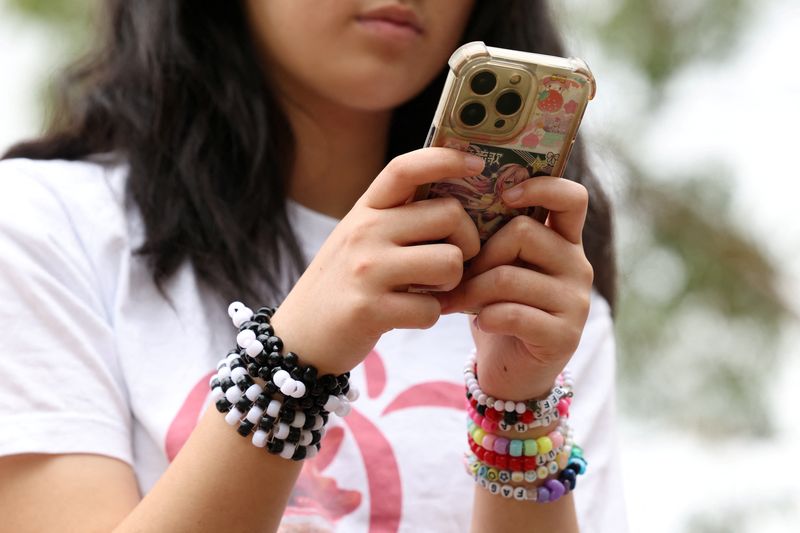
The impact of the ban on young users has been varied. While some teenagers expressed anxiety about adjusting to life without constant digital connectivity, others appeared more ambivalent. Fourteen-year-old Claire Ni described her feelings as "neutral," indicating a lack of strong emotional reaction to the change. Luna Dizon, aged 15, noted that while she still had access to her accounts, she anticipated a "culture shock" once the ban was fully implemented. She expressed confidence that young people would eventually adapt to the new reality.
The government has acknowledged that the ban may not be perfectly enforced. However, early reports indicate a significant impact. On TikTok alone, approximately 200,000 accounts were deactivated by Wednesday, with hundreds of thousands more expected to be blocked in the coming days. Many of the estimated one million children affected by the legislation took to social media to post farewell messages. One teen shared on TikTok, "No more social media ... no more contact with the rest of the world," while another used the hashtag "#seeyouwhenim16."
Global Implications of the Ban
The implementation of Australia's social media ban marks a critical moment in the ongoing global debate about protecting children online. It serves as a real-world test for governments worldwide that have grown frustrated with the perceived slow pace of social media companies in implementing measures to mitigate online harms.
The center-left government's proposal for this landmark law was driven by research highlighting the negative impacts of excessive social media use on the mental health of young teenagers. These harms include exposure to misinformation, cyberbullying, and the promotion of unhealthy body image ideals.
Countries such as Denmark, New Zealand, and Malaysia have expressed interest in studying or potentially adopting Australia's model. This positions Australia as a crucial test case for determining the extent to which governments can enforce age restrictions without infringing upon freedom of speech or hindering technological innovation.
Julie Inman Grant, the eSafety Commissioner overseeing the ban, noted that a significant number of American parents are advocating for similar measures in the United States. She stated that she frequently hears from parents and activists who wish for comparable protections and a government that prioritizes the safety of young people over the profits of technology companies.
Platform Compliance and Future Considerations
Elon Musk's X (formerly Twitter) was the last of the ten major platforms to implement measures to restrict access for underage users, confirming its compliance with the Australian law. In a statement on its website, X clarified that it was adhering to the law, stating, "It's not our choice - it's what the Australian law requires." The platform indicated that it automatically removes users who do not meet its age requirements.
The Australian government has indicated that the list of covered platforms will evolve as new services emerge and user demographics shift. Companies have informed the government that they will employ a combination of methods to verify age. These may include:
- Age Inference: Estimating a user's age based on their online behavior and activity patterns.
- Age Estimation: Utilizing selfie technology to gauge a user's age.
- Verification Checks: Potentially requiring uploaded identification documents or linking bank account details.
For social media companies, this regulatory shift signifies a new era of potential structural challenges. Studies indicate that user growth is plateauing and the time spent on these platforms is decreasing. While companies often claim to generate minimal advertising revenue from users under 16, they also acknowledge that these young users represent a vital pipeline for future engagement. Prior to the ban, a substantial 86% of Australians aged eight to 15 were active social media users, according to government figures.
Some young individuals have raised concerns that the social media ban could lead to increased isolation, particularly for those with niche interests or belonging to marginalized communities. Annie Wang, a 14-year-old, expressed apprehension that platforms are essential for these individuals to find their communities and support networks. She also pointed out that social media can serve as a vital outlet for venting feelings and seeking help, suggesting that a ban could negatively impact the mental health of some young people.
Post a Comment for "Australia's Teen Social Media Ban Begins"