
SA Watches: Australia's Under-16 Social Media Ban - Denmark Next?
Global Push to Shield Young Minds: Australia Leads, Denmark Eyes Social Media Curbs
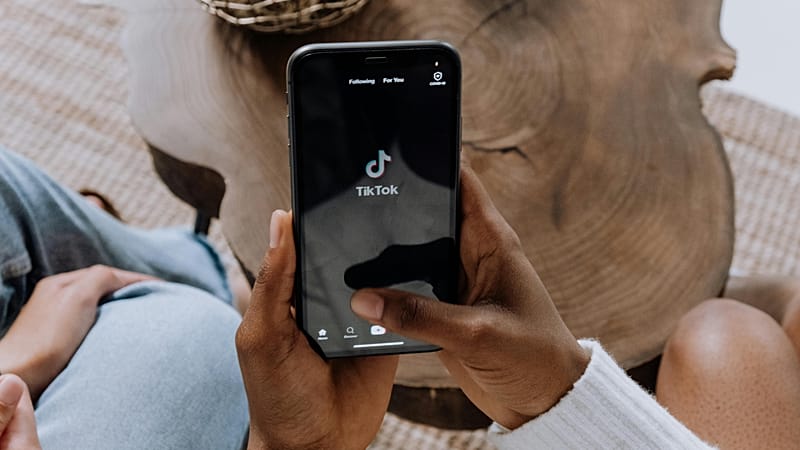 Australia is poised to implement a groundbreaking social media ban for individuals under the age of 16, signalling a significant global shift in how governments are addressing the pervasive influence of digital platforms on young people. The move, set to take effect from Wednesday, stems from growing concerns about children’s immersion in a digital landscape fraught with harmful content and relentless commercial pressures.
Following closely on Australia's heels, Denmark is also signalling its intent to regulate social media access for its youth. Last month, the Nordic nation announced a significant agreement that could lead to a law blocking social media for anyone under 15. This ambitious proposal, potentially enacted by mid-2026, aims to create a safer online environment for children. While the proposed legislation includes provisions allowing parents, after a specific assessment, to grant access to their children from the age of 13, it represents one of the most stringent measures yet from a European Union country to curb social media use among minors.
However, this proposed crackdown has ignited debate among Danish students and technology experts, raising critical questions about its feasibility and implications.
Voices of the Youth: Concerns and Perspectives
For Danish teenagers like Ronja Zander, 15, and Chloé Fjelstrup-Matthisen, 14, who are active participants in the digital realm, the proposed ban presents a complex dilemma.
"I have friends I've only met online, and if I were under 15, I wouldn't be able to stay in touch with them," Zander shared, highlighting the social connections forged through digital platforms.
Both students acknowledge the darker side of social media, including the prevalence of cyberbullying and disturbing graphic content. Fjelstrup-Matthisen recounted a harrowing experience: "Just a few months ago, a shooting happened in the US, and the video was all over social media. I saw it when I went to school." She expressed a strong sentiment that the onus of filtering harmful content should not rest on young users. "It's not the responsibility of young people to ensure there's no bad stuff online," she argued. "The government needs to regulate what we see."
Denmark's Proposed Enforcement Mechanism
Denmark's Minister for Digital Affairs, Caroline Stage, has indicated that the ban will not be an immediate imposition. A consultation period and several parliamentary readings will precede its potential enactment, likely in the latter half of next year. Stage underscored the urgency of the situation, stating, "For far too long, we've allowed social media platforms unrestricted access to our children's spaces. There have been no limits."
She drew a powerful analogy: "When we go out at night, there are bouncers checking ages to prevent underage entry into parties. In the digital world, we lack such gatekeepers, and we desperately need them."
The precise methods of enforcing such a ban remain under discussion. However, Denmark's digital affairs ministry has outlined plans for a "digital identity wallet," anticipated in spring 2026. This digital wallet is expected to incorporate an age verification feature to ensure compliance with social media age restrictions.
Stage noted that while many platforms already have age restrictions for younger users, a staggering 98% of Danish children under 13 possess at least one social media profile, with nearly half of those under 10 also active online.
Global Trend and Expert Caution
Denmark's proposed measures align with Australia's stringent new regulations. Under the Australian law, social media platforms such as Facebook, Instagram, Kick, Reddit, Snapchat, Threads, TikTok, X, and YouTube face substantial fines, potentially reaching up to 50 million Australian dollars (€28.2 million), if they fail to remove accounts belonging to Australian children under 16.
The trend extends beyond these two nations, with several other countries, including France, Greece, Romania, Malaysia, and New Zealand, actively considering the implementation of minimum age requirements for social media access.
Despite these growing restrictions, experts urge caution. Anne Mette Thorhauge, an associate professor at the University of Copenhagen, points to significant challenges in enforcement, alongside concerns about increased data collection and the potential infringement of children's rights.
"The most significant challenge, in my view, is the democratic rights of these children," Thorhauge stated. "It's disheartening that this isn't given more consideration." She added, "For many children today, social media serves the same purpose that broadcast media did for my generation – it's a vital channel for connecting with society."
Post a Comment for "SA Watches: Australia's Under-16 Social Media Ban - Denmark Next?"