
‘When somebody says no, sales start’, says Dietmar Siersdorfer
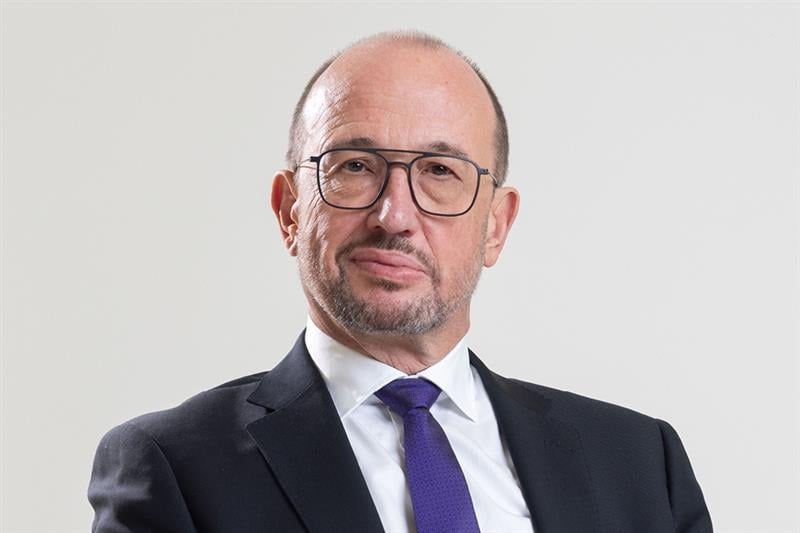
“Every large organisation has areas it tends to avoid based on past experience,” says Dietmar Siersdorfer in a recent conversation with Gulf Business editor Neesha Salian. “I see those moments not as barriers, but as invitations. My team knows my philosophy: ‘When somebody says no, sales start.’ That’s when you push hardest to find the right way in.”
That drive to identify opportunity where others see complexity has defined Siersdorfer’s 40-year career journey.
From a 21-year-old engineer wanting to discover the world to leading Siemens Energy through its most transformative years in the Middle East and Africa, Siersdorfer has built a career on the belief that “change is always good”.
The school of cultural adaptation
His leadership philosophy wasn’t forged in a boardroom, but in the field during his first international posting in Malaysia in the 1990s.
“I discovered different cultures and different ways of looking at things in Asia,” he reflects. “I learned that you need to adapt to where you are. While there is often a temptation to apply a singular global template to every market, I’ve always preferred to mix different views to bring things forward together.”
This approach found its most powerful application in the UAE, where he managed a team at Siemens Energy of more than 80 nationalities. “Countries from across the world were collaborating as one team,” he says.
“The key is fostering an environment where different perspectives are valued, because in business, you need multiple viewpoints to succeed.”
Dietmar Siersdorfer in conversation with Gulf Business editor Neesha SalianThe reality check on energy transition
Siersdorfer is a staunch advocate for a greener future, but he is also a realist. He notes that the global conversation has shifted from idealistic theory to operational necessity.
“Three to five years ago, the narrative was that the world would be entirely renewable, that we wouldn’t need gas turbines anymore,” he explains. “Today, the discussion is about how we actually get power to the people. Electricity growth is so demanding that everyone recognises you can’t do it with renewables alone.”
He points to the recent power failure in Spain (last year) as a cautionary tale for grid stability: “Spain has 75 per cent renewables plus nuclear. When a part of the grid shut down, the nuclear plants’ safety features forced them to shut down too.
“Within half an hour, the entire grid was down. This is why we need rotating equipment, gas turbines, that keep grids automatically stable. We may never see 100 per cent renewable grids for at least the next decade and a half.”
Strengthening localised leadership in Africa
Two years ago, Siersdorfer took on the challenge of Africa, where roughly 600–700 million people still live without electricity. His focus was on a strategic evolution of how the company serves the continent’s unique needs.
“We recognised that the scale of opportunity in Africa required a more localised approach,” he says. “To truly partner with these nations, we prioritised having our leadership teams based directly on the continent. I championed the idea that our people need to be on the ground, experiencing the challenges and successes first-hand.”
Around the same time, the Presidential Power Initiative (PPI) in Nigeria saw its first phase implemented. “In November 2025, I met the president in Nigeria. It was a different discussion, with implementation underway.”
Championing new opportunities in Saudi Arabia
Strategic growth often requires advocating for fresh investment even when internal consensus is cautious. In Saudi Arabia, Siersdorfer saw a pace of execution that demanded a new level of commitment.
“I told the company we needed to look at upgrading our facilities there. After several weeks and months, we got approvals to build and extend our factory capacity.” The substation factory, which opened recently, is already fully loaded for years solely from Saudi demand. “Things change, and I believe change is always good. Don’t take only your experience; take also the new things that you potentially can do.”
The innovation edge: AI at Jebel Ali
Innovation, for Siersdorfer, is about incremental efficiency with massive impact. He points to the company’s operations for the Dubai Electricity and Water Authority in Dubai’s Jebel Ali as a prime example of AI in action.
“We have gas turbines with intelligent AI controller systems. This AI optimises operations to reduce gas consumption while dramatically cutting emissions, not just CO2, but dangerous NOx emissions. AI can help, and we need to continue this avenue from an engineering perspective.”
The next chapter for Dietmar Siersdorfer: Beyond “retirement”
After 40 years, Siersdorfer is looking toward a new kind of “A game”.
“I don’t like the word ‘retirement’. I’m changing to a different avenue, but I’m not retiring from life or this field,” he reveals. “I’m founding a company and have already signed on clients. I want to select what I’m doing; I aim to do things which I couldn’t do in a corporate environment, like taking different avenues in AI.”
Siersdorfer’s final piece of advice for the next generation? Empowerment over micromanagement.
“I don’t need to be the front man running the show. What I provide is focus and direction. Empowering people to do their best is what matters."
Post a Comment for "‘When somebody says no, sales start’, says Dietmar Siersdorfer"