
An ancient Egyptian papyrus held by the British Museum has been cited as possible evidence supporting some of the Bible's most controversial claims about giants.
The 3,300-year-old document, known as Anastasi I, has been in the museum's collection since 1839 and has recently resurfaced on the Associates for Biblical Research, renewing interest in its possible links to biblical accounts.
The papyrus describes encounters with the Shosu people, said to stand 'four cubits or five cubits' tall, up to eight feet in height.
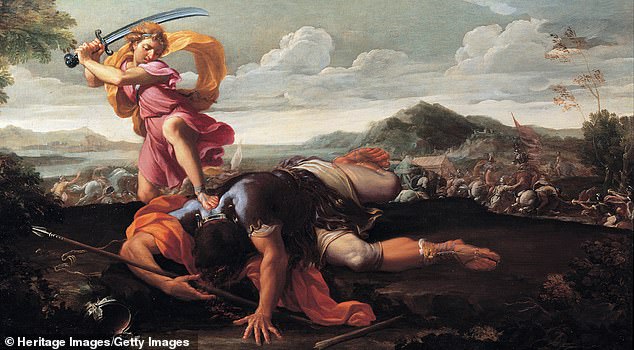
Supporters of the theory say the text provides rare non-biblical corroboration of Old Testament accounts of giants, which appear repeatedly beyond the familiar story of David and Goliath.
An Egyptian cubit measured roughly 20 inches, meaning the Shosu would have towered over most people of the era.
The papyrus takes the form of a letter written during a time of war, detailing hostile terrain and military challenges.
Critics argue the text is a satirical instructional letter from scribe Hori to another scribe, Amenemope, mocking his lack of knowledge of geography, military strategy, and logistics.
The late Bible scholar Dr Michael Heiser noted that heights of six feet eight inches or more would be comparable to tall individuals today, rather than evidence of supernatural beings.
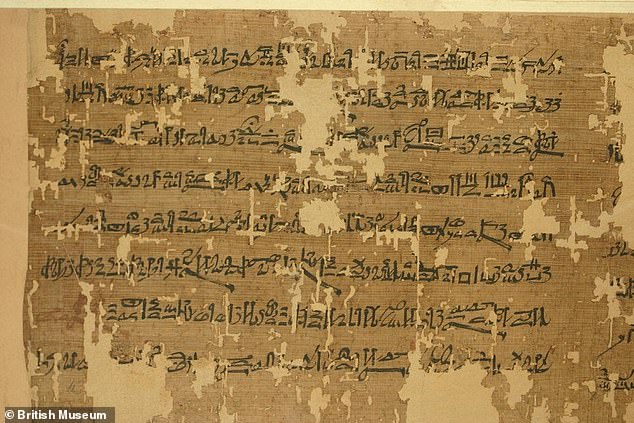
Scholars noted that the papyrus likely dates to the New Kingdom period of Egypt, roughly the 13th century BCE, providing historical context for these encounters.
Several passages describe entire races or tribes of exceptionally large people, some of whom were said to have terrified the Israelites.
In Genesis chapter 6, the Bible states, 'There were giants in the earth in those days; and also after that, when the sons of God came in unto the daughters of men, and they bare children to them, the same became mighty men which were of old, men of renown.'
The Hebrew word used in this passage, Nephilim, is commonly translated as either 'giants' or 'fallen ones.' According to biblical tradition, the Nephilim were wiped out in the Flood, though later texts describe their descendants appearing in future generations.
One such account appears in Numbers 13:33, which describes the Israelites encountering enormous people during their journey: 'And there we saw the giants, the sons of Anak, which come of the giants: and we were in our own sight as grasshoppers, and so we were in their sight.'
Advocates of the giant theory argue that the Anastasi I papyrus provides evidence outside the Bible that such people may have existed.
The papyrus was sold by merchant and antiquities trader Giovanni d'Anastasi and is written as a letter from one scribe to another.
In the text, the writer Hori warns of danger along a narrow mountain pass, stating: 'The narrow defile is infested with Shosu concealed beneath the bushes; some of them are of four cubits or of five cubits, from head to foot, fierce of face, their heart is not mild, and they hearken not to coaxing.
'Thou art alone, there is no helper with thee, no army behind thee.'
Associates for Biblical Research highlighted this passage as evidence that the Shosu, who may have been Canaanites, were of exceptional size.
'This would mean that the height of those encountered varied from at least six feet eight inches to eight feet six inches,' the researchers wrote.
'This is particularly interesting when you consider that a main point in the letter regards the need for accuracy.'
Other experts noted, however, that the Shosu (or Shasu) are widely understood by historians to have been a nomadic group in the Levant, suggesting the papyrus may reflect military observations rather than literal claims of supernatural giants.
Other ancient Egyptian texts have also been cited in support of biblical giant narratives.
The Egyptian Execration Texts, which list enemies on clay vessels, reference 'ly anaq,' or 'people of Anak,' a name linked to giants mentioned in the Bible.
Some Egyptologists caution that while these inscriptions demonstrate awareness of foreign tribes, their interpretations as literal giants remain speculative.
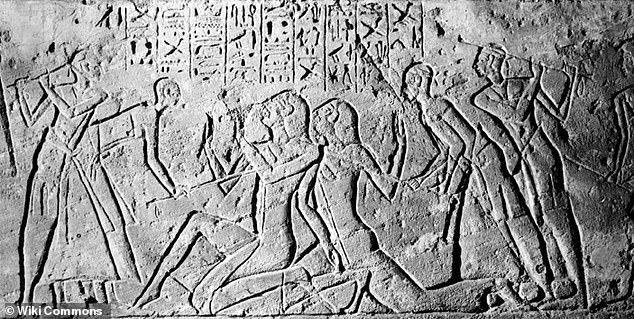
Additional claims point to Egyptian wall reliefs from the Battle of Kadesh, dated to around 1274 BCE, which depict captured Shasu spies who appear unusually large.
Another biblical figure often cited is Og, king of Bashan, described in Deuteronomy 3.
The Bible states:' For only Og king of Bashan remained of the remnant of the giants. Indeed his bedstead was an iron bedstead. (Is it not in Rabbah of the people of Ammon?) Nine cubits is its length and four cubits its width, according to the standard cubit.'
Some Bible archaeologists have argued that references to Og align with ancient Near Eastern texts.
A Canaanite tablet reads: 'May Rapiu, King of Eternity, drink wine … the god enthroned in Ashtarat, the god who rules in Edrei.'
The names correspond to the Rephaim and cities Og is said to have ruled.
Christopher Eames of the Armstrong Institute of Biblical Archaeology wrote: 'The combination of names Rapia, Ashtaroth and Edrei is a remarkable link to the biblical account of Og and the Rephaim.
'Could it even be a reference to this king himself? It has been suggested that 'Og' was simply a regnal title meaning 'man of valor,' paralleling other Ugaritic and Canaanite titles. The list of extra-biblical parallels could go on.'
Skeptics, including Dr Heiser, remain unconvinced. They note there is no archaeological evidence of giants, such as skeletal remains or oversized dwellings.
The British Museum has described the papyrus as a historical document illustrating military life and geographic awareness, without concluding supernatural beings. The existing evidence consists entirely of inscriptions and textual references, with no physical proof to support the existence of a race of giants.


No comments:
Post a Comment