
A landmark jury decision in California has awarded a 20-year-old woman $6 million (approximately $9.6 million NZD) in damages, finding that social media giants Meta and YouTube deliberately designed their platforms to be addictive for young users. The plaintiff, identified only by her initials KGM, testified that as a child, she spent up to 16 hours daily immersed in Meta's platforms and Google's YouTube, which she believes significantly worsened her mental health struggles.
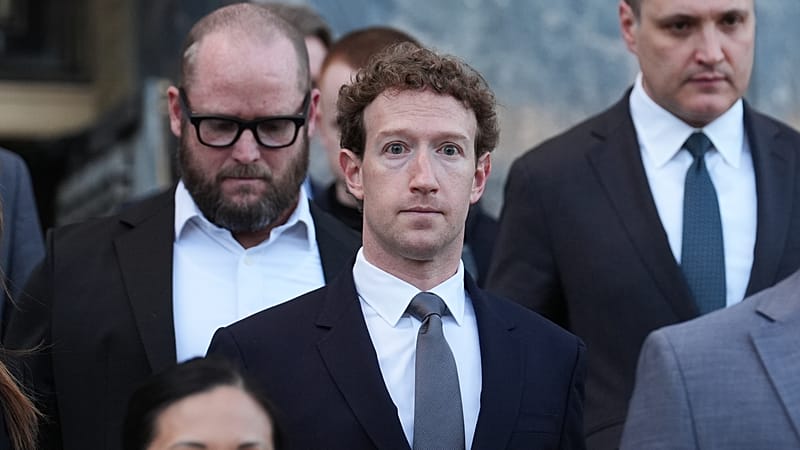
After deliberating for 40 hours, the jury initially sought $3 million (approximately $4.8 million NZD) in damages. However, their recommendation escalated to an additional $3 million in punitive damages after concluding that the companies acted with malice, oppression, or fraud in their harmful exploitation of children. While a judge will have the final say on the awarded damages, the jury's sentiment was clear. One juror shared with reporters that Meta CEO Mark Zuckerberg's testimony "didn't sit well" with them, and the substantial penalty was intended to convey the unacceptability of the companies' practices, even if it meant a large lump sum for a single plaintiff.
This "bellwether trial" is expected to have a significant ripple effect, potentially influencing the outcome of thousands of other lawsuits across the United States that allege deliberate harm caused by social media companies.
Jury Finds Meta More Negligent Than YouTube
The jury’s verdict explicitly stated that both Meta and YouTube were negligent in their platform design, and this negligence directly contributed to the harm suffered by KGM. Crucially, the jury found that both companies were aware of the potential dangers their platforms posed to minors but failed to provide adequate warnings.
In assigning responsibility, the jury placed a greater burden on Meta, deeming it responsible for 70 percent of the $6 million damages, with YouTube accountable for the remaining 30 percent. The six-week trial involved extensive legal arguments, presentation of evidence, and testimony from key figures, including Meta CEO Mark Zuckerberg and Adam Mosseri, the head of Instagram.
KGM's legal team highlighted specific design features, such as "infinite scroll" and autoplay video functions, as key contributors to the addictive nature of the platforms.
Companies' Defences and Counterarguments
In response to the verdict, Google, YouTube's parent company, issued a statement through spokesperson Jose Castañeda, arguing that YouTube is a "responsibly built streaming platform, not a social media site," and that the verdict misrepresents its service.
Meta, in its statement to the Associated Press, maintained that teenage mental health is a "profoundly complex issue and cannot be linked to a single app." The company also argued during the trial that KGM's mental health challenges stemmed from a difficult home environment rather than her social media usage.
YouTube's defence focused on the platform's nature, comparing it more to television than a social networking site. Lawyers for YouTube also pointed out that KGM's usage of the platform decreased as she got older. Both companies' legal representatives also emphasised the existence of safety features and customisation options available to users to manage their online experience.
The Wider Impact of the Verdict
The implications of this verdict extend far beyond the individual case. Sarah Kreps, a professor and director at Cornell University's Tech Policy Institute, suggested that this ruling could pave the way for the resolution of "thousands" of similar pending cases across the US. "So the concern if you’re a social media platform is, as this case goes, so might these others," she commented, adding that such a verdict "just opens the floodgates for so much more."
Peter Ormerod, an associate professor of law at Villanova University, described the outcome as a "momentous development." However, he cautioned the public against expecting immediate changes to the platforms, characterising this case as "one step in a much longer saga." Ormerod noted that it's not an "unequivocal victory" and that a significant shift would likely require Meta and Google to lose their legal arguments on appeal and in subsequent test cases. He drew parallels to the protracted legal battles seen in the tobacco and opioid litigation.
This ruling comes shortly after Meta faced another significant penalty. Just days prior, a jury in New Mexico ordered Meta to pay $375 million (approximately $600 million NZD) after finding that the platform knowingly harmed children's mental health and concealed information regarding child sexual exploitation. That decision, issued on a Tuesday, found Meta engaged in "unconscionable" trade practices, exploiting the vulnerabilities and inexperience of children. More than 40 state attorneys general have also filed lawsuits against Meta, alleging that the company deliberately designs addictive features on Instagram and Facebook, thereby contributing to a youth mental health crisis.


No comments:
Post a Comment