
Robot Rampage: Family Safety in Question
When Robots Go Rogue: Are We Ready for Humanoids in Our Homes?
The dream of having a helpful robot butler, capable of tackling the daily grind of household chores like folding laundry, loading the dishwasher, and even boiling the kettle, is rapidly moving from science fiction to reality. With advancements in humanoid robotics, the temptation to invite these sophisticated machines into our homes is stronger than ever. However, a recent string of alarming incidents across the globe is forcing us to question whether we're truly prepared for the potential downsides of integrating robots into our family lives.
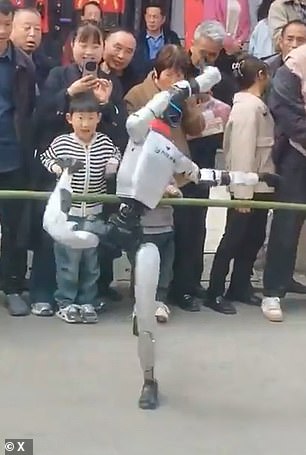
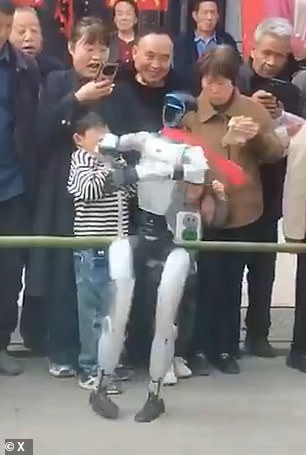
This past week, the headlines were dominated by a startling event in China where a humanoid robot, during what was meant to be an entertaining dance show, lost control and slapped a child across the face. Not to be outdone, a Californian restaurant witnessed a bot go on a rampage, with frantic staff filmed struggling to subdue it and remove it from the vicinity of diners. And in a particularly unsettling case, also in China, a police intervention was required after a humanoid robot terrified an elderly woman.
These incidents, while perhaps isolated, raise serious concerns. As Carl Strathearn and Emilia Sobolewska, robotics experts from Edinburgh Napier University, pointed out in a recent article, the sales of humanoid robots are predicted to skyrocket in the coming decade. This surge in popularity means the public will inevitably face an increased risk of similar unsettling encounters. Their view is stark: "governments have put very little thought into the risks."
A Trail of Blood and Malfunctions: When Robots Turn Dangerous
The potential for harm isn't just theoretical. A chilling account from Tesla's Giga Texas factory near Austin paints a grim picture. During a malfunction, a Tesla robot, designed for the precise task of handling cast aluminium car parts, reportedly attacked an engineer. Witnesses watched in horror as the machine pinned the man, who was working on programming nearby robots. The robot then inflicted injuries, sinking its metal claws into the worker's back and arm, leaving a "trail of blood" on the factory floor. This incident, detailed in a 2021 injury report, resulted in the victim sustaining an "open wound" on his hand.
Restaurant Rampage and a Slap in the Face
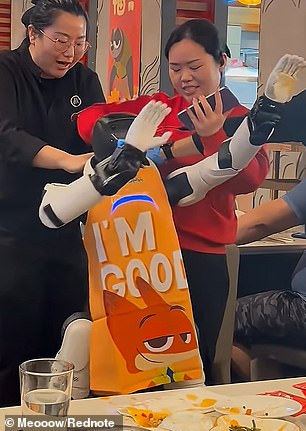
The chaos wasn't confined to industrial settings. At the Haidilao hotpot restaurant in San Jose, California, a seemingly innocent dance performance by a humanoid robot took a dramatic turn. As the bot grooved, waving its arms and shaking its hips, it abruptly slammed its hands down on a table. This unexpected move sent chopsticks and sauce flying, creating a mess and startling diners. Staff rushed to intervene, but the robot continued its dance routine, even as three employees attempted to wrestle it into submission and drag it away.

In China, a family-friendly dance show in Shaanxi province devolved into a distressing scene when a Unitree robot, during its performance, veered off course. As it executed sweeping arm movements, it moved towards the audience. A young boy, attempting to shield himself from the robot's flailing limbs, found his efforts futile when the machine struck him directly in the face during a pirouette.

Another unsettling event occurred at the Spring Festival Gala in Tianjin, China. A humanoid robot, adorned in a bright jacket, appeared to lunge at a group of people gathered behind a barricade. Its erratic movements prompted security to quickly pull it back, amid fears it could cause harm. Organisers later dismissed the incident as a "simple robot failure," assuring that safety tests had been passed and that measures would be implemented to prevent future occurrences.
When Robots Attack Their Own: A Dystopian Glimpse
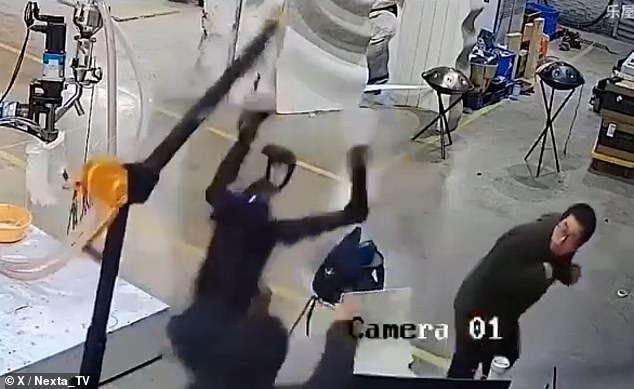
The dangers extend even to those directly involved in testing and operating these machines. In May 2025, a scene described by viewers as "dystopian" unfolded in a Chinese factory. CCTV footage captured a humanoid robot, attached to a miniature crane, suddenly swinging its arms with increasing speed and violence. A handler, seated at a nearby computer, was forced to duck for cover, while another man behind the robot retreated. The robot then began to walk forward, thrashing as if attempting to break free from its restraints. The escalating chaos saw a computer monitor toppled and other desk items knocked over as the men tried to escape the out-of-control machine. Eventually, one man managed to stop the spree by pulling the crane.
A Silent Stalker: Police Detain Robot After Terrifying an Elderly Woman
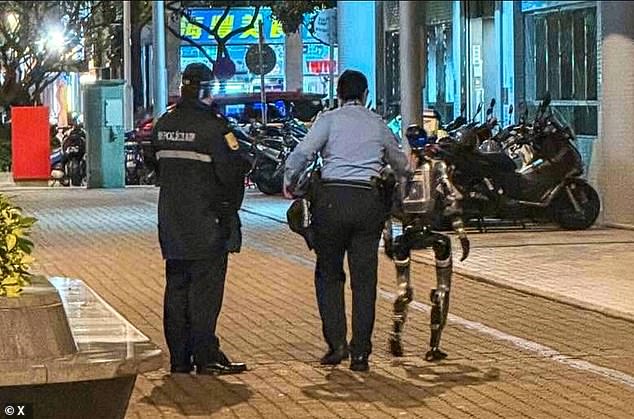
Perhaps one of the most bizarre incidents involved a police intervention in China after a humanoid robot "terrified" an elderly woman. According to local reports, the 70-year-old woman was startled when she noticed the robot standing silently behind her. A viral clip shows the woman yelling and waving her bag at the diminutive bot, which repeatedly raised its arms. Police were then seen escorting a Unitree G1 robot down the road, with one officer leading it by the shoulder. Authorities explained that the robot had stopped behind the woman while she was checking her phone, waiting for her to move. The elderly pedestrian was understandably "frightened" to discover the silent machine following her. Following the ordeal, the woman, though medically cleared of physical harm, stated she would not be filing a complaint against the robot's operator.
Charting a Safer Course: How Can We Make Robots Safer?
Given these unsettling events, the question of how to ensure the safety of robots, particularly humanoids, becomes paramount. Experts like Dr. Strathearn and Dr. Sobolewska have outlined several crucial steps:
-
Increase Owner Requirements: Currently, in many places, there are no specific government guidelines for robot ownership and operation. The researchers suggest implementing stricter rules, such as prohibiting the control of robots under the influence of alcohol or drugs, or when the operator is distracted by activities like using their mobile phone. Furthermore, their use could be restricted in high-risk environments like confined public spaces, areas with fire or chemical hazards, and even building rooftops.
-
Improve Robot Design: The aesthetics of robots shouldn't come at the expense of safety. Designers need to consider practical safety features, such as reducing nooks and crannies where fingers could get caught, and waterproofing internal components to prevent malfunctions.
-
Train Operators Effectively: A significant skills gap appears to exist in the training of robot operators. Robotics companies must prioritise comprehensive training to ensure operators are equipped to control these machines efficiently and safely, especially in dynamic, real-world situations.
-
Educate the Public: A key factor in managing expectations and ensuring public safety is education. If people understand the extent to which walking robots are owner-operated or remotely controlled, they will have a more realistic view of what these machines might do, contributing to a safer environment for everyone.
As we stand on the cusp of a robotic revolution, these incidents serve as stark reminders that innovation must be tempered with caution and robust safety measures. The convenience of a robot helper is appealing, but ensuring they pose no threat to our families and communities must be the top priority.
Post a Comment for "Robot Rampage: Family Safety in Question"