
Hormuz Attack: Captain's Plea to Iran to "Turn Back"
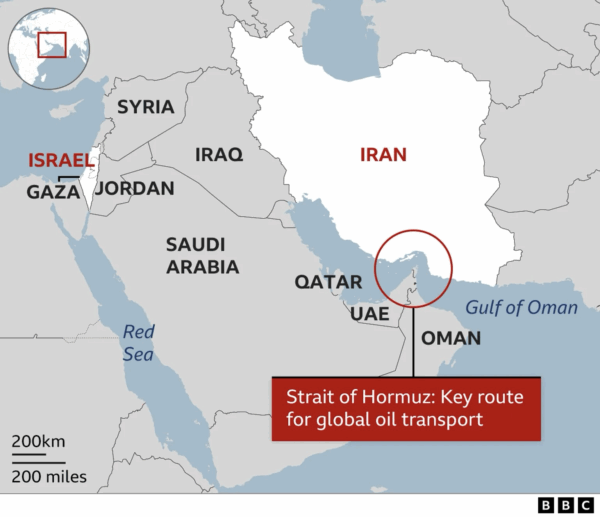
Tense Standoff in Strait of Hormuz: Iranian Navy Fires on Indian Tankers
A harrowing audio recording has surfaced, capturing the desperate pleas of a ship captain to the Iranian navy to cease firing in the strategically vital Strait of Hormuz. The captain of the oil tanker, the Sanmar Herald, is heard frantically pleading, "You gave me clearance to go," in the aftermath of Iran's initial announcement that the waterway had been fully reopened. This incident, which involved shots fired at two Indian vessels, has led Iran to declare it has re-imposed "strict control" over the Strait, citing the ongoing US blockade.
The distress call, directed at the "Sepah navy" – the official designation for the Islamic Revolutionary Guard Corps (IRGC) Navy – paints a vivid picture of the escalating tensions. The captain's voice, laced with alarm, clearly identifies his vessel: "This is Motor Vessel Sanmar Herald. You gave me clearance to go! My name is second on your list." The pleas continue, "You gave me clearance to go! You are firing now. Let me turn back!"
Marine tracking data corroborates the captain's account, showing the Sanmar Herald had made significant progress through the Strait before abruptly reversing course. In a separate, disturbing video, another ship captain is reportedly being ordered to turn back by the Iranian navy, with the reason cited being a lack of permission. A disembodied voice states, "There is no permission for you to cross the Strait. You are ordered to go back to your departure immediately." The captain, seemingly with no other recourse, agrees to comply.
Iranian state media has confirmed that the regime fired near two Indian ships in an effort to compel them to retreat. Fortunately, both tankers and their crews are understood to have escaped unharmed. However, the Indian government has formally expressed its "deep concerns" regarding the dangerous episode.
The attempted transit by these Indian vessels occurred shortly after Iran's Foreign Minister had indicated on Friday that the Strait would be fully reopened. This declaration, however, proved short-lived. By Saturday, the situation had drastically changed, with the IRGC issuing a stern warning that any vessel attempting to cross would face an attack. This abrupt reversal was attributed to the continuing US blockade of the Strait.
The IRGC issued a statement detailing their aggressive stance: "Approaching the Strait of Hormuz will be considered co-operation with the enemy, and the offending vessel will be targeted." They further mandated that "no vessel is to move from its anchorage in the Persian Gulf or the Sea of Oman." This stringent directive underscores the volatile nature of the region and the Iranian regime's determination to control maritime traffic.
The US blockade, as referenced by Iran, is part of a broader strategy articulated by President Trump on Friday, who stated that the naval blockade of Iranian ports would persist until a peace deal is reached between the two nations. Iran views this blockade as a violation of a two-week ceasefire, which is slated to expire on April 22.
Navigating Diplomatic Waters Amidst Conflict
Despite the escalating military posturing, diplomatic efforts to de-escalate the conflict and bring an end to the ongoing hostilities between Washington and Tehran are reportedly continuing. Iran's chief negotiator has indicated that recent discussions with the US have yielded some progress, though significant differences persist on critical issues, including nuclear matters and the status of the Strait of Hormuz.
President Trump has described his conversations with Tehran as "very good," but simultaneously issued a warning that the United States would not be "blackmailed" concerning the vital shipping channel. Earlier this month, peace talks, which saw Vice-President JD Vance travel to Pakistan, concluded without a definitive agreement, yet there remains optimism for a second round of negotiations.
Iran's earlier announcement regarding the reopening of the Strait of Hormuz coincided with a fragile 10-day truce between Israel and the Iranian-backed Hezbollah militant group in Lebanon. The conflict has resulted in a devastating loss of life, with at least 3,000 people killed in Iran, nearly 2,300 in Lebanon, 23 in Israel, and over a dozen in various Gulf Arab states. Tragically, thirteen US service members have also lost their lives in the broader regional instability.
US Military Prepares for Expanded Naval Operations
Adding another layer of complexity to the situation, reports have emerged suggesting that the US military is making preparations to board Iran-linked vessels in the coming days. This potential move signals an expansion of the naval conflict, which has thus far been largely concentrated within the Strait of Hormuz.
General Dan Caine, the Chairman of the Joint Chiefs of Staff, reportedly announced this escalation on Thursday, according to US officials. General Caine stated that the US "will actively pursue any Iranian-flagged vessel or any vessel attempting to provide material support to Iran."
His directive specifically includes the targeting of "dark fleet vessels carrying Iranian oil." He elaborated on the nature of these vessels, explaining that "dark fleet vessels are those illicit or illegal ships evading international regulations, sanctions or insurance requirements." This announcement indicates a robust effort by the US to disrupt Iran's oil trade and its broader support networks.
Post a Comment for "Hormuz Attack: Captain's Plea to Iran to "Turn Back""