
What are the key warning signs of conflict escalation?
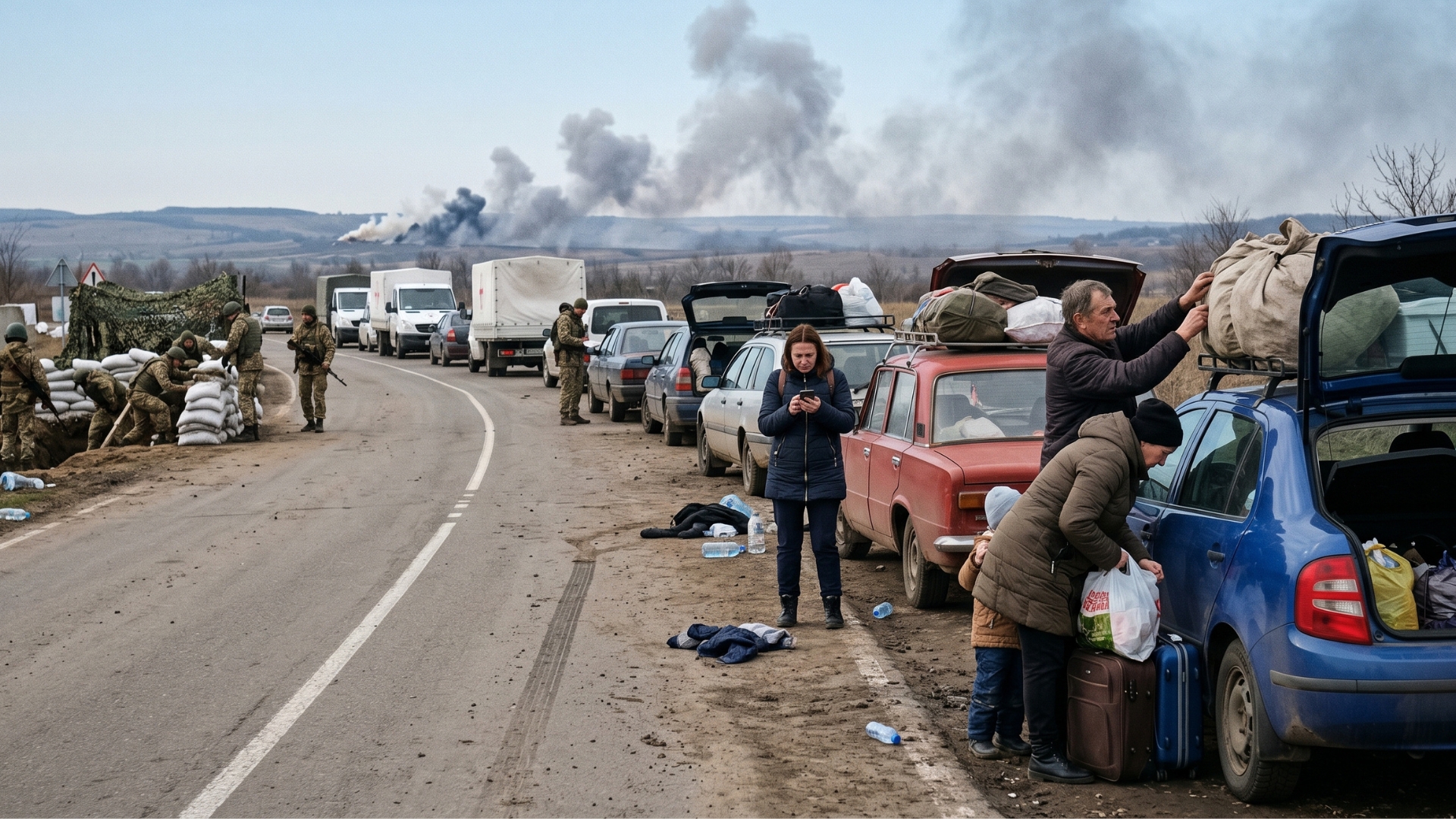
One of the clearest warning signs of conflict escalation is a sudden change in tempo. That can mean more frequent strikes, a wider geographic spread of attacks, rising civilian casualties, or the entry of new armed actors. ACLED’s conflict tracking treats deadliness, danger to civilians, geographic diffusion, and the number of armed groups as core indicators of worsening conflict intensity, which makes them a useful starting point for understanding escalation risk.
For civilians, escalation is often visible before diplomats call it that. More displacement, new evacuation orders, damaged roads, shrinking humanitarian access, and rising fear around ordinary movement are all practical signs that a conflict is becoming harder to contain. Recent U.N. humanitarian updates from Lebanon, for example, linked rising transport risk, road damage, access problems, and displacement volatility directly to escalating hostilities.
A Surge in Strikes and Casualties Is the Most Obvious Warning
The first warning sign is a clear increase in attacks. If airstrikes, shelling, drone attacks, raids, or cross-border fire become more frequent or more intense, the conflict is usually entering a new phase. The ICRC has repeatedly warned that an intensification of hostilities raises the risk of catastrophic civilian consequences, while ACLED’s framework highlights rising deadliness as one of the strongest indicators that conflict severity is worsening.
What matters is not only the number of attacks, but also their pattern. A conflict that was previously sporadic may become sustained. Front lines that were relatively stable may begin to shift faster. Retaliatory strikes may also come closer together, reducing the time available for diplomacy or de-escalation. Those changes often signal that commanders and political leaders are accepting greater risk.
Geographic Spread Means the War Is Getting Harder to Contain
Another major warning sign is geographic diffusion. When violence spreads to new towns, border zones, major cities, or strategic infrastructure corridors, it usually means the conflict is no longer staying inside its earlier limits. ACLED explicitly uses geographic diffusion as a core measure of conflict escalation, because wars become more dangerous when new fronts keep opening.
This matters because wider geography usually means wider stakes. New areas can pull in additional armed groups, neighboring states, or outside powers. A conflict that spills across borders or toward major transport and civilian centers is also harder to stabilize, since each newly affected area adds fresh military and political pressures.
More Armed Groups Usually Means More Escalation Paths
A conflict also becomes more volatile when more actors enter it. New militias, foreign-backed groups, allied factions, or outside militaries can multiply the number of decision-makers and reduce central control. ACLED includes the number of armed groups in its conflict index for exactly this reason: more actors usually mean more fragmented command, more retaliation risks, and more opportunities for miscalculation.
This is often the point where a local war starts becoming regionalized. Once outside players begin joining directly or through proxies, escalation may no longer depend only on the original belligerents. Instead, the conflict starts running through overlapping alliances, rival deterrence signals, and chain reactions that are harder to stop.
Displacement and Evacuation Orders Often Signal a More Dangerous Phase
Mass displacement is not just a humanitarian consequence. It is also a warning sign. When civilians begin fleeing in larger numbers, when authorities issue evacuation orders, or when aid agencies warn that people are being forced into smaller and less safe areas, it often means a broader offensive or intensified bombardment is expected. The ICRC has explicitly tied further displacement to intensifying hostilities, and U.N. experts recently described rapid displacement in Lebanon as part of a fast-escalating protection crisis.
Displacement matters strategically because it shows the conflict is overwhelming ordinary civilian coping mechanisms. It can also destabilize neighboring districts or states, create pressure on aid systems, and make armed escalation politically harder to reverse once populations are already on the move.
Civilian Infrastructure Damage Is a Serious Escalation Indicator
When roads, hospitals, transport routes, water systems, or other essential civilian infrastructure come under growing pressure, that is another strong warning sign. It usually means the conflict is expanding beyond tactical battlefield engagements and into the systems that keep society functioning. The ICRC and U.N. humanitarian reporting have both warned that strain on infrastructure and shrinking humanitarian space are hallmarks of worsening conflict environments.
This kind of damage also has a compounding effect. Once roads are cut, logistics become harder. Once hospitals are strained, survival rates worsen. Once civilian transport becomes riskier, displacement and panic rise faster. These are signs not just of violence, but of a conflict becoming structurally more destructive.
Public Threats, Retaliatory Language, and Harder Red Lines Matter
Escalation is also visible in rhetoric. When leaders publicly threaten wider action, declare new red lines, warn civilians to evacuate, or promise retaliation after every strike, they narrow their own room to compromise. The ICRC’s recent statements on the Middle East repeatedly warned that further escalation risked a broader regional crisis, underscoring how quickly rhetoric and military signaling can reinforce one another.
Rhetoric alone does not guarantee war, but it is a serious signal when it is paired with mobilization, broader strike patterns, and deteriorating humanitarian conditions. At that point, words are often no longer just messaging. They become part of the operational environment.
Shrinking Humanitarian Access Is a Late but Crucial Warning
One of the most alarming warning signs is when humanitarian access begins to collapse. If aid convoys face new risks, roads become unusable, safe corridors disappear, or relief agencies warn they cannot reliably reach affected communities, it often means the conflict is crossing into a more severe stage. U.N. reporting on Lebanon specifically linked worsening access constraints to escalating hostilities and rising civilian danger.
This matters because humanitarian access is often one of the last buffers between a violent conflict and a full civilian catastrophe. When that buffer weakens, escalation is no longer just a military problem. It becomes a life-support problem for entire communities.
What Comes Next
The key warning signs of conflict escalation are usually visible in combination, not isolation: more attacks, more civilians at risk, wider geography, more armed groups, faster displacement, infrastructure strain, harder rhetoric, and shrinking humanitarian access. ACLED’s framework and recent ICRC and U.N. reporting all point in the same direction: when those indicators begin rising together, the conflict is moving toward a more dangerous and harder-to-contain phase.
The practical lesson is simple. Escalation is easiest to stop before it becomes normalized. Once violence spreads, new actors enter, and civilians begin losing the systems that keep them alive, the warning signs are no longer just warnings. They are evidence that the conflict has already started changing shape.
Post a Comment for "What are the key warning signs of conflict escalation?"