
What technologies are changing the nature of modern warfare?
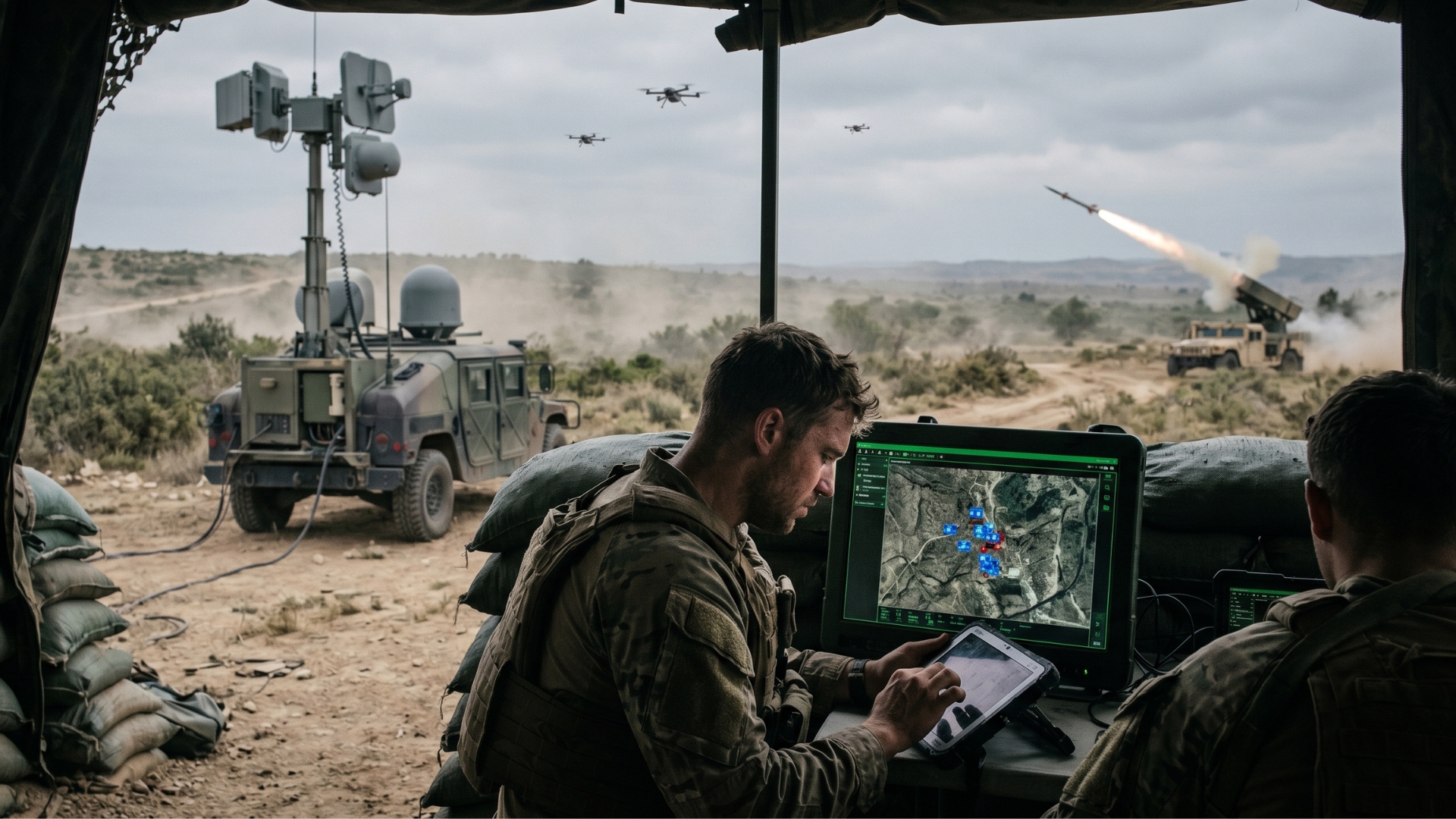
The nature of war is changing because militaries no longer rely only on tanks, artillery, aircraft, and troop numbers to gain an edge. They increasingly depend on cheap drones, rapid data processing, resilient communications, spectrum dominance, and space-enabled targeting to see first, strike faster, and survive in contested environments. Recent U.N., NATO-linked, and defense reporting all point to the same conclusion: modern warfare is becoming a struggle over information, autonomy, and the ability to disrupt the enemy’s systems at scale.
For soldiers and civilians alike, this shift has practical consequences. Cheaper and more numerous systems can make front lines more transparent, cities more vulnerable to persistent surveillance and attack, and ordinary movement more dangerous. At the same time, technologies like ground robots, distributed communications, and better counter-drone defenses can reduce exposure for troops and sometimes limit the need to send people into the most lethal spaces.
Drones Have Changed the Cost and Scale of Combat
The clearest transformation is the spread of unmanned systems, especially small drones and loitering munitions. Lessons from Ukraine show that large numbers of cheap drones have made older, centralized air-defense approaches less sufficient on their own and pushed militaries toward flexible, locally integrated defenses. The U.S. Defense Department’s 2024 counter-unmanned systems strategy reflects that shift, describing drone threats as urgent enough to drive new force-protection efforts and Replicator 2, a program focused on defending against small aerial systems.
What drones change most is the economics of war. A low-cost platform can find, track, and sometimes destroy targets that once required far more expensive aircraft or missiles. That has made persistence, attrition, and adaptation more important than owning a few exquisite systems.
Artificial Intelligence Is Speeding Up Battlefield Decisions
Artificial intelligence is increasingly valuable not because fully autonomous warfare has suddenly arrived everywhere, but because AI helps militaries process images, support targeting, improve geospatial intelligence, assist command and control, and manage swarms or fleets of unmanned systems. UNIDIR says AI is rapidly transforming the military domain, while the European Parliament’s research service describes the Ukraine war as an “AI war lab” in which both sides have actively developed and deployed AI for military purposes.
The key change is speed. AI can compress the time between detection and action, especially when paired with drones, sensors, and digital command systems. But it also raises risks, including overreliance on automated outputs, faster escalation, and harder questions about human control in the use of force.
Electronic Warfare Has Become a Front-Line Necessity
Electronic warfare may be less visible than drones, but it is now central to survival on the battlefield. The UK Parliament’s 2025 briefing says EW is an essential element of modern military operations and cites reporting that Russian EW capabilities are responsible for 75% of Ukrainian drone losses while also reducing artillery precision. The same briefing explains that military operations depend heavily on the electromagnetic spectrum for navigation, communication, targeting, and situational awareness.
That is a major shift in how war works. Winning now often means jamming enemy drones, spoofing signals, protecting your own communications, and fighting for access to the spectrum. In many cases, the force that can better degrade the enemy’s systems without losing its own will have the battlefield advantage even before traditional firepower is applied.
Space and Commercial Satellites Are Now Part of Everyday Warfighting
Space is no longer just strategic backdrop. The U.S. Space Force’s April 2025 warfighting framework says space superiority is essential to joint-force success and describes counterspace operations across orbital, electromagnetic, and cyberspace warfare. RAND’s recent work on Ukraine says commercial imagery and declassified intelligence improved warning and situational awareness, while commercial space services have made future conflicts more visible and more dependent on space-enabled support.
This matters because commercial satellites now support navigation, communications, intelligence, and targeting in ways once reserved mainly for major powers. That makes battlefields more transparent, but also creates new vulnerabilities if GPS, satellite links, or orbital systems are disrupted.
Counter-Drone Systems and Defensive Adaptation Are Rising Just as Fast
As drones spread, so do the technologies meant to stop them. The Pentagon’s counter-unmanned strategy and battlefield reporting from Ukraine both show that militaries are moving toward layered defenses that combine active intercepts, passive protection, local adaptation, and more economically sustainable methods of defense. In other words, the future of war is not just more drones. It is also a constant contest between cheap offensive systems and cheaper or smarter ways to neutralize them.
That cost contest is important because it can determine whether a force can absorb prolonged attacks without exhausting its budget or munitions. The side that solves the cost problem often gains staying power.
Robotics and Multi-Domain Integration Are Expanding the Battlefield
Modern warfare is also changing through wider use of ground and surface robots and through tighter integration across land, air, sea, cyber, and space. Reporting on battlefield trends in Ukraine shows growing use of uncrewed systems beyond the air domain, while UNIDIR highlights AI’s role across command, control, and military operations more broadly. This is pushing warfare toward human-machine teams rather than purely human formations.
The broader effect is that war is becoming more distributed. Command posts, sensors, shooters, satellites, and software increasingly operate as one network. That does not eliminate traditional weapons. It changes how they are found, guided, protected, and used.
What Comes Next
The technologies changing warfare most are the ones that combine scale, affordability, and network effect: drones, AI, electronic warfare, space-based services, cyber-enabled command systems, robotics, and counter-drone defenses. Together, they are making combat more transparent, more contested, and more dependent on who can adapt fastest under pressure. The lesson from current military analysis is that modern war is no longer only a contest of firepower. It is a contest of sensing, linking, disrupting, and learning faster than the other side.
Post a Comment for "What technologies are changing the nature of modern warfare?"