
2026 Indian Monsoon Set to Begin in Two Weeks
Early Onset of the 2026 Southwest Monsoon
The Indian Southwest Monsoon is expected to reach India within the next two weeks, but a developing El Niño could signal a drier than normal monsoon season. The Indian Meteorological Department (IMD) has been tracking the advance and retreat of the monsoon over the country. This weekend, the IMD issued its first progression of the northern limits of the southwest monsoon, which reached the Andaman Sea and Andaman & Nicobar Islands on 16 May 2026, just over the southern reaches of the Bay of Bengal.
According to the IMD, the monsoon onset is likely to reach Kerala on 26 May 2026, with a model error of ±4 days. This date is five days ahead of the normal onset date of 1 June.
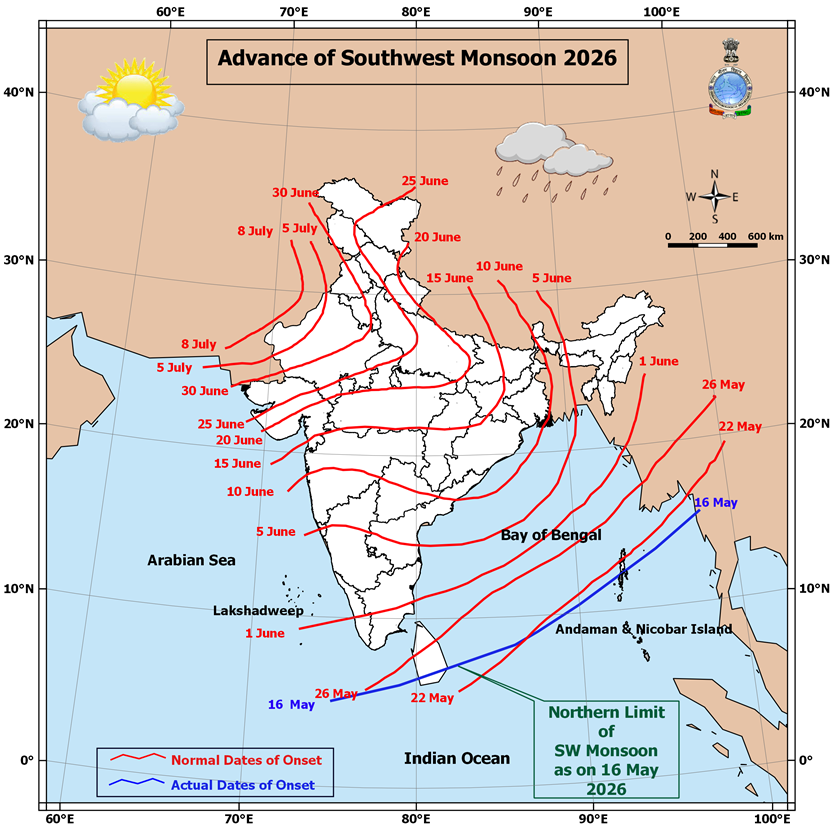
Image: Advance of the 2026 southwest monsoon onset (blue) and the normal dates of onset (red). Source: IMD
To make this early forecast onset date, the IMD monitors several key monsoon predictors:
- Minimum temperatures over Northwest India
- Pre-monsoon rainfall peak over South Peninsula
- Cloudiness over the South China Sea and northeast Indian Ocean
- Trade wind strength over the southeast and northeast Indian Ocean
The southwest monsoon is characterised by a surge of westerly winds extending 5-7 kilometres above sea level. These winds are laden with moisture from the Arabian Sea, bringing periods of heavy rainfall and squally conditions across much of southern India.
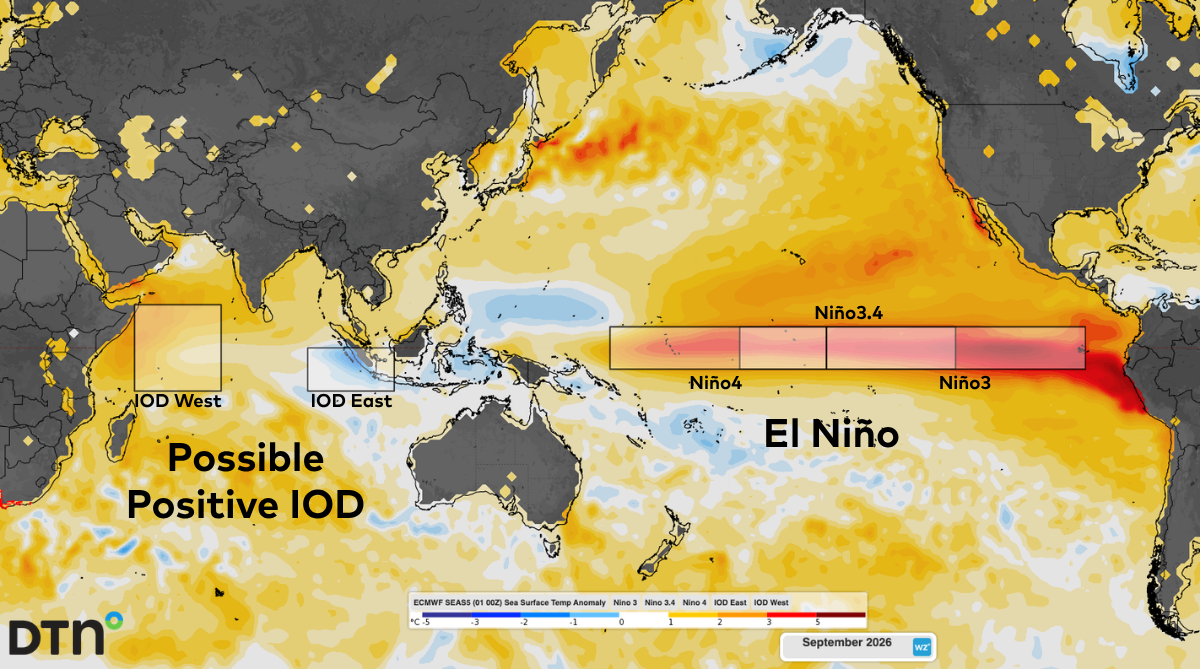
Image: Moisture-laden monsoon clouds can be seen on satellite imagery moving from west to east over the southern Bay of Bengal on Saturday, 16 May 2026. Source: [Source]
The southwest monsoon usually takes 4-6 weeks to progress into the far north of the country. The Western Ghats, an insurmountable mountain range along the west of India, splits the monsoon into the Arabian Sea and Bay of Bengal branches.
Impact of Climate Drivers on the 2026 Indian Summer Monsoon
The IMD predicts below normal (95-90% of the Long Period Average (LPA)) rainfall across India during the 2026 southwest monsoon season. The dominant factor driving the below average rainfall expected during the coming monsoon season is the predicted strong El Niño developing in the equatorial Pacific Ocean. While occurring in a different oceanic basin, El Niño events shift the Walker Circulation pressure pattern, leading to higher than normal pressure over the eastern Indian Ocean and weaker monsoonal winds. As a result, El Niño events are typically associated with reduced monsoonal rainfall and increased potential for drought, especially over northwestern and southeastern India.
More locally, the Indian Ocean Dipole (IOD) could move towards the positive phase late in the monsoon season. Positive IOD events are characterised by warmer than average waters in the IOD West region, near the Horn of Africa. Warmer waters to the southwest of India increase the moisture content of monsoonal winds and can lead to increased rainfall during the rainy season. If this positive IOD event can become established, it will most likely peak after the end of the southwest Indian monsoon season, which runs till about September, but could contribute to increased monsoonal rainfall late in the season.
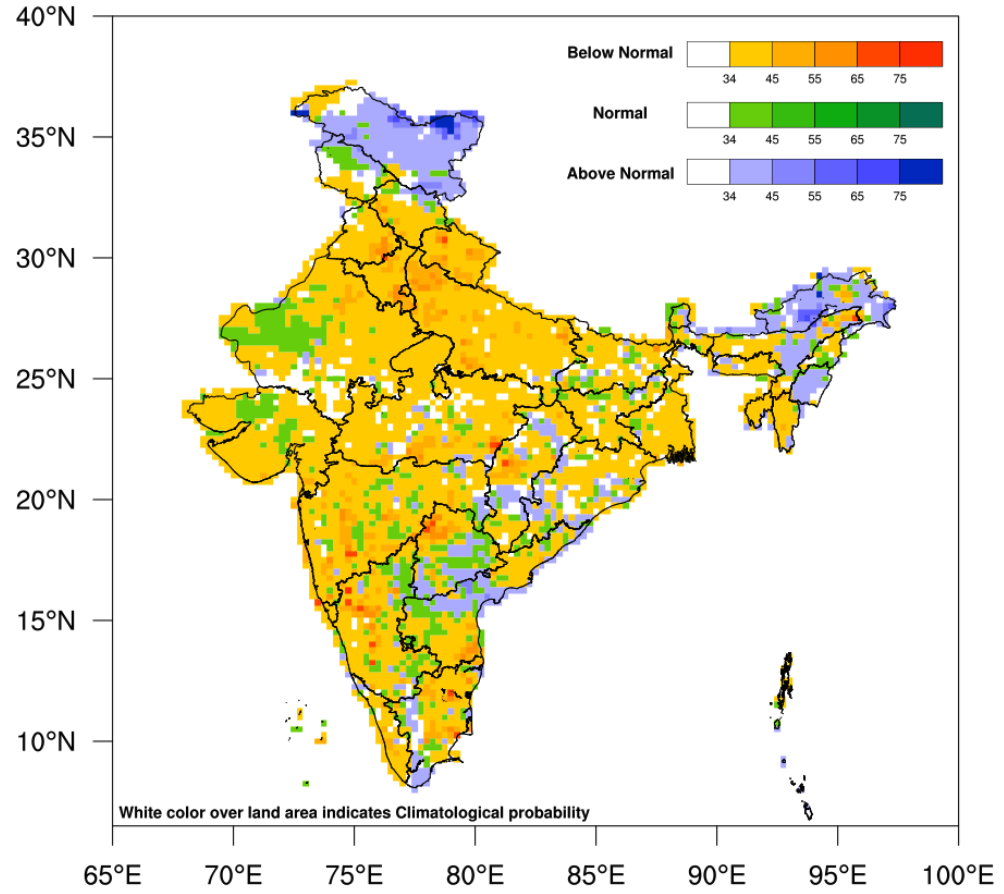
Image: Sea Surface Temperature Anomaly forecasts across the Indian and Pacific oceans during September 2026, showing the strong El Niño and possible positive IOD events. Source: DTN
Another factor that seasonal forecasters need to consider ahead of the monsoon season is the northern hemisphere snow cover, especially around Siberia. The start of 2026 saw slightly below average snow cover extent, which can increase land warming during the springtime (reflecting less solar energy). This allows warm air to rise to the north of India, decreasing the pressure and drawing stronger monsoonal winds early in the season. As a result, an earlier monsoon onset over the sub-continent is possible in the coming weeks.
Under the influence of these climate drivers, along with seasonal computer modelling, the IMD predicts India will experience 92% of the Long Period Average (LPA) monsoon season (June to September) rainfall, with a model error of ±5%. While below average rainfall is forecast across broad parts of the country, parts of northeastern, northwestern and South Peninsular India could see average to above average rainfall, as seen in the seasonal model output below.
Effects of Monsoonal Rainfall on India
The 2025 southwest monsoon season featured heavy rain periods. The cumulative rainfall across the country throughout the season was 937.2mm, 107.9% of the long period average (LPA) of 868.6mm.
Excesses or deficiencies in monsoonal rainfall can lead to floods or droughts, impacting India’s food security, livelihood and overall economy. Replenishments of water resources like rivers, lakes and groundwater vital for irrigation and drinking water supplies also impact hydropower energy generation.
Post a Comment for "2026 Indian Monsoon Set to Begin in Two Weeks"