
5 Must-Have Storage Devices of the Past
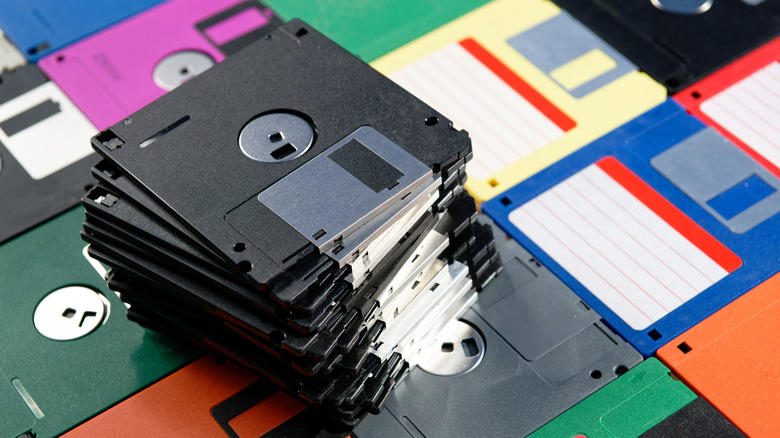
Perhaps the most essential foundations of the digital era are the skills to store, transmit, and receive information. Being able to record a piece of data and share it with someone across the globe might appear ordinary today, but this capability was a revolutionary breakthrough when it was first developed. The specific methods we use to store data have undergone numerous transformations and advancements over time, mainly through storage devices such as punch cards, floppy disks, and CDs.
Although we developed the idea of storing data many decades ago, there has been continuous effort to progressively enhance the quantity of data that can be stored, the speed and convenience of its retrieval, and the security of its storage. Every phase of computer advancement has introduced its primary data storage method, eventually making the previous one outdated despitehow crucial these vintage computer peripherals used to be.
Read more: 12 Classic Computer Peripherals That Were Once Indispensable
Punch cards
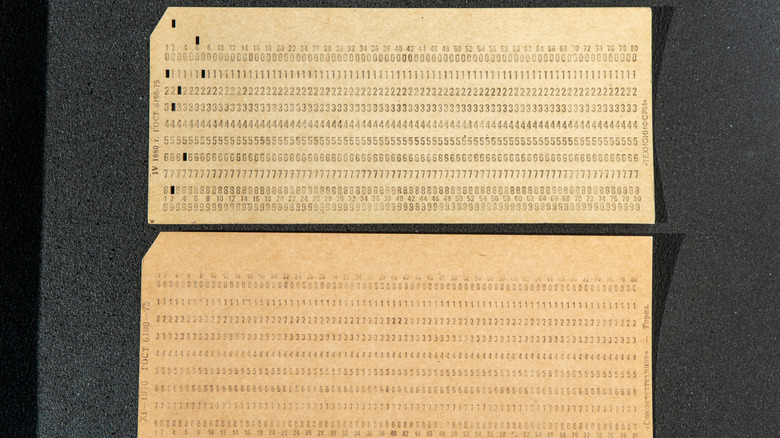
In the initial, more experimental phase of computing, the concept of rapidly storing and retrieving data was almost like a dream. Successfully making a computer perform simple calculations was a huge challenge that required significant hardware, with no possibility for saving those results. However, this changed in 1890 when an amazing invention came from a modest U.S. census employee named Herman Hollerith: the punch card.
Hollerith sought a more efficient method for processing vast amounts of census data, and created a device capable of reading information from paper cards with punched holes. Each card contained rows of data points, with holes indicating which specific data was active. Hollerith's machine would process these cards, recording the hole punches in a way similar to how a carnival organ plays sheet music. This greatly streamlined the data tabulation process. Although Hollerith's original invention was designed for this specific use, when computing became prominent in the 1950s, his punch cards evolved into a method for storing and accessing information, largely popularized by one ofIBM's game-changing inventions.
Cassette tapes
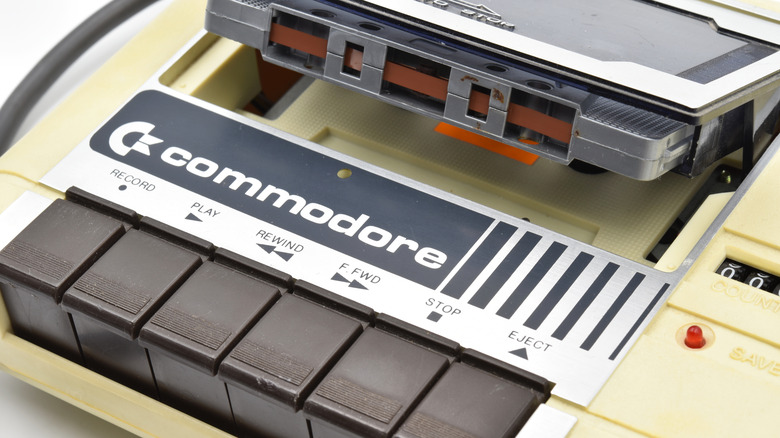
When you picture cassette tapes, you might imagine them being used to store and play music in a boombox. Although this was their most well-known application, cassette tapes were also utilized in the 70s and 80s as an early form of computer storage. Indeed, they were the preferred format for some business and home computers such as the Commodore 64 and Sinclair Spectrum. In the early days of computing, mainframe computers stored data using large reel-to-reel recorders.
These reels would be filled with magnetic tape, where a series of tones would be recorded using a magnetizing electrical signal. These tones, when analyzed by a different computer, could be converted into binary code, which could then be interpreted as readable information. Cassette tapes functioned in a similar way, with the tapes being loaded with magnetic material and recorded in the same manner. You could connect a tape deck to your Commodore 64 computer, execute a save command, and the computer would generate the required tones to store your data on the tape. As tapes were widely available due to their common use in the music industry, they provided an inexpensive and accessible method for data storage.
Floppy disks
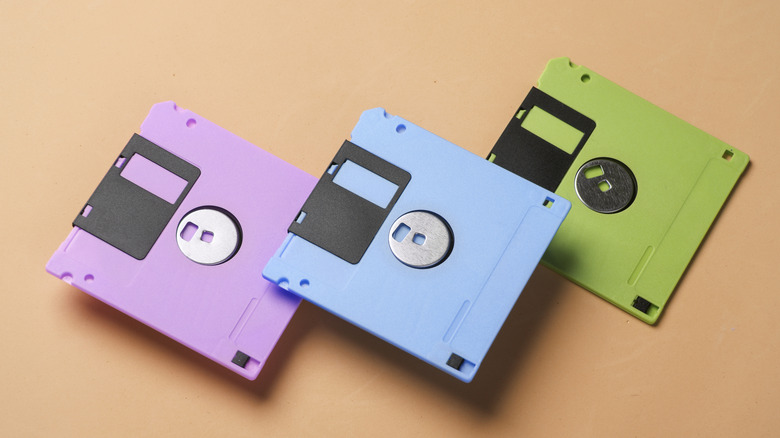
Although cassette tapes were the preferred storage option for certain computers, other systems took a different approach: disks enclosed in a flexible plastic casing. It was this plastic layer that led to the informal term "floppy disks," despite the device being more square than circular in design.
Floppy disks emerged as a method for storing data in the late 1960s and early 1970s, eventually gaining widespread use due to their small size and low cost. One disk could store approximately 80KB of information, and it was accessed using an 8-inch floppy disk drive. The data was stored on the disk's surface, but these disks were prone to damage. In 1984, Apple's Macintosh computer helped bring attention to a newer type of floppy disk, which was reduced in size to 3.5 inches. This version was enclosed in a more durable plastic casing with a sliding metal cover to safeguard the writable area, and it could hold 1.4MB of data.
CD-ROM
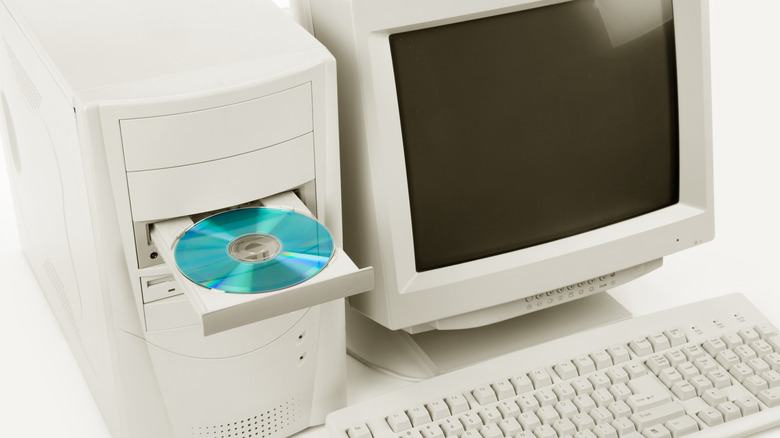
As is often the case, music once again led the way in advancing data storage technologies with the introduction of compact discs (CDs) in the early 1980s. Sony developed the first CDs as a method for storing and playing music, but they quickly emerged as the primary means of data storage due to their faster speed and greater capacity compared to floppy disks.
Original CD-ROMs (an abbreviation for Read-Only Memory) were plastic discs with one side featuring microscopic pits that stored data, which was accessed using a laser. This was effective for data storage, offering more than 600MB of space, but they couldn't be rewritten, unlike magnetic storage systems. This issue was addressed in the 1990s with the creation of the CD-Recordable, commonly known as CD-R, which replaced the pits with a unique dye layer.
This photosensitive layer can have its chemical makeup changed by the disc drive laser through a procedure often referred to as "burning." This process was typically limited to a single use on standard CD-Rs, but this issue was addressed with the development of rewritable CDs, also known as CD-RWs. Compact discs became the preferred medium for storing data and distributing commercial software throughout the early 2000s, especially after the introduction of higher-capacity DVDs and Blu-Ray discs.
Flash drives
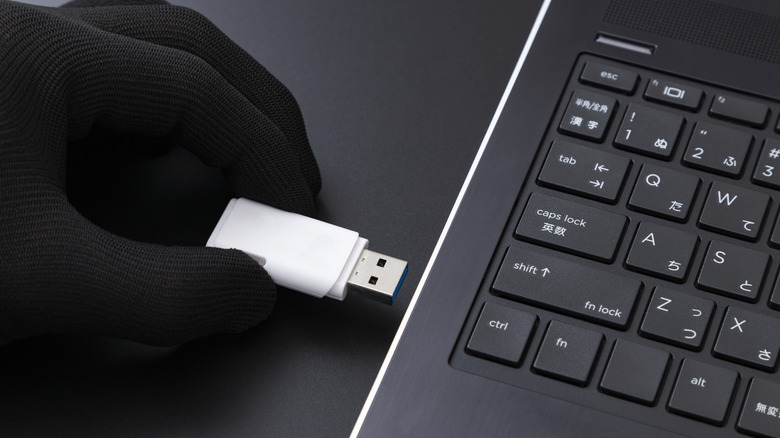
As the internet became widely used in the late 1990s, traditional methods of storing data physically began to decline. Why bother with purchasing and burning a CD when you could easily transmit data online? Nonetheless, there remained a demand for storage devices, especially for those without a stable internet connection or who needed to quickly move files such as school and business projects between computers. This was the time when the USB flash drive emerged as a practical solution.
USB drives were launched in the late 1990s. These initial models featured a compact printed circuit board that, when plugged into a computer through its USB port, enabled users to transfer information between the computer's hard drive and the drive's memory. The first USB flash drives provided only 8MB of storage, but this capacity increased to 1GB within a short period thanks to improved technology, making them a widely used option for managing large amounts of data. Although cloud storage is now common andflash drives might not appear necessary these daysThey continue to be available in different sizes and storage capacities for effortless and practical data storage.
Enjoyed this article? Subscribe to 's free newsletter and Add us as a favored search providerfor the newest developments in technology and entertainment, along with useful tips and advice.
Read the original article on .
Post a Comment for "5 Must-Have Storage Devices of the Past"