
Ebola Outbreak: Congo Expands Treatment Centers for Lethal Virus Killing 110
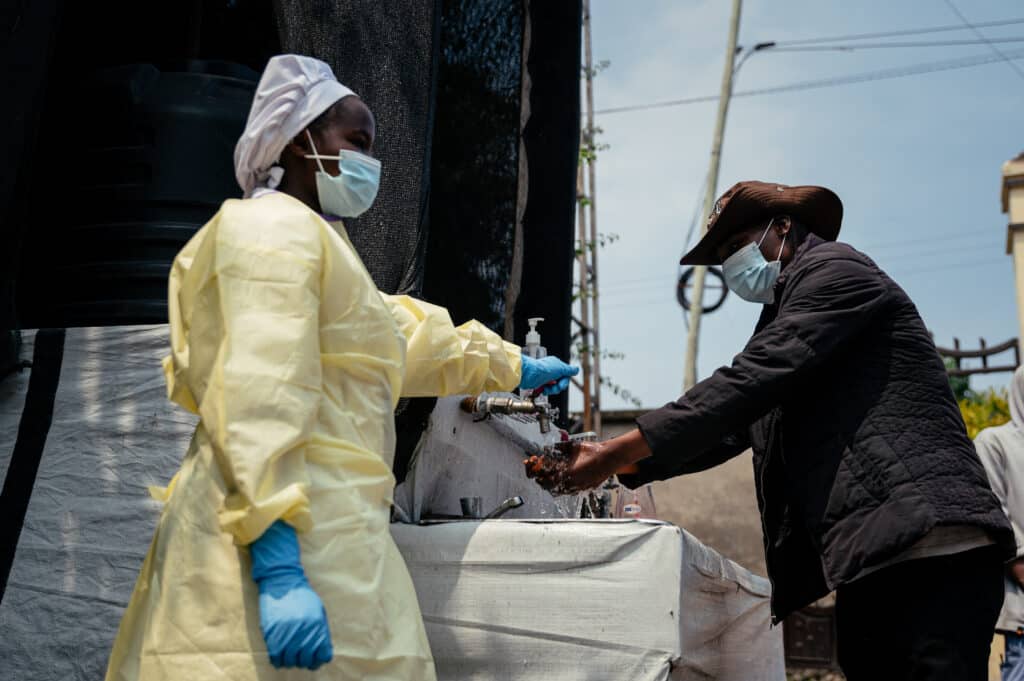
Ebola Outbreak in Eastern Congo
In the eastern province of Ituri, the Democratic Republic of the Congo (DRC) has decided to open three new Ebola treatment centers. The World Health Organization (WHO) is also sending a team of experts to assist in the fight against the outbreak. This comes after a rare type of the virus has claimed over 110 lives.
An American doctor who was treating patients in the region has now tested positive for the virus, according to local officials. This case highlights the urgency of the situation as there are currently no approved vaccines or medicines available to combat this particular strain of Ebola.
WHO Declares Public Health Emergency
The WHO recently declared the Ebola outbreak a public health emergency of international concern. As of the latest reports, there have been over 118 deaths and 300 suspected cases in Ituri and North Kivu provinces. Additionally, one death and one suspected case were reported in neighboring Uganda. Experts believe the number of cases could rise as more surveillance efforts are conducted.
The Bundibugyo virus, which is responsible for this outbreak, went undetected for several weeks, according to health experts and aid workers. Confirmed cases have now been reported in several locations, including Bunia, Goma, Mongbwalu, Butembo, and Nyakunde.
Delayed Response and Challenges
Matthew M. Kavanagh, director of the Georgetown University Center for Global Health Policy and Politics, criticized the delayed response to the outbreak. He pointed out that early tests were looking for the wrong strain of Ebola, leading to false negatives and a loss of valuable time in responding to the crisis.
Kavanagh also expressed concerns about the Trump administration's decision to withdraw from the WHO and reduce foreign aid. He argued that these actions weakened the surveillance systems needed to detect such outbreaks early.
Growing Panic in Affected Communities
The severity of the symptoms and the rising number of cases have caused growing panic among residents in Bunia. Noëla Lumo, a local resident, shared her fears about the virus. Having lived in Beni, a region previously affected by Ebola outbreaks, she started making protective masks by hand upon hearing about the latest outbreak.
Congo's health minister, Samuel Roger Kamba, noted that the first death from the virus occurred on April 24 in Bunia, with the body being repatriated to the Mongbwalu health zone, an area known for its large population and mining activities. This event is believed to have contributed to the escalation of the outbreak.
Detection and Confirmation of Cases
The initial samples from Bunia were tested for the more common Zaire strain of Ebola, but they came back negative, according to Dr. Richard Kitenge, the Health Ministry Incident Manager for Ebola. The first confirmation of the virus occurred on May 14, with the Bundibugyo strain confirmed the following day.
Esther Sterk of Medecins Sans Frontieres told the AP that the situation is "quite worrying" and evolving quickly. She emphasized that the detection of the virus was late, which is often the case with Ebola outbreaks due to the similarity of symptoms with other tropical diseases.
American Doctor Tests Positive
Dr. Peter Stafford, an American doctor working in Bunia, has tested positive for the virus. He was treating patients at a hospital when he developed symptoms, according to his organization, Serge. Three other employees of the same organization, including his wife, are also working at the hospital but are not showing any symptoms.
Seven Americans, including the infected doctor, are being transported to Germany for monitoring. CDC officials stated that the risk to Americans remains low but have issued travel advisories urging caution for those traveling to Congo and Uganda.
Rare Type of Ebola
Ebola is highly contagious and can be transmitted through bodily fluids such as vomit, blood, or semen. The disease it causes is rare but severe and often fatal. Dr. Craig Spencer, an associate professor at Brown University, highlighted the importance of compassion in dealing with the virus, as it disproportionately affects those caring for the sick.
This is only the third time the Bundibugyo virus has been detected since 1976. The virus was first identified during an outbreak in Uganda in 2007-2008, which resulted in 149 infections and 37 deaths. The second occurrence was in 2012 in Isiro, Congo, where 57 cases and 29 deaths were reported.
Humanitarian Crisis in Eastern Congo
Eastern Congo, particularly the Ituri province, faces significant challenges. The Mongbwalu region is remote, with poor road networks located over 1,000 kilometers from Kinshasa. The area has long struggled with a humanitarian crisis, exacerbated by the presence of armed groups that have caused displacement and violence.
U.N. staff in the region have been advised to work from home and avoid crowded areas. According to a U.N. official, the situation is dire, with over 273,000 displaced people in Ituri.
Rwanda has closed its land border with Congo, while Ugandan authorities have increased surveillance along their border with the country, despite no evidence of the virus spreading within Uganda.
Post a Comment for "Ebola Outbreak: Congo Expands Treatment Centers for Lethal Virus Killing 110"