
Gold Miners' 1890 Discovery Shook Prehistoric History
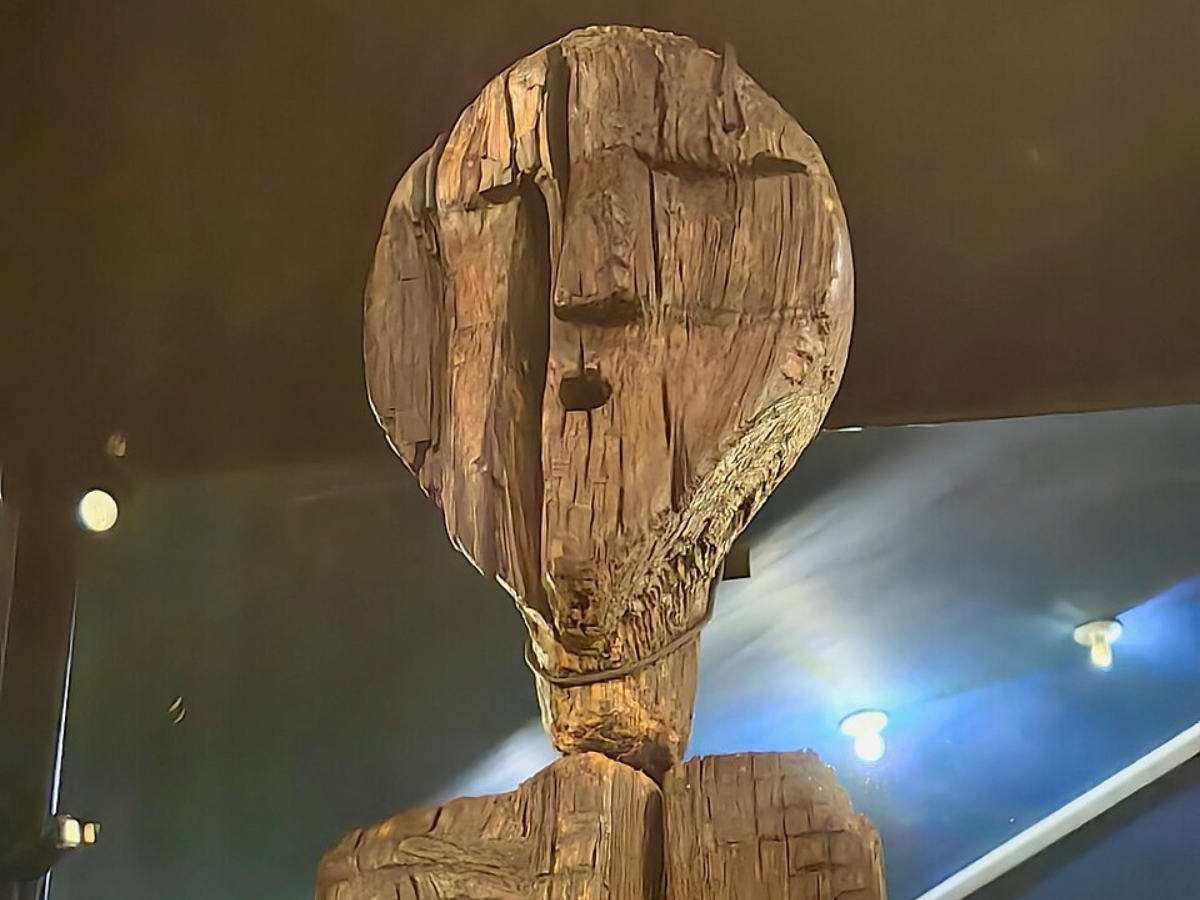
In 1890, a group of gold miners was knee-deep in a murky peat bog in the Ural Mountains of Russia, digging for something valuable. What they found was not gold. Instead, they uncovered something far stranger and more significant. As they dug deeper into the water’s dark depths, carved wooden pieces emerged and were eventually assembled into what we now know as the Shigir Idol—a giant wooden monument that is thousands of years older than Stonehenge.
Here's the astonishing part: the longer scientists study it, the older it becomes.
A wooden monument that shouldn’t exist
When most people think about ancient monuments, they imagine stone structures like the pyramids, Stonehenge, or Easter Island. Stone tends to last, but wood rarely does. So, it's almost miraculous that a massive carved wooden structure from the early post-Ice Age period is still around today. According to reports from Smithsonian Magazine, the idol is now believed to be twice as old as Stonehenge and the pyramids. This revelation sent shockwaves through the archaeological community when updated dating methods confirmed its incredible age.
The reason this artifact has survived is largely due to the bog itself. Peat bogs are naturally low in oxygen, which prevents microbial decay that would normally destroy organic material within decades. It's as if nature created a vacuum seal, preserving the idol for over 11,000 years. Without the bog, much of this part of human history might have been lost forever.
The more scientists looked, the older it became
When the idol was first reconstructed in the late 1800s, scholars were impressed but uncertain about its age. Initial estimates placed it a few thousand years old—significant, but not groundbreaking. However, as dating technology advanced, the estimated age of the idol continued to increase.
As Smithsonian reported, newer radiocarbon dating methods kept pushing the date further back until it finally settled at over 11,000 years old. That places its creation in the Mesolithic period, when humans in what is now the United States were still nomadic hunter-gatherers following megafauna across the continent. There were no towns, no writing, and no wheel. Yet, somewhere in the Urals, someone was carving intricate faces and complex geometric patterns into a 17-foot-high wooden structure.
The faces that still don't make sense
This is where modern archaeology hits a wall. The Shigir Idol is not only ancient but also decorated. Its surface is carved with many human-like faces, along with lines and shapes that clearly held significance for its creators. But what exactly do these symbols mean? Here, archaeologists face a challenge.
We can recognize intention, craftsmanship, symbolism, and effort, but the message remains elusive. The symbolic system behind the Shigir Idol belongs to a world that has largely disappeared, leaving little to cross-reference. It's like finding a handwritten letter in a language no one alive understands. You know it's important, but you can't decipher its meaning.
Why this quietly rewrote prehistory
For many years, archaeologists believed that complex symbolic thinking—such as art, ritual, and organized meaning-making—emerged only after the advent of settled civilization. They assumed that farming, villages, and social organization were prerequisites for humans to create monuments with intentional meaning. The Shigir Idol shattered that assumption.
This was a hunter-gatherer community, thousands of years before agriculture arrived in the Urals, that produced a 17-foot carved monument with multiple faces and a symbolic geometric language. While it didn't rewrite history entirely, it did force a serious rethinking of when and how human intelligence expressed itself symbolically. That’s no small achievement.
For American millennials and Gen Z, who grew up with a version of history that often starts with ancient Egypt or Greece, the Shigir Idol serves as a quiet corrective. Human symbolic thinking is far older than we’ve been led to believe, stretching back into a prehistoric world we are only beginning to understand.
The miners of 1890 were not searching for history—they were hunting for gold. Instead, they accidentally preserved a message from over 11,000 years ago. We haven’t yet fully decoded it, but the fact that we’re still trying says a lot about us.
Post a Comment for "Gold Miners' 1890 Discovery Shook Prehistoric History"