
Groan Worthy: Psychologists Analyze 32,500 Dad Jokes to Uncover the Secret of Success or Failure
The Science Behind Dad Jokes
Dad jokes are a unique form of humor that often relies on corny puns and literal interpretations. These jokes, while sometimes annoying, have a special place in the world of comedy. But what exactly makes a joke a dad joke? According to recent research, it's not just about the punchline but also the structure and content of the joke itself.
Understanding the Structure of Dad Jokes
Psychologists have conducted extensive studies to determine what makes a dad joke successful. They analyzed 32,533 examples from the internet, using AI to help process the data rather than relying on human volunteers to endure every groan-inducing punchline. The researchers defined a dad joke as "short, clean, affable and non-offensive."
The study found that the most successful dad jokes often revolve around topics like nature, hospitals, and money. Conversely, jokes involving celebrities, politics, or religion were more likely to fall flat.
In one experiment, approximately 600 people were asked to rate the funniness of various jokes. The top three included:
- I accidentally passed my wife a glue stick instead of her ChapStick. She's still not talking to me.
- What country's capital is growing the fastest? Ireland. Every day it's Dublin.
- I told a joke on a Zoom meeting but nobody laughed. It turns out I'm not remotely funny.
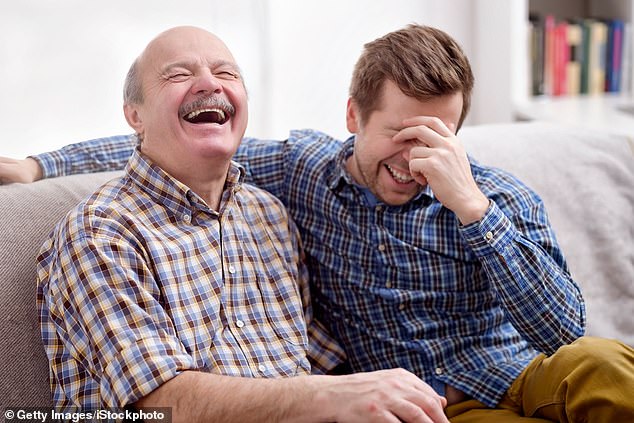
Dr. Paul Silvia of the University of North Carolina, who led the study, explained, "Just like the cops searching for the criminals who stole the wheels from their patrol car, we have worked tirelessly to identify the comedic features of dad jokes and the kinds of people who enjoy them."
Examples of Punderful Jokes
Some of the most popular dad jokes include:
- My dad asked me if I was an organ donor. He's a man after my own heart.
- The book I ordered about clocks finally came in. It's about time.
- Why do Norwegian battleships have barcodes painted on them? So they can Scandinavian.
- I was annoyed when my wife gave me a coffin for my birthday. I said, "This is the last thing I need."
According to Dr. Silvia, "Dad jokes should be inclusive, appropriate, and non-offensive. They aren't religious or political, and they rarely have any reference to death or violence."
Who Likes Dad Jokes?
The study also explored who is more likely to find dad jokes funny. Results showed that men, pet owners, parents, higher-educated individuals, those with more money, religious people, and conservatives tend to appreciate these jokes more.
Dr. Silvia and his colleague Meriel Burnett from the University of Massachusetts categorized the puns into various types. The most annoying type, according to the study, are 'pedantic literalisms,' which use a precise interpretation of a word. An example is: "Did you know deer can jump higher than the average house? It's because the average house can't jump."
Other types of puns include:
- Homonym puns, which play on words with the same pronunciation and spelling but different meanings. Example: "I've started a new job taking care of horses. It provides a stable income."
- Homograph puns, which only work when written down, playing on words with the same spelling but different sounds. Example: "What makes music heavy metal? A lead singer."
- Homophone puns, which rely on words with the same sound but different spelling. Example: "So long, boiling water. You will be mist."
- Heterophonic paronym puns, which depend on words with similar but not identical pronunciation. Example: "When my wife feels sad I let her colour in my tattoos. She just needs a shoulder to crayon."
The Misconception About Puns
The study also addressed a common misconception about humor, stating that "the biggest urban legend about humour is that people find puns aversive." This belief, according to the researchers, was spread by "stuffy British men."
The researchers have made their extensive database of dad jokes available to fellow academics interested in studying humor or "hassling their teenagers."
Post a Comment for "Groan Worthy: Psychologists Analyze 32,500 Dad Jokes to Uncover the Secret of Success or Failure"