
India's Bangladesh Dilemma: Demographic Strains and Geopolitical Perils
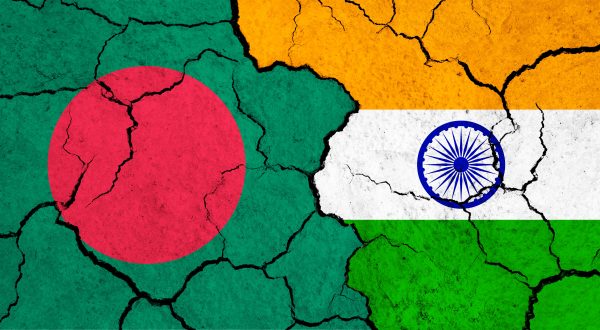
The India-Bangladesh Border Conundrum: A Strategic Challenge
India's eastern border with Bangladesh is one of the most complex and strategically significant frontiers in the region. Stretching over 4,096 kilometers, this border has long been a focal point for various challenges, including illegal migration, demographic shifts, and security vulnerabilities. However, recent developments have added new layers of complexity to this issue, intertwining it with political changes in both West Bengal and Bangladesh, as well as Pakistan's attempts to exploit the situation.
Historical Context and Evolution of the Problem
The roots of the India-Bangladesh border issue can be traced back to the post-Partition era. Initially driven by refugee movements and the 1971 humanitarian crisis, the problem evolved into a persistent challenge of illegal infiltration. Over the decades, this has transformed into a multifaceted issue involving economic migration, demographic engineering, and cross-border criminal activities.
Post-1971, the influx of undocumented migrants has led to significant population growth in border districts such as Assam and West Bengal. Areas like Dhubri, Barpeta, Goalpara, Malda, and Murshidabad have seen rapid expansion of Muslim-majority pockets, raising concerns about shifting demographics and cultural identity.
Forms of the Threat
The threats posed by the porous border are multi-layered:
- Demographic Engineering: Changes in religious and linguistic composition in border towns have altered local power dynamics and cultural identity.
- Porous Border Vulnerabilities: Despite progress in fencing, riverine and marshy stretches remain difficult to secure. Incomplete fencing has facilitated not just people movement but also cattle smuggling, narcotics, arms, and terror transit routes.
- Illegal Trade and Hybrid Risks: Smuggling networks thrive in weakly monitored zones, funding cross-border criminal syndicates.
- Proxy Potential: The border's porosity, combined with demographic footholds, creates conditions for "a thousand cuts." This low-intensity destabilisation could be exploited by Pakistan without committing resources and forces.
These pressures have strained resources, jobs, and social cohesion in affected towns, fueling movements like Assam's NRC exercise and long-standing political mobilisation.
West Bengal's Political Shift and Border Security
The 2026 West Bengal Assembly elections marked a turning point for border security. The BJP's historic victory under Suvendu Adhikari brought a renewed focus on securing the state's borders. The incoming administration has prioritised handing over land to the Border Security Force (BSF) for accelerated fencing and cracking down on infiltration and cattle smuggling.
This contrasts sharply with the previous Trinamool Congress (TMC) government, which faced Centre-State friction over land allocation for fencing and perceived leniency on push-ins/pushbacks. The new focus is expected to yield tangible impacts such as faster completion of border fencing and outposts, strengthened coordination between state police, BSF/central agencies, and reduced illegal trade corridors.
Pakistan's Rising Influence in Bangladesh
The fall of Sheikh Hasina's Awami League government in 2024 and the subsequent rise of the Bangladesh Nationalist Party (BNP) under Prime Minister Tarique Rahman have opened space for Pakistan to recalibrate its ties with Dhaka. High-profile visits, eased visas, resumed direct flights, and military delegations reflect a warming relationship. Pakistan views this as an opportunity to rebuild "brotherly" links, with outreach from Islamabad's top leadership and invitations for Rahman to visit.
This realignment carries clear risks for India. Lashkar-e-Taiba (LeT) commander Saifullah Saif claimed that Hafiz Saeed's network was operating from Bangladesh to "push jihad into India." Pakistan's Defence Minister Khwaja Asif warned that any Indian "false-flag operation" would be met with retaliation "in Kolkata."
India's Strategic Play: Diplomacy, Development, and Deterrence
New Delhi is not without leverage. The Modi government appointed former Union Minister Dinesh Trivedi as India's High Commissioner to Bangladesh, marking a rare political appointment. Trivedi, who enjoys direct access to the Prime Minister's ear, is positioned to convey India's core concerns while advancing economic cooperation.
India can continue supporting Bangladesh's development through trade, connectivity, energy, and infrastructure. However, it must insist that Dhaka address India's legitimate security and demographic worries as reciprocity. Key items include enhanced border coordination, joint fencing efforts, and a firm action against anti-India extremist elements and terror groups.
Conclusion: Balancing the Conundrum
India's Bangladesh Conundrum is a test of integrated statecraft. It involves combining robust border management, intelligence-driven counterinfiltration, demographic vigilance, and calibrated diplomacy. Recent political shifts in both Calcutta and Dhaka have sharpened the stakes.
With Suvendu Adhikari's government prioritising fencing and security, and Dinesh Trivedi engaging the Rahman administration from Dhaka, New Delhi has the tools to mitigate risks. Success will depend on sustaining pressure on illegal flows while preventing Pakistan from turning the eastern border into a new axis of hybrid conflict.
The alternative, unchecked porosity and demographic drift, risks turning manageable migration challenges into enduring strategic vulnerabilities. India's eastern security architecture must evolve from reactive defence to proactive deterrence, ensuring that development aid and diplomatic engagement reinforce, rather than undermine, national interests.
The coming months under the new governments in West Bengal and Bangladesh will be decisive in determining whether the conundrum is managed or allowed to metastasise.
Post a Comment for "India's Bangladesh Dilemma: Demographic Strains and Geopolitical Perils"