
Investigation Begins into UPS Plane Engine Failure That Killed 15 in Ireland
Federal safety investigators have initiated two days of hearings to investigate last year's fatal UPS cargo plane crash, which resulted in the loss of 15 lives. The inquiry aims to uncover why an engine detached from the aircraft, leading to its catastrophic descent. The engine separated from the MD-11's wing as it was accelerating down the runway at Louisville’s Muhammad Ali International Airport in November. The crash claimed the lives of three pilots on board and 12 individuals on the ground, with more people injured.
Jennifer Homendy, chair of the National Transportation Safety Board (NTSB), addressed the families of the victims during her opening remarks: "Please know: Your loved ones are the reason we’re here. We want to find out what happened."
The hearings involve NTSB staff, Boeing, UPS, labor unions, and other stakeholders, and will conclude on Wednesday. A final NTSB report is not expected for over a year, as investigators thoroughly examine all potential factors contributing to the crash.
The Crash
The UPS plane, en route to Hawaii carrying packages and fuel, had barely left the ground and cleared the airport fence when it crashed into several nearby Louisville businesses, creating a massive fireball.
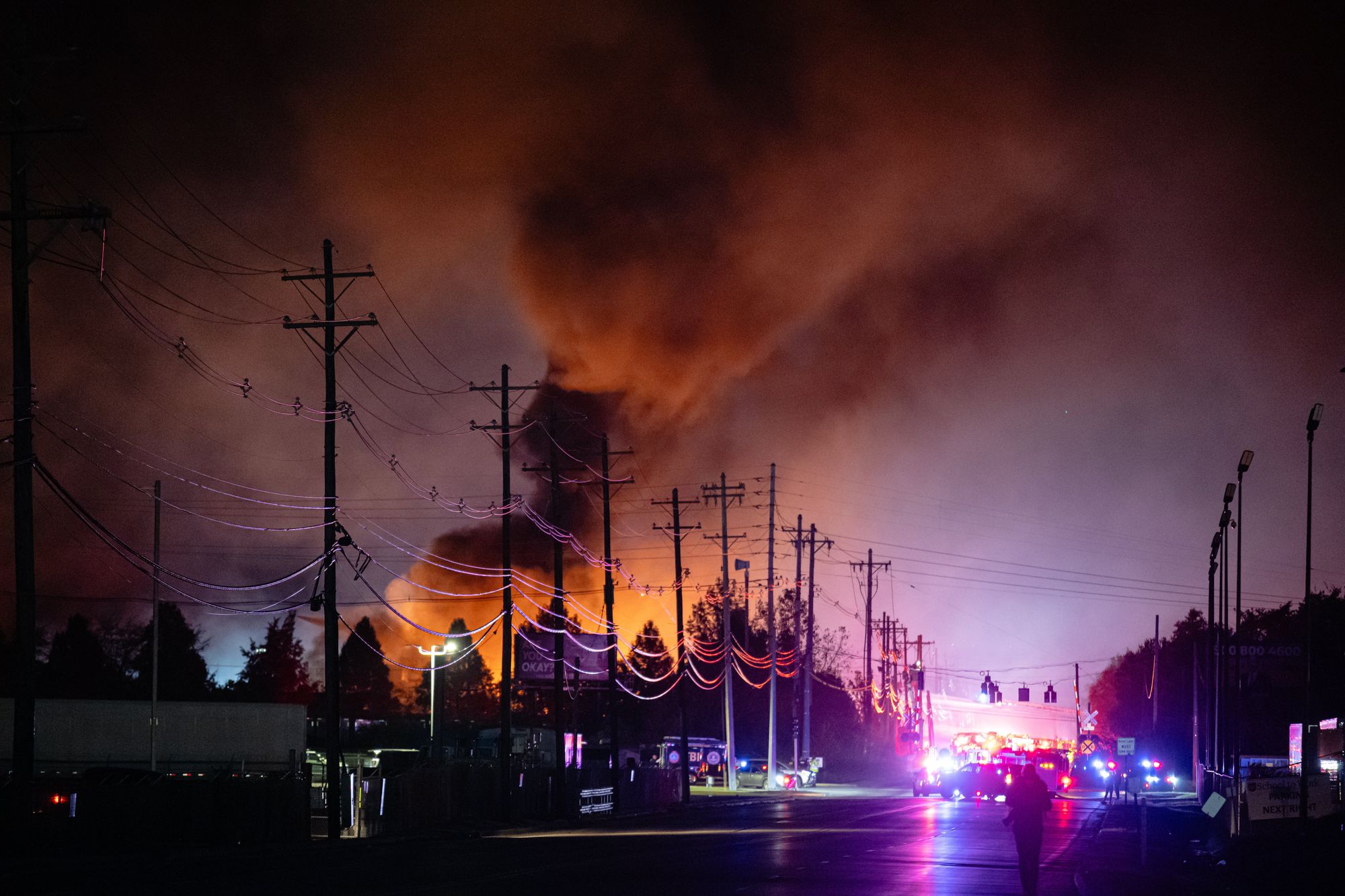
Dramatic photos released by the NTSB after the crash showed the engine detaching and flying up and over the wing as flames erupted on the wing. The final images depict the plane ablaze as it briefly becomes airborne, leaving behind trails of smoke.
Following the crash, all MD-11s and DC-10s, a predecessor aircraft, were grounded. NTSB investigators revealed that similar part flaws were found in three other UPS planes and a DC-10.
The Louisville disaster bore similarities to a 1979 crash in Chicago involving a DC-10. In that incident, the left engine also fell off, resulting in the deaths of 273 people and prompting the worldwide grounding of 274 DC-10s.
The airliner eventually returned to service after the NTSB determined that maintenance workers had damaged the plane during an improper use of a forklift to reattach the engine. This meant the crash was not caused by a fatal design flaw, despite prior accidents involving DC-10s.
However, even then, the plane's manufacturer, McDonnell Douglas, raised concerns about the spherical bearing that helps secure the engines to the wings. McDonnell Douglas later merged with Boeing.
Past Problems with These Planes
The NTSB stated shortly after the Louisville crash that investigators discovered cracks in some of the parts that secured the engine to the wing. These cracks had not been detected during regular maintenance, raising questions about the adequacy of the maintenance schedule. The last thorough examination of these critical engine mount parts occurred in October 2021, and the plane was not scheduled for another detailed inspection for approximately 7,000 more takeoffs and landings.
Boeing documented in 2011 four previous failures of a part that helps secure the MD-11’s engines to the wings. At that time, Boeing determined that these failures would not result in a safety of flight condition. The service bulletin issued by Boeing did not require plane owners to make repairs like an FAA airworthiness directive would, and the agency did not issue such a directive. Instead, Boeing recommended replacing the bearings with a redesigned part that was less likely to fail.
MD-11 Planes Flying Again
Some MD-11s, which have been a workhorse in the cargo fleet, are now back in the air after the FAA approved Boeing's plan to replace the spherical bearing on each aircraft and increase inspections.
FedEx resumed using the planes to deliver packages on May 10, but UPS has announced plans to retire its fleet of MD-11s. Western Global also uses MD-11s but has not yet disclosed its plans.
Some experts speculated after the crash that the MD-11s might never fly again if the repair proved too costly for these older planes. However, Boeing asserted that it found a way to address the safety concerns simply by replacing the bearing and increasing inspections.
Post a Comment for "Investigation Begins into UPS Plane Engine Failure That Killed 15 in Ireland"