
Noam Bettan Claims Second Place at Eurovision as Bulgaria Triumphs
Israel’s Noam Bettan Secures Second Place at Eurovision 2024
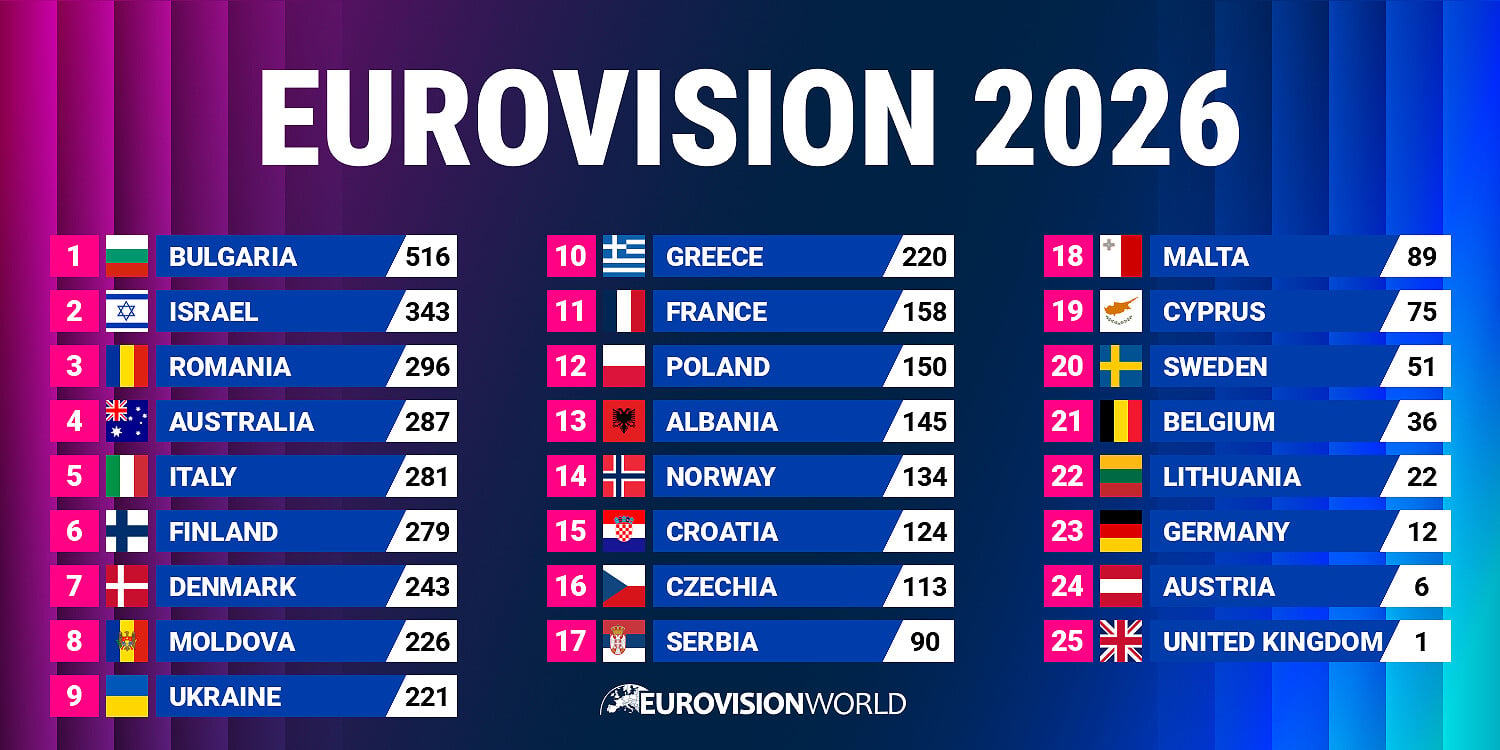
Israel’s Noam Bettan made a strong impression at the Eurovision Song Contest grand final held in Vienna, Austria, finishing in second place. His performance of “Michelle,” delivered in French, Hebrew, and English alongside five backup dancers, was met with widespread acclaim. Despite his impressive showing, Bulgaria’s Dara took the top prize with the energetic dance number “Bangaranga.” This marked Bulgaria’s first-ever victory in the competition, surprising many as bookmakers had predicted Finland, Australia, or Greece to win.
Bettan secured a total of 343 points, with 123 from the jury and 220 from the public vote. Bulgaria, on the other hand, earned 516 points overall, with 204 from the juries and 312 from the televote. Romania’s Alexandra Căpitănescu claimed third place with her provocative song “Choke Me,” which also finished second in the televote.
The results highlighted the competitive nature of the contest, with Israel placing third in the televote and eighth in the jury rankings. While this was not enough to secure first place, it still represented a significant achievement for the country.
A Smooth Performance Amid Tensions
Unlike the semi-final round, where anti-Israel chants were heard, the grand final broadcast featured no such disruptions. Fans could be heard chanting “Noam, Noam” as his performance began, showing their support. However, some booing was noted after the announcement of Israel’s high public vote.
Bettan received the maximum 12 jury points from Poland, along with 10 from Ukraine and Moldova, and eight from Albania, Austria, and Lithuania. The full breakdown of televote results, including those from the semifinal rounds, will be released overnight.
Israel’s jury awarded its highest points to Australia, followed by Denmark, Bulgaria, and Finland. After his performance, Bettan expressed gratitude to Europe, saying, “Thank you Europe, toda raba,” before adding, “I love you all — Am Yisrael Chai,” meaning “the people of Israel live.”
A Moment of Hope
In a post-performance video message, Bettan shared that he felt “much more excited than the previous times” and described his experience as “100 times better than past performances.” He emphasized the effort and dedication that led to this moment, expressing hope that he provided Israelis with “a moment of hope.”
During the semi-finals, an anti-Israel activist was ejected from the arena after shouting “Stop the genocide” during Bettan’s performance. The incident underscored the political tensions surrounding Israel’s participation in the contest.
Bettan had previously spoken about preparing for potential booing during rehearsals, as reported in an interview with The Times of Israel. His remarks reflected the challenges faced by Israeli contestants in recent years.
Political Backdrop and Reforms
Tensions over Israel’s participation in Eurovision have been high in recent years, culminating in a significant political boycott this year. Five countries—Spain, Slovenia, Ireland, Iceland, and the Netherlands—decided to withdraw from the competition in protest. Their decision followed a vote by European Broadcasting Union (EBU) members to implement voting reforms rather than hold a direct vote on Israel’s participation.
The reforms included capping votes per person at 10 instead of 20, reintroducing juries in the semifinals, and introducing new rules to discourage large online campaigns. These changes aimed to ensure fairness and prevent external influences from affecting the results.
Israel received a warning from the EBU last Saturday over an online campaign promoting Bettan’s song, which called for fans to cast all their votes for Israel. The EBU stated that the campaign did not align with the competition’s rules or spirit. Kan, the Israeli public broadcaster, confirmed that the videos were removed but maintained that no rules were violated.
A Calm Week in Vienna
The week leading up to the contest in Vienna saw relatively smooth proceedings for Israel. Unlike previous years, there were fewer reports of behind-the-scenes tension. Bettan was seen interacting warmly with other contestants, including Moldova’s Satoshi, Denmark’s Søren Torpegaard Lund, Albania’s Alis, and Boy George of San Marino’s act.
However, not all interactions were positive. The Croatian act Lelek reacted angrily after the Kan X account posted a joke meme about their facial tattoos. The public broadcaster deleted the post and issued an apology to the Croatian delegation.
Protests Remain Small
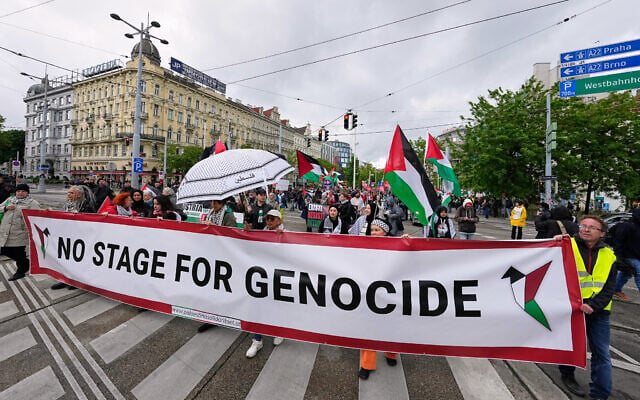
Despite the hype around anti-Israel protests in Vienna, the turnout was much lower than expected. A rally near the venue on Saturday afternoon drew only a few hundred people, far below the 3,000 organizers had anticipated. Similar protests on Tuesday attracted only a handful of activists.
At a press conference, Eurovision director Martin Green acknowledged the challenges the contest is facing. He encouraged viewers to “close the curtains to the outside world and dream that something else is possible.” On the contest’s 70th anniversary, he dismissed speculation about its future, stating, “Here’s to the next 70 years.”



Post a Comment for "Noam Bettan Claims Second Place at Eurovision as Bulgaria Triumphs"