
Senate Official Blocks Trump's Ballroom Funding in Budget Bill
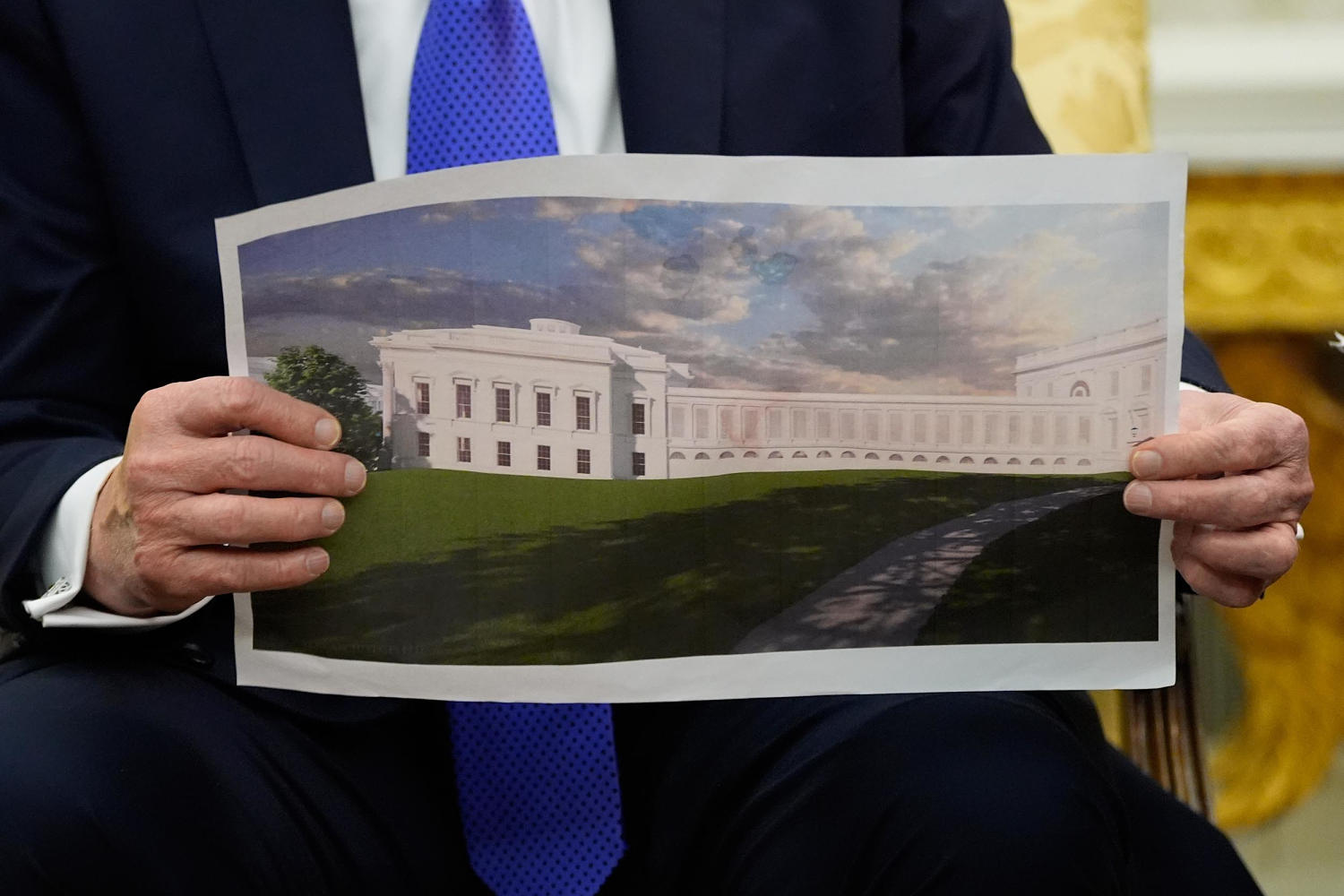
A Republican-led bill aiming to allocate $1 billion for the Secret Service to support funding for President Donald Trump'sWhite House ballroom is at risk due to opposition from a leading Senate figure.
The Senate parliamentarian, Elizabeth MacDonough, stated on Saturday that the budget bill, which seeks to finance ICE and Border Patrol along with$1 billion to support the financing of the ballroom, must be rephrased to address legal considerations.
A project as intricate and extensive as Trump's proposed ballroom naturally requires the collaboration of numerous government agencies that fall under the oversight of multiple Senate committees," MacDonough said to Senate offices on Saturday. "As written, the provision improperly allocates funds for activities beyond the jurisdiction of the Judiciary Committee.
The legislator stated that the bill would require a 60-vote threshold to pass, indicating it cannot proceed with just a majority vote, in contrast to comparable bills that have been advanced through budget reconciliation.
Budget reconciliation is a legislative procedure designed to bypass the Senate's 60-vote cloture rule, although it has limitations on the types of provisions that can be incorporated.
The development is a setback for the Republican bill, but it doesn't mark the conclusion of attempts to incorporate ballroom funding. Senate Republicans had already been revising the wording of the provision prior to Saturday's decision, according to a GOP leadership aide who spoke with NBC News, based on input from Senate officials.
A representative from the Senate Judiciary Committee's Republican group also informed NBC News that "discussions and changes are ongoing, as they have been for several days."
It remains uncertain whether Republicans can rephrase the clause in a manner that completely addresses the parliamentarian's concerns. The budget resolution outlining the bill's content only permits language to come from the Senate Judiciary Committee and the Senate Homeland Security and Governmental Affairs Committee.
If Senate officials determine once more that the ballroom project is within the authority of a committee other than those two, Republicans might have to exclude that funding from the bill, as they likely won't secure the 60 votes required to override the parliamentarian's decision.
Senate Budget Committee's top-ranking Democrat, Jeff Merkley from Oregon, stated on Saturday that "the American public shouldn't waste a single dollar on Trump's luxurious and unnecessary ballroom project."
While we anticipate that Republicans will modify this bill to satisfy Trump, Democrats are ready to oppose any alterations to it," Merkley stated. "We must not allow Republicans to squander our national resources on a campaign of disorder and corruption while ignoring the concerns of the American people.
Ryan Wrasse, a representative for Senate Majority Leader John Thune, minimized the challenge faced by the Republican bill on Saturday.
"Redraft. Refine. Resubmit. This is all standard during a Byrd process," Wrasse wrote in apost on X.
The "Byrd process" describes an unofficial procedure where the parliamentarian examines proposed budget reconciliation bills to confirm they meet the requirements of the Byrd Rule. This rule guarantees that elements included in a budget reconciliation bill are closely related to federal spending and revenue, avoiding unnecessary additions.
Senator Lindsey Graham, the head of the Senate Budget Committee from South Carolina, did not promptly respond to a request for a statement.
Some Senate Republicans had already expressed reluctance about the Republican plan to allocate $1 billion in public funds for the ballroom project, which Trump had consistently claimed would cost“no government funds.”
Republican senators were shown a suggestion for financial support submitted earlier this week, which allocated $220 million to strengthen the White House grounds, $180 million for a visitor screening center, $175 million for training, and an additional $175 million to improve security for Secret Service agents, according to a memo obtained by NBC News.
I still have a few more questions, and they will provide us with additional details," said Sen. Roger Marshall, R-Kan., following the meeting. "I remain unconvinced.
Senator Rand Paul, from Kentucky, and Senator Susan Collins, from Maine, both stated that the project should be funded through private sources, as Trump had originally pledged.
Trump previously mentioned that the ballroom project would cost $400 million and would be financed through private sources. Comcast Corp., which owns NBCUniversal, is among the corporate contributors.
The White House stated that the requested public funds would be exclusively allocated for "security modifications and improvements" related to the entire ballroom initiative.
Post a Comment for "Senate Official Blocks Trump's Ballroom Funding in Budget Bill"