
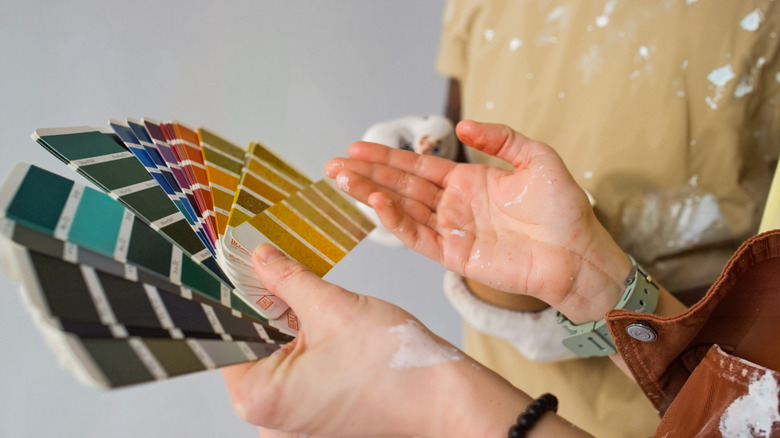
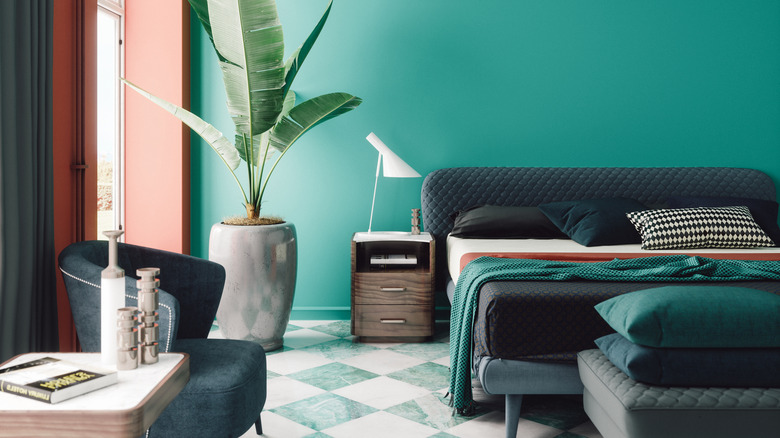
It appears that the past few years have been filled with vibrant colors. People grew tired of their millennial gray and all-beige homes and instead sought to add striking shades to every part of their spaces. In response to this,the trend of color-drenchingdominated the scene. Every element — from the ceiling down to the walls, baseboards, and moldings — was painted in the same shade, creating a sense of enclosure as you entered the room. Some went even further by matching their curtains, carpet, and sofa to the chosen color, introducing contrast only through different paint finishes and fabric textures. However, the concept of color drenching has been popular since 2023, and after three years, it's beginning to feel a bit worn out. So what will be the next major trend to take its place? According to Yelp, the answer is "color-maxxing."
Yelp conducted a 2026 Summer Housing Trends Reportin which it drew upon perspectives from its data analytics team, trend specialists, and designer Hema Persad to forecast the leading trends for the season. As outlined in the report, individuals are pushing the concept of color immersion even further by incorporating a broader range of shades. Instead of opting for a single monochromatic tone throughout the room, color-maxxing involves selecting colors from existing items in the space (such as furniture and decorations) and applying those tones to the walls, ceiling, and moldings. This approach isn't restricted to paint alone — wallpaper can also be included in the design.
Read more: Outdated Kitchen Styles That HGTV Stars Have Moved Past in Homes
What is color-maxing, and how to achieve it
Yelp initially recognized the emergence of color-maxxing as a growing trend by examining its Request a Quote forms. It observed that requests for full-room painting had increased by 72%. Additionally, searches for ceiling painters rose dramatically by 16,884%, while inquiries for door and trim painters or stainers surged by an incredible 187,073%. For Yelp, this signaled a strong demand for more vibrant colors and modern shades.
If you're interested in joining the trend but unsure about combining more vibrant colors, designer Hema Persad offers many suggestions on how to successfully embrace the bold color trend. She told Yelp that when choosing door colors, you should consider the accents already present in the room's decoration, such as patterned rugs, curtains, or artwork. She also suggests that designers take into account their home's architecture when selecting these shades. You should ensure everything matches the style of your home to create a unified look. Persad also suggested adding wallpaper in the same colors to the mix, pointing out that it would be particularly effective on the ceiling. (However, there are some)key points to consider before applying wallpaper to your ceiling.)
How to develop a unified color scheme
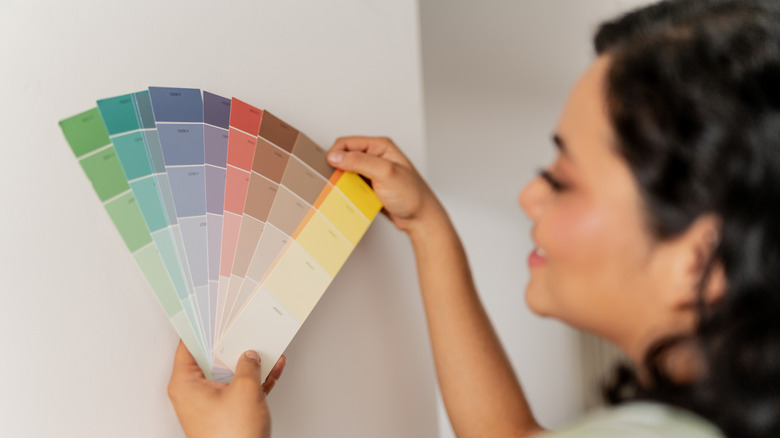
While taking inspiration from current decor is a useful suggestion, it can still be challenging to determine how to create a unified color scheme. Initially, you should select only three distinct colors to avoid a cluttered appearance. When organizing these colors, it's advisable to followthe timeless 60-30-10 ruleIn other words, ensure that your primary color occupies 60% of the room. The secondary, supporting color should cover 30%, while an accent color is most effective when limited to just 10% of the area.
To assist you in imagining your color scheme before selecting paints, try a color palette generator such asCoolorsto observe your selected hues side by side. This can serve as your reference when selecting paint colors. Next, to view how specific paint shades will appear in your specific room, use applications such asBenjamin Moore Custom Color Viewer or Sherwin-Williams' ColorSnap Visualizerso you can visualize the end result without needing to purchase costly paint samples.
Liked this article? Subscribe to receive professional home advice, step-by-step DIY tutorials, and creative design ideas.House Digest newsletter and adding us as a favored search provider!
Read the original article on House Digest.


No comments:
Post a Comment