
The hidden side of Guardiola that shapes Man City's legacy
The Influence of Pep Guardiola
When other coaches are asked about Pep Guardiola, they often describe him as the game’s greatest manager. One common compliment is that he makes them think about things they didn’t expect. He comes up with plays and tactics they couldn’t have imagined. In many ways, this is the best eulogy for Guardiola—he has turned football thinking on its head.
While such discussions are subjective, it's clear that Guardiola has a strong claim to being the greatest manager of all time. His achievements at Manchester City, Barcelona, and Bayern Munich speak volumes. At City alone, he has secured six Premier League titles, one Champions League, three FA Cups, and five Carabao Cups. These accomplishments, combined with his success at Barcelona and Bayern Munich, include three Spanish titles, three German titles, two more Champions Leagues, and four other domestic cups.
This success has been sustained over an impressive 15 years. In terms of pure trophies, Guardiola is one of the most relentlessly successful coaches ever. However, what makes his legacy even more significant is the reason behind his success. Guardiola has an almost undeniable claim to be the most influential manager ever. Football today is largely played the way it is in 2026 because of him.
Never before has one coach’s influence been so profound, not even Rinus Michels or Johan Cruyff. By reinterpreting their principles for the modern age, Guardiola has also benefited from the advantages of the modern era to spread his football everywhere.
The Tactical Revolution
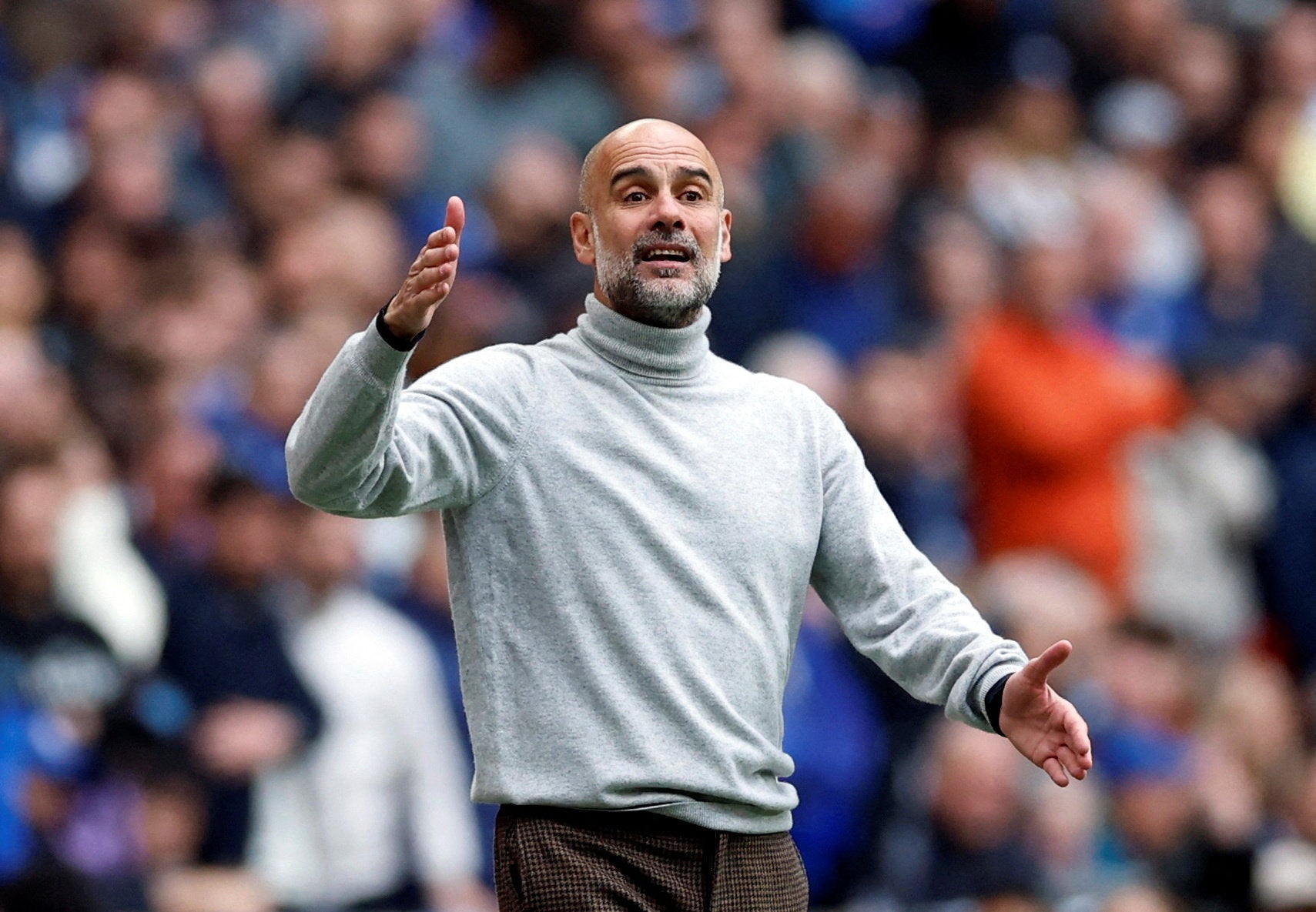
All modern pressing systems ultimately come from Guardiola. All modern play comes from him. His positional game has become the tactical hegemony in a way no ideology has before, and for such an extended period. Through that, perhaps his greatest victory was his effect on English football.
Remember the question “what is tackles?” after another calamitous four-goal defeat, this time at Leicester City, which begged more questions about whether his football was possible in the Premier League? What was the concern? Guardiola’s team evaded tackles, changing English football in two ways.
One is heard in the now common refrain about how everyone plays out from the back, and all the other trappings of his “positional game”. The other is in subjecting the famously competitive Premier League to looking something like the Bundesliga or Ligue 1. With feats such as 100-point campaigns, four successive titles, and a domestic treble, Guardiola achieved a dominance England has never seen—not even with Sir Alex Ferguson. City’s Abu Dhabi ownership more than got its money’s worth.
And it is from all of that there is—rather fittingly—another way to think about Guardiola.
The Role of Resources and Challenges
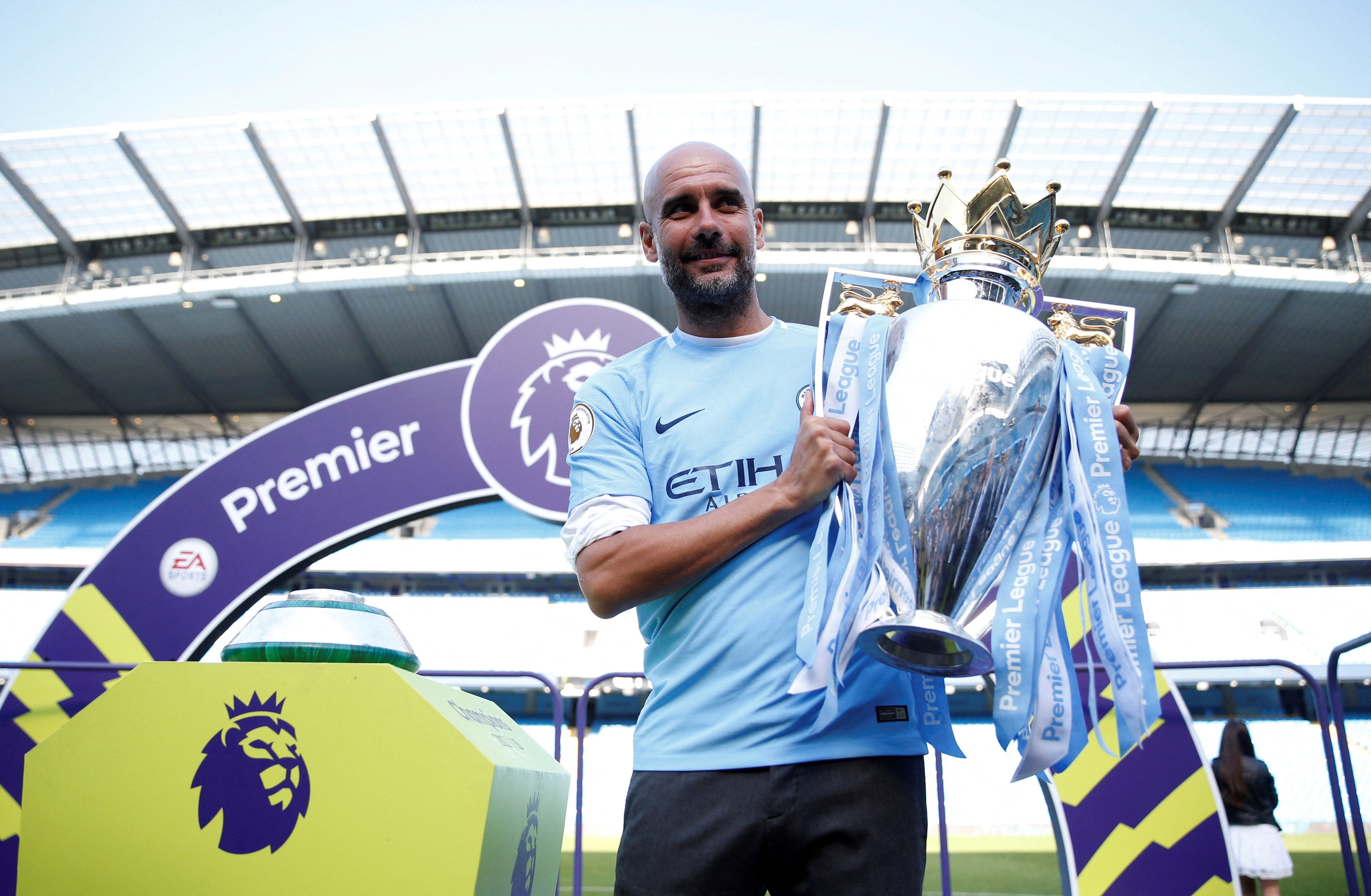
Of course, his football was going to be possible in England since City responded to the travails of 2016-17 by spending a quarter of a billion. It forms the one purely football caveat in Guardiola’s sensational record. He’s never really had to work anywhere where he’s had to compromise. He’s always worked at a country’s greatest power, be that in terms of the squad at Barcelona or pure finance.
That is of course largely to his credit since he immediately got to the top and stayed there, in a way even his greatest peers ultimately struggle with. Nobody just keeps winning like that. As such, it’s not a case of winning because of resources but rather how resources amplified his own talent. The greatest manager was afforded the most ideal possible settings, everything catered to him.
It also means, however, he’s never had a defiant achievement like Sir Alex Ferguson winning with Aberdeen or Jose Mourinho with FC Porto. Even those yet to join those titans of management, such as Mikel Arteta, restored a club in a way Guardiola has never done.
And if that makes his career a touch incomplete, in not having that classic manager rise, it’s also important as regards honing your approach. Guardiola’s football takes deeply integrated synchronicity, but that’s a lot harder to achieve if you’re at a club where your key centre-back is suddenly out for three months and you don’t have the depth to cover.
Look at the comparable Luis Enrique in relative struggles at Celta Vigo and Roma. Would a touch more honing have allowed Guardiola another Champions League, the one trophy return that looks a little thin in his records?
The Politics Behind the Scenes
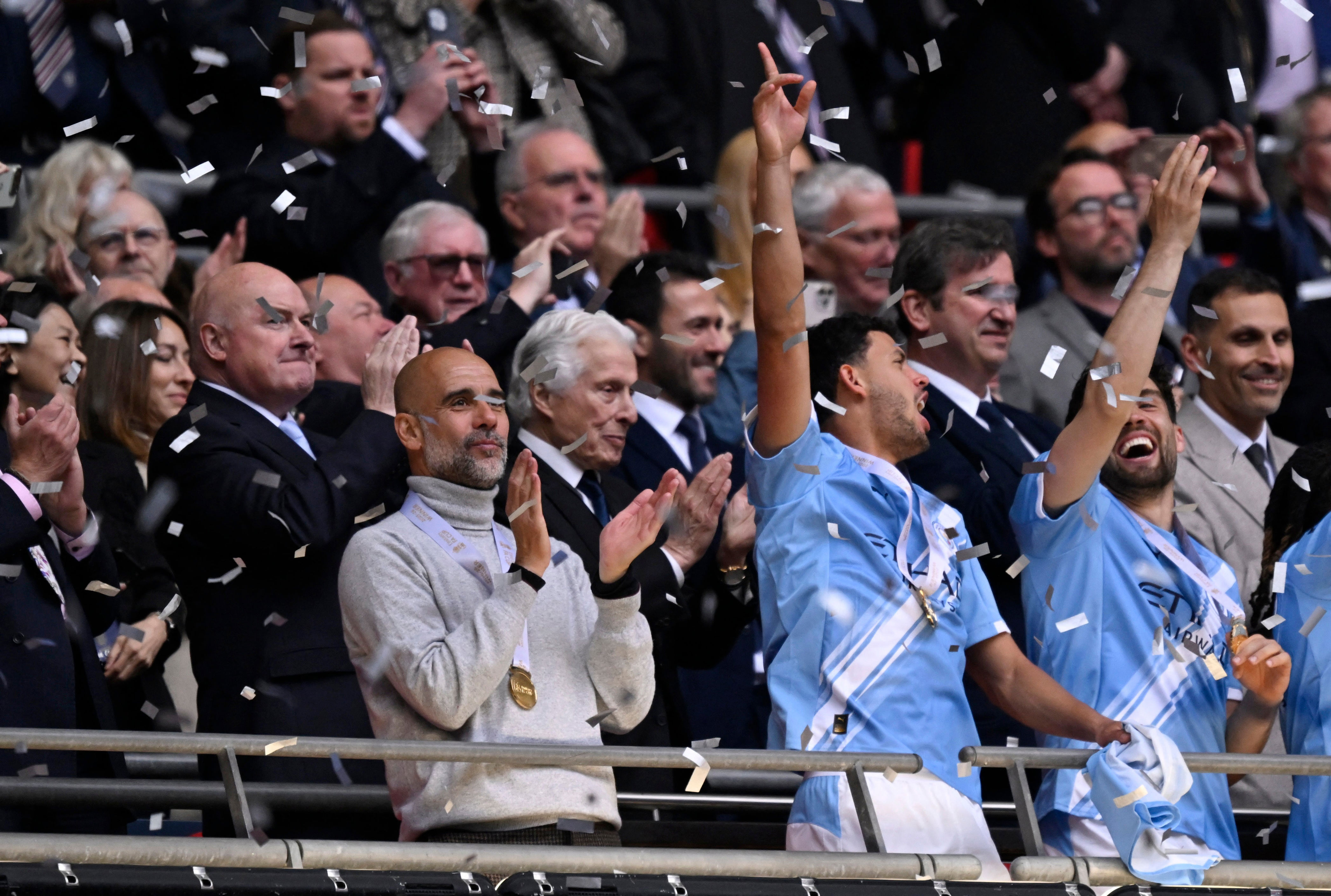
There’s also another dimension with City, beyond the resources. There’s the politics, a subject that Guardiola himself has invited discussion on. City are not just the most lavishly funded football project in history but also a “sportswashing” project—a vehicle for the projection of the power of Abu Dhabi and the United Arab Emirates, with all of that entails—including a highly criticised human rights record and now mounting evidence that it is backing the Rapid Support Forces in a campaign in Sudan that a United Nations fact-finding mission described as “carrying the hallmarks of genocide”.
Human rights organisation Fair Square even called on the UK’s Foreign Office to investigate City’s named owner Sheikh Mansour bin Zayed Al Nahyan, the deputy prime minister of UAE. The body did not receive a response from City or the UAE embassy. Abu Dhabi have otherwise expressed outraged innocence to the wider claims.
It is to all this that Guardiola, one of the most celebrated football figures in history, has lent his halo; his reputational glow. And while players and managers are generally given a pass for such choices due to how short their careers are and how complex the industry now is beyond the pitch, there are two differences with Guardiola.
One is how intertwined his identity has been with the entire project, as if the ownership were trying to appropriate a place in the most celebrated football lineage of all. Another is how avowedly political he is.
Guardiola has laudably spoken about Palestine, but has he considered the role of Abu Dhabi and the UAE in that crisis, not least their own relationship with Israel? It was similar in 2018 when he creditably wore a yellow ribbon in support of Catalan independence leaders and spoke about political freedoms on “humanity”. On being asked how he squared that with gratitude to Sheikh Mansour, a leader in a country “criticised for not respecting freedoms”, Guardiola gave a garbled answer about how “every country decides the way they want to live for themselves”.
That had echoes of when he was doing ambassadorial work for Qatar 2022 and said the state had “all the freedoms of the world, within the frame that the government gives them”.
The Broader Implications
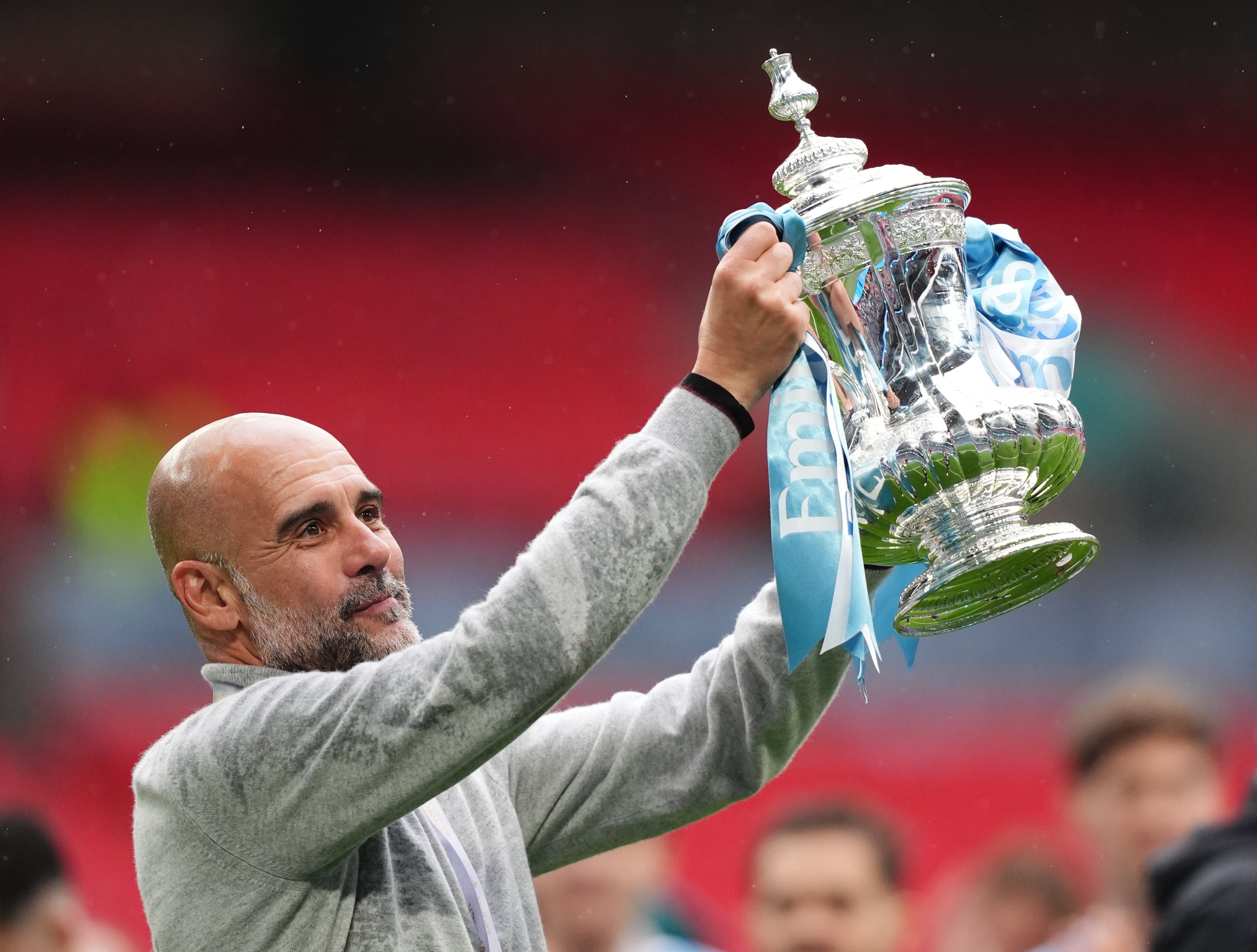
The wider point is Guardiola could have gone anywhere. He chose this. Whether conscious or not, he allowed his football reputation to legitimise a highly questionable geopolitical project. While such descriptions usually receive storms of backlash, especially at a moment when someone is being celebrated, these are the big important themes that the game should absolutely concern itself with.
It is yet waiting to see another potential effect of this. Weighing over the majority of Guardiola’s time at the club is the Premier League investigation into City, since the initial Football Leaks that prompted all of this came out in November 2018. Most of the charges do not relate to his time at the club but, if guilt were proven, a key point would be about how you can’t just cleanly separate one era from another; they’re interlinked.
More pointedly, and absurdly for English football, most of Guardiola’s success has come while a huge investigation has been ongoing. City insist on their innocence. Whatever the outcome, Guardiola is now likely to not be around now to discuss it. He’s finally leaving, his football record greatly enhanced. He’s also done similar for the reputation of Abu Dhabi's football project.
There are, fittingly, two ways to think about Guardiola.
Post a Comment for "The hidden side of Guardiola that shapes Man City's legacy"