
A New Focus on the White House: Trump’s Ambitious Upgrades
Donald Trump, known for his distinctive style and approach to leadership, has always had a keen eye for grandeur. While he may not be recognized for his commitment to environmental conservation, recent discussions suggest that the President is now focusing on a series of upgrades to the White House, which could have significant implications for both the presidential residence and the surrounding landscape.
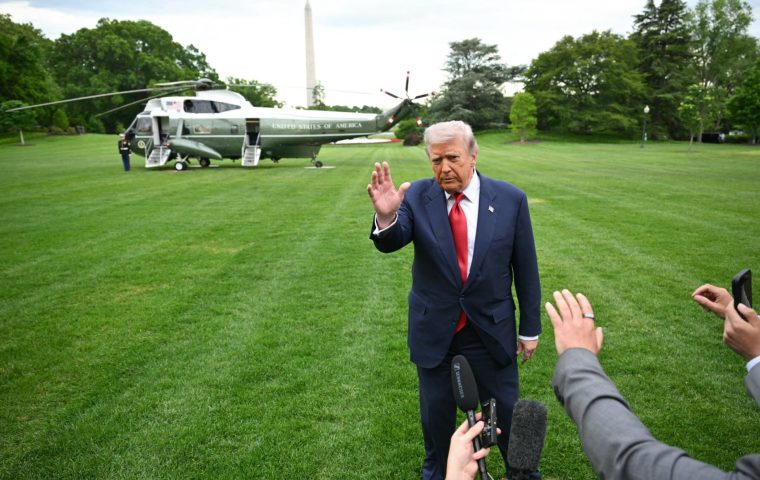
One of the proposed changes involves the installation of a new helipad at the White House. This initiative is said to be aimed at preventing the powerful Marine One helicopters from damaging the South Lawn's grass. The idea is that a dedicated helipad would allow lighter crafts to land, thus preserving the pristine lawns. However, creating a discreet helipad is no small task, and this move seems to align with Trump's tendency to embrace opulence and grand design.
The helipad is part of a broader plan for a massive and costly makeover of the presidential offices and residence, as well as the larger landscape of Washington D.C. This ambition echoes similar projects undertaken by other world leaders, such as the German Chancellor’s residence, which will also feature a rooftop helipad starting next year. Such initiatives have often been criticized as unnecessary extravagance, yet they reflect a desire to leave a lasting legacy.
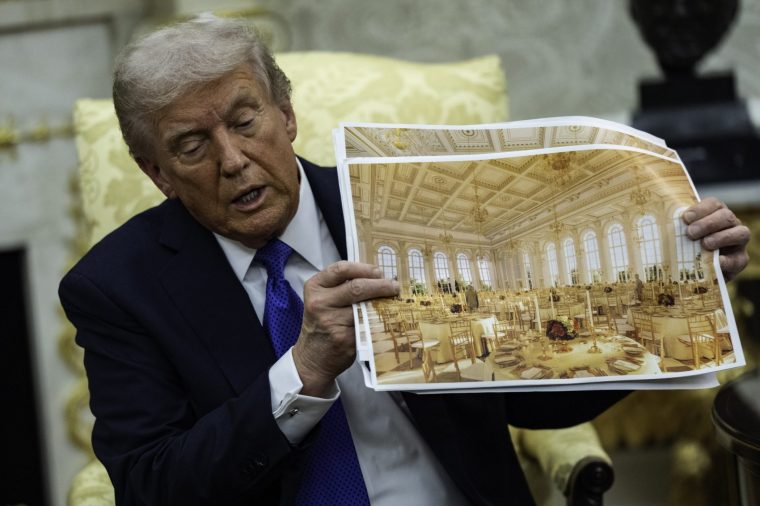
Trump’s penchant for bling and grandeur is evident in his various properties, including the Mar-a-Lago complex, which is adorned with grandiose touches, statues, and swimming pools. This aesthetic preference has led to several controversial renovations at the White House, including the replacement of an art deco bathroom with a black-and-white marble one featuring glinting fittings. Trump even claimed that this change would have found favor with Abraham Lincoln, citing the alignment with designs from "1850 and civil wars."
The underlying motivation behind these domestic improvements is revealing of Trump's priorities. While the official excuse provided by the White House is that the renovations “benefit future presidents and Americans,” there are indications that the President is more focused on personal legacy than on pressing global issues. For instance, after a recent incident at the White House correspondents’ dinner, where a gunman attempted to gain entry, Trump claimed that having a ballroom already existed “this never would have happened.”
This focus on internal matters appears to be occurring during a critical period in U.S. foreign policy. The decision to attack Iran, with its inconclusive fallout and economic impact on oil and gas prices, should be a top priority for any leader. Yet, the Trump administration has taken a different path, prioritizing domestic projects over global concerns.
Trump is currently navigating between war room meetings with significant implications for the global economy and sessions on the minutiae of the ballroom complex, as well as decisions regarding the helipad and whether granite features should be black or grey. As one former member of his personal staff noted, Trump has “a phenomenal attention to detail – even down to the lettering on a building or a door handle – when it is a passion project.”
Whether to resume attacks on Iran is a crucial decision the President needs to take soon. He cannot afford to keep threatening without taking action. The alternative route involves pulling together Gulf allies like Qatar, UAE, and Saudi Arabia to orchestrate a backdown from Tehran using their influence and economic channels.
Trump is expected to hold a meeting with his national security advisors shortly to discuss further military or off-ramp options. John Bolton, a former national security advisor who fell out with the President during his first term, mentioned that it is clear to the regime in Iran that Trump wants out, but he also knows if he makes a bad deal, he’s going to be harmed by it politically.
These are the decisions and deliberations that shape historic moments and presidential memoirs—high risk, high reward. Not many occupants of the West Wing would combine them with near-daily attention to what is happening on a pet building project—or indeed whether a reflecting pool renovation ordered to be completed on the National Mall can be hurried along to hit the 250th anniversary of American Independence deadline.
All of this leaves even some exhausted Republicans worrying that the chief White House resident might be more concerned with the decor than global security—or indeed, that having done all the fixtures and fittings, he may be loathed to leave the place when his term is up.


No comments:
Post a Comment