
A New Focus on the White House: Trump’s Ambitious Upgrades
Donald Trump is not typically known for his commitment to conservation or environmental causes. However, a new plan currently under discussion has revealed an unexpected shift in focus. Amid a stalemate with Iran, growing tensions with NATO over the withdrawal of US forces from Poland, and a public increasingly concerned about the cost of living during a midterm election year, the President is now turning his attention to the next phase of White House upgrades.
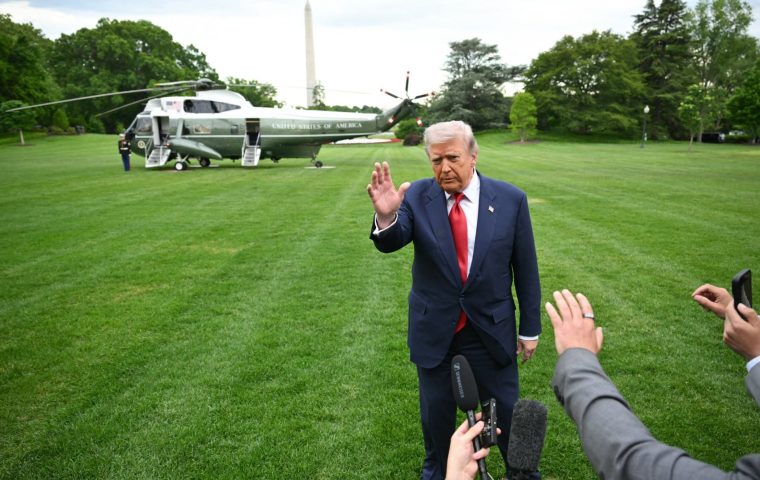
One of the most notable proposals involves the installation of a new helipad at the White House. The stated purpose of this upgrade is to prevent presidential helicopters from damaging the South Lawn’s grass. While this may seem like a practical solution, it also raises questions about the broader implications of such a move.
Practicality and Controversy
The Marine One helicopters used to transport the President are powerful machines, often causing damage to the pristine lawns around the White House. A dedicated helipad could allow for the use of lighter aircraft, reducing the risk of damage. However, creating a discreet helipad is no small task, especially given the high-profile nature of the location.
Trump, who made a dramatic entrance into the political arena by descending in a gilded escalator at Trump Tower in 2015, has long been associated with grandiose architectural choices. This latest proposal seems to be in line with that tradition, as part of a larger, costly renovation of the presidential offices and residence, as well as the broader landscape of Washington, D.C.
Inspiration from International Examples
It is possible that Trump was inspired by recent developments in Germany, where the Chancellor's residence will feature a rooftop helipad starting next year. This move has faced criticism as an unnecessary extravagance in Berlin. For Trump, however, such grand gestures are nothing new. His aesthetic has always leaned heavily on his love for luxury, as seen in the opulent features of his Mar-a-Lago complex, which includes statues, swimming pools, and other lavish touches.
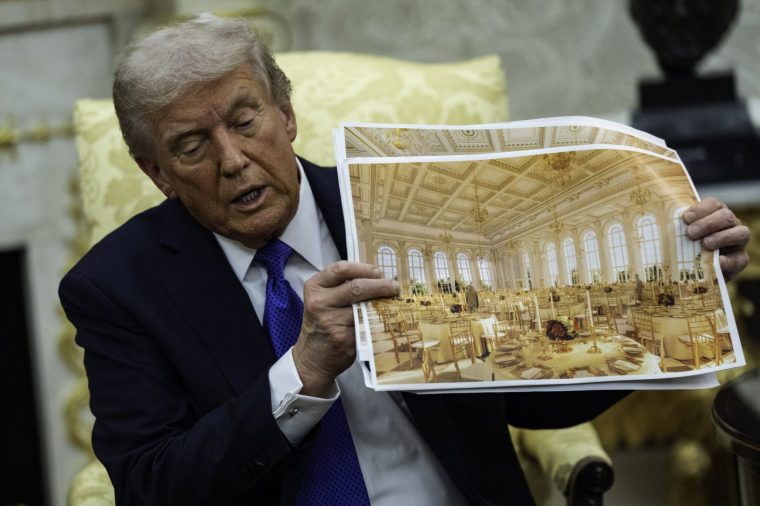
The President has a strong desire to leave his mark on everything he touches. From paving Eleanor Roosevelt’s Rose Garden to create an outdoor patio space, to what is officially called the “East Wing modernisation project” but is essentially the construction of a $400 million ballroom funded by billionaire supporters, Trump is committed to reshaping the White House in his own image.
A Distraction from Global Affairs?
Underlying this extensive domestic improvement push by a second-term President is a clear indication of where Trumpian priorities lie. It appears that these projects often serve as distractions from more pressing global issues. The official excuse for the renovations is that they "benefit future presidents and Americans." However, after a recent incident at the White House correspondents’ dinner, when a gunman attempted to gain entry, Trump claimed that if the ballroom had already existed, "this never would have happened."
Despite the serious implications of recent events, such as the attack on Iran and the resulting economic fallout, Trump continues to focus on details that seem far removed from the bigger picture. He alternates between war room meetings with significant global economic implications and sessions on the minutiae of the ballroom complex, as well as decisions about the helipad and whether granite features should be black or grey.
Attention to Detail and Priorities
As one former member of his personal staff noted, Trump has "a phenomenal attention to detail – even down to the lettering on a building or a door handle – when it is a passion project, and none at all if it isn’t." This level of focus on seemingly minor details stands in stark contrast to the critical decisions facing the administration.
Whether to resume attacks on Iran is a major decision that the President must make soon. He cannot afford to keep threatening without taking action. The alternative is to bring together Gulf allies like Qatar, UAE, and Saudi Arabia in an effort to orchestrate a backdown from Tehran using their influence and economic channels.
Trump is expected to meet with his national security advisors shortly to discuss further military or off-ramp options. John Bolton, a former national security advisor, recently remarked that "it’s clear to the regime in Iran that he wants out, but he also knows if he makes a bad deal, he’s going to be harmed by it politically. So, he’s trapped and he doesn’t know what to do."
These are the kinds of decisions that define historic leadership and presidential memoirs—high risk, high reward. Not many occupants of the West Wing would combine such decisions with near-daily attention to a pet building project or whether a reflecting pool renovation ordered to be completed on the National Mall can be hurried along to hit the 250th anniversary of American Independence deadline.
All of this leaves even some exhausted Republicans wondering if the chief White House resident might be more concerned with the decor than global security—or indeed, that having done all the fixtures and fittings, he may be reluctant to leave the place when his term is up.


No comments:
Post a Comment