
Unraveling a 800-Year-Old Solar Mystery with Trees and Records
A group of researchers from the Okinawa Institute of Science and Technology have uncovered signs of a solar radiation occurrence over 800 years back. This finding was made through a unique combination of historical records from the medieval period and highly accurate carbon-14 readings obtained from trees that are buried in northern Japan. Experts think the event was aSolar proton event (or SPE), a surge of high-energy particles emitted by the Sun. These particles can present significant dangers to astronauts venturing outside Earth's magnetic shield.
This research looked into a "sub-extreme" proton event, a form of space weather that occurs more often than the most severe solar storms, making it a potential threat for deep space missions. In response to the study, Professor Hiroko Miyahara from the Solar-Terrestrial Environment and Climate Unit stated, “Prior research on historical SPEs has mainly concentrated on rare, highly intense events. Our paper offers a foundation for identifying sub-extreme SPEs—events that happen more regularly and are approximately 10-30% as intense as the most extreme ones, yet still pose significant risks.” The results showedpublished in the Proceedings of the Japanese Academy, Series B.
A hint concealed within a medieval journal
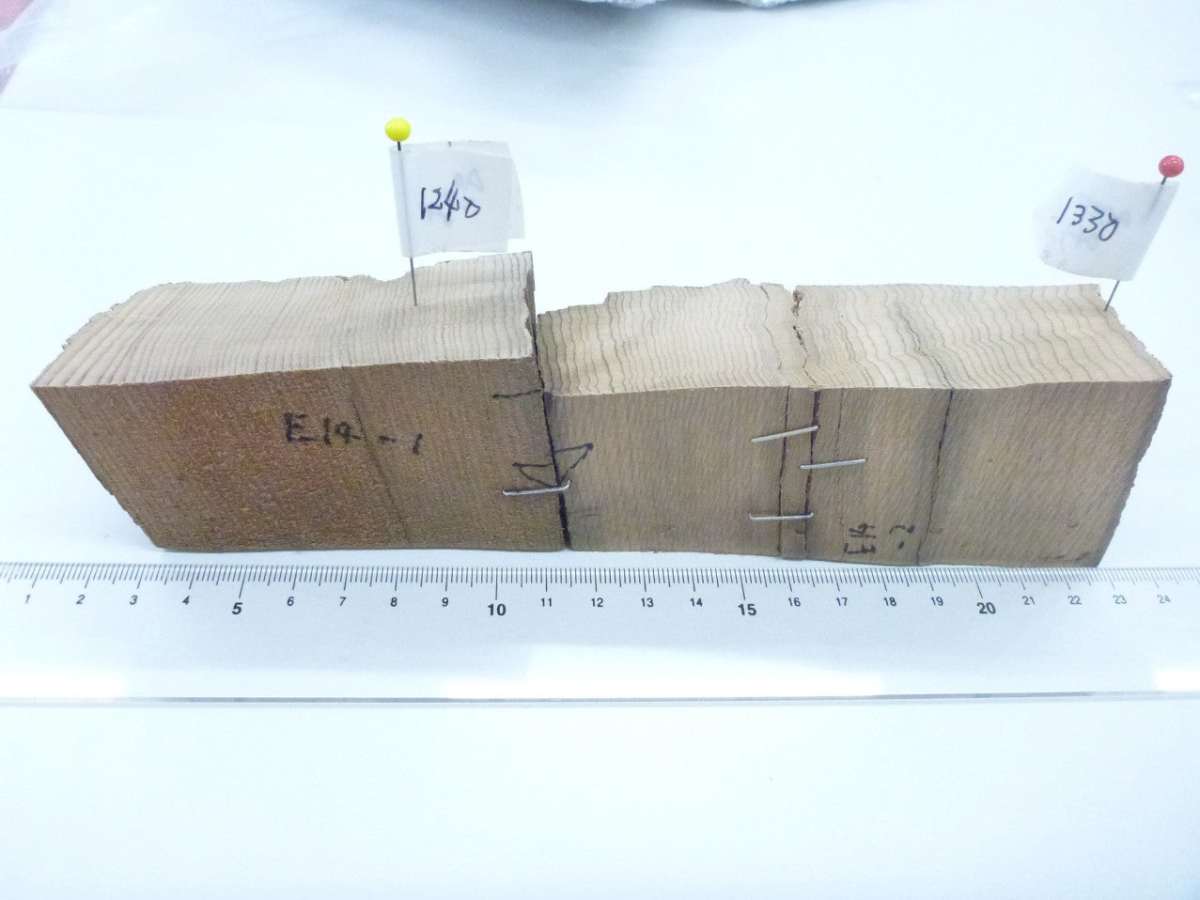
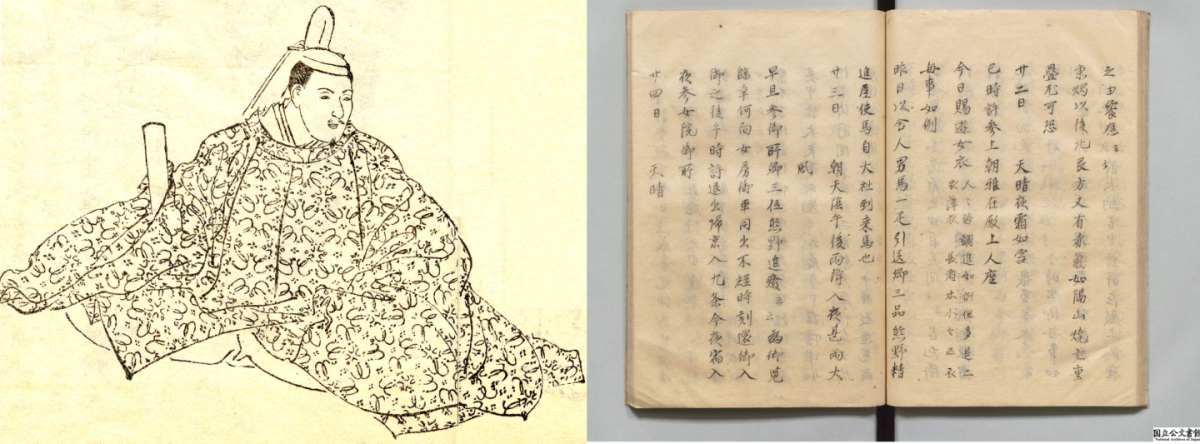
So, what method did scientists use to uncover a long-ignored solar occurrence? The solution is found in the methodology employed by the research group. The initial hint was obtained from Meigetsuki, the diary of Japanese poet and courtier Fujiwara no Teika. In February 1204 CE, Teika documented observing strange "red lights in the northern sky above Kyoto." Solar proton events do not directly causeauroras, but they are frequently associated with times of high solar activity that can generate them. To scientists, this account recorded in the diary seemed recognizable. The team then studied buried sunaro trees found in Aomori Prefecture, Japan. When high-energy particles hit Earth's atmosphere, they cause a nuclear chain reaction, ultimately resulting in carbon-14. This radiocarbon transforms into carbon dioxide, which is taken in by trees during photosynthesis and stored in their growth rings. By analyzing the carbon-14 levels in the wood, the team identified unusual increases connected to a severe solar proton event.
The scientists used ultra-accurate carbon-14 measurements, which were created over more than ten years, and these were precise enough to identify changes that typical techniques usually overlook. Although these measurements identified a radioactive peak, the group had to determine the specific date when this happened. For this purpose, they applied a technique known as dendroclimatic analysis, which compares tree-ring growth patterns with regional climate variations to create a timeline. This enabled the researchers to locate the event between the winter of 1200 CE and the spring of 1201 CE. This time frame was also confirmed by historical documents from China, which mentioned a similar red aurora during that time.
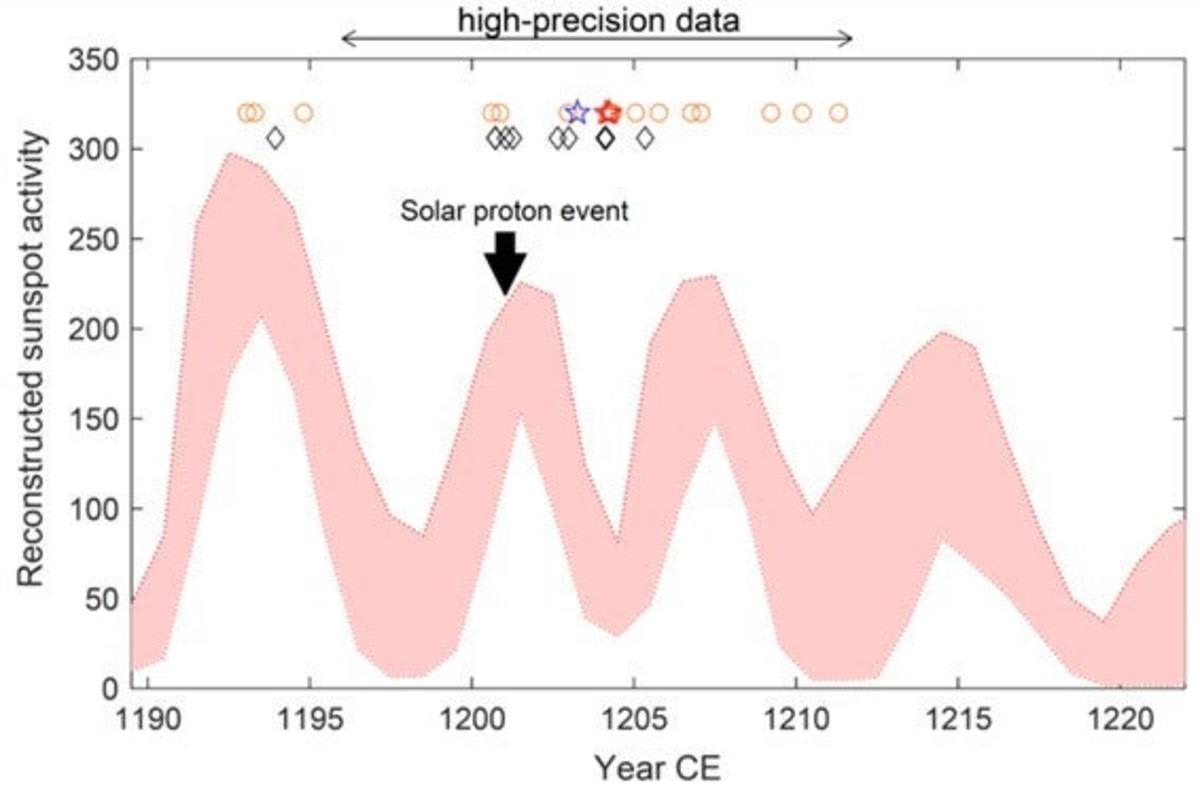
The results also indicate that the Sun functioned differently during the medieval era. "The high-precision data not only enabled us to precisely date sub-extreme solar proton events, but it also allows us to clearly recreate the solar cycles of that time," Miyahara explained. "Currently, the Sun's activity varies over eleven-year cycles, but we have discovered that the cycle was only seven to eight years long back then, suggesting a much more active Sun." The newly identified event seems to have occurred near the peak of one of those unusual cycles.active solar cycles.
Why are scientists focusing on this?
Solar particle events might appear to be distant cosmic occurrences, yet researchers caution that they could pose a risk to astronauts and satellites during upcoming deep-space journeys. In 1972, a set of SPEs took place between NASA’s Apollo 16 andApollo 17Lunar expeditions. If the astronauts were outside Earth's magnetic shield during these eruptions, they might have encountered dangerous levels of radiation. Combining past records with scientific information may assist scientists in gaining a clearer insight into how intense solar events evolve over time.
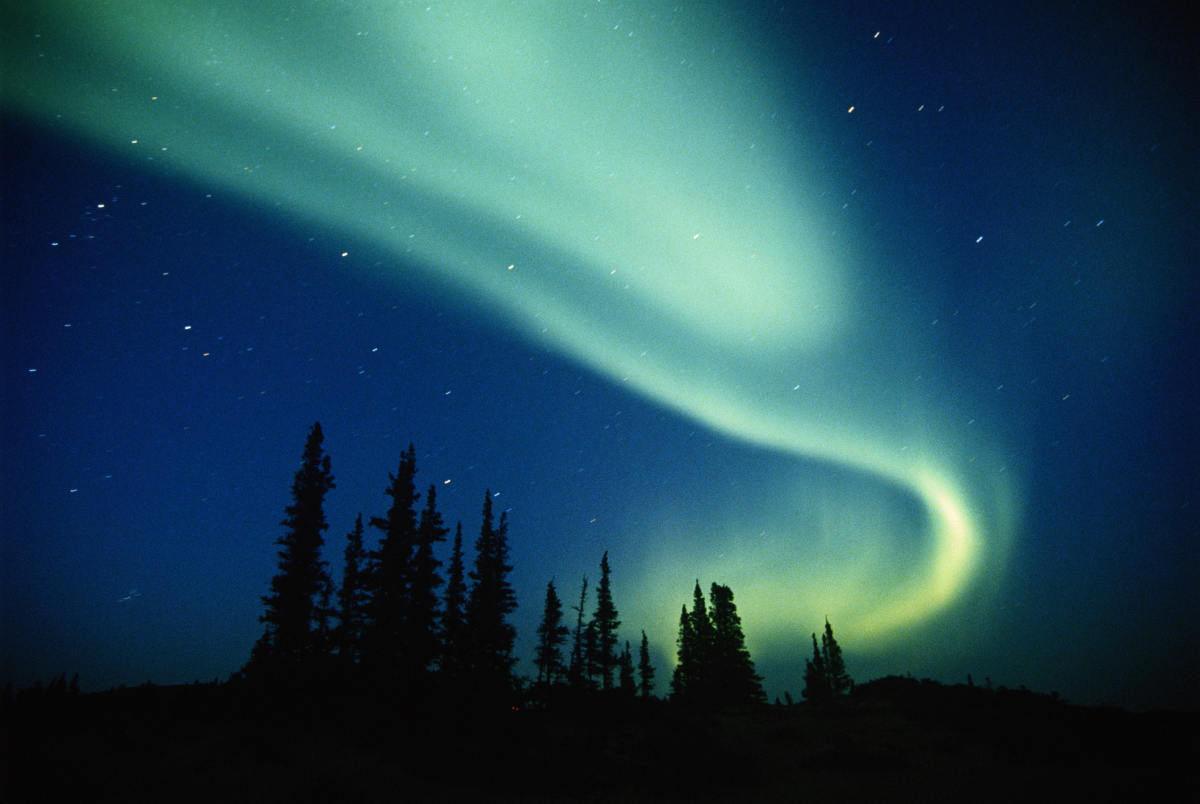
The research also brought up additional inquiries. Although the newly discovered SPE seems to correspond with the height of a solar cycle, certain accounts of extended low-latitude auroras appear to be more aligned with the less active part of the cycle. Scientists now aim to gain a clearer understanding of the solar conditions that might have caused these unforeseen occurrences.
Post a Comment for "Unraveling a 800-Year-Old Solar Mystery with Trees and Records"