
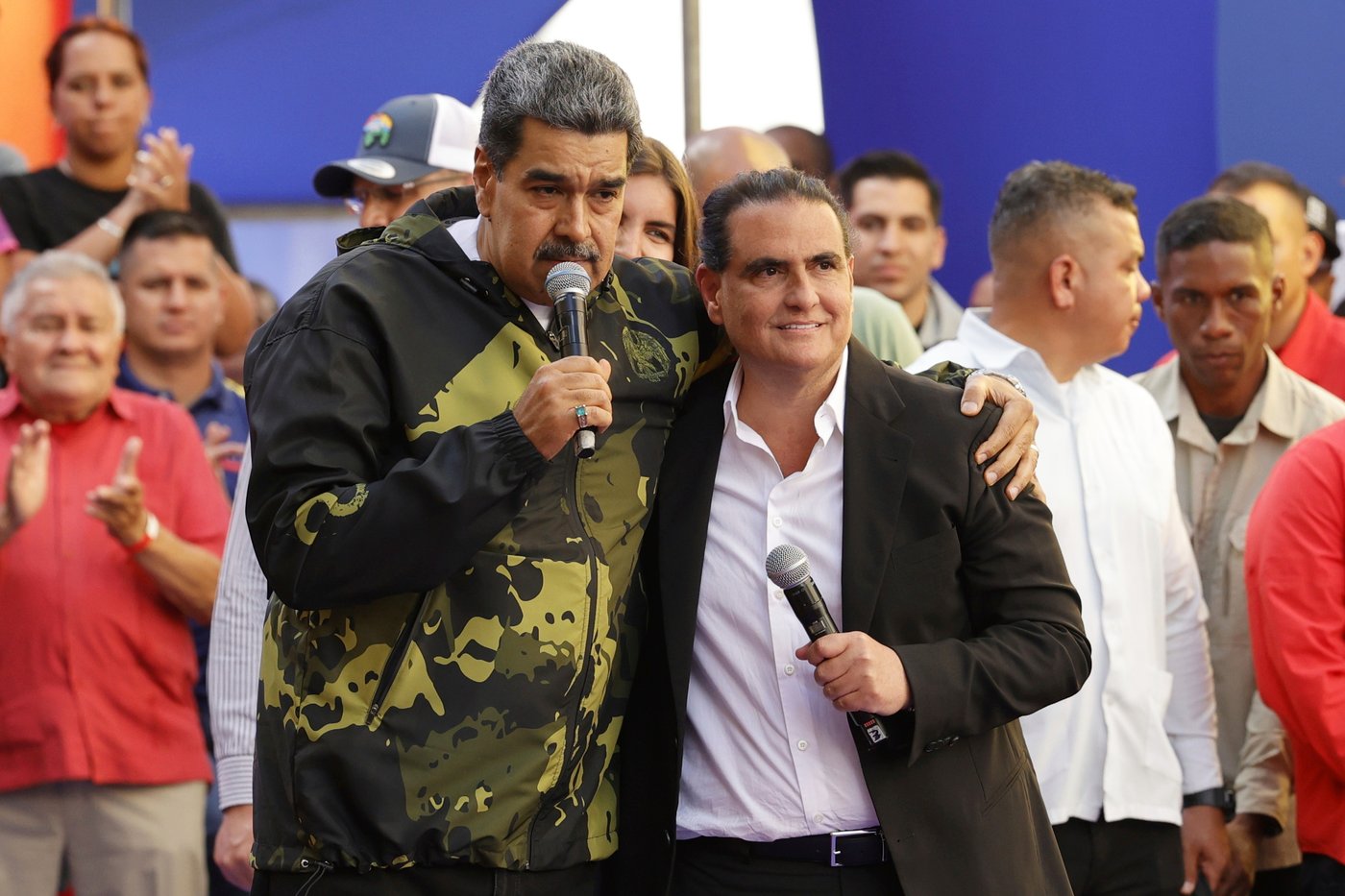
The Deportation of Alex Saab: A Shift in Venezuela's Political Landscape
Venezuela's government recently announced the deportation of a close ally of President Nicolás Maduro, Alex Saab, who is facing multiple criminal investigations in the United States. This move comes just under three years after Saab was pardoned by President Joe Biden as part of a prisoner exchange. The decision marks a significant shift in the political dynamics surrounding Saab, who was once a key figure in Maduro's administration.
Saab, a Colombian-born businessman, has long been described by U.S. officials as Maduro’s “bag man.” His potential testimony against Maduro could be crucial, especially given that Maduro is currently awaiting trial on drug charges in Manhattan after being captured in a surprise raid by the U.S. military in January.
The Venezuelan immigration authority stated that the decision to deport Saab was based on ongoing criminal investigations in the U.S. The statement referred to Saab only as a “Colombian citizen,” which appears to be a reference to Venezuelan law that prohibits the extradition of its nationals. This approach may have been an attempt to navigate the complex legal landscape surrounding Saab's case.
A Fortune Built on Government Contracts
Saab, 54, built his fortune through various government contracts in Venezuela. However, he fell out of favor with the new leadership that took power following Maduro's ouster. Since taking over from Maduro on January 3, acting President Delcy Rodríguez demoted Saab, firing him from her Cabinet and stripping him of his role as the main conduit for foreign companies looking to invest in Venezuela.
Conflicting reports have circulated about Saab's status, with some suggesting he was imprisoned or under house arrest. His removal to the United States is likely to deepen divisions within Rodríguez's fragile ruling coalition of Chavistas, named after the movement started by the late Hugo Chávez.
Rodríguez has garnered significant goodwill in Washington and has successfully stalled any discussions about new elections as she bends to the Trump administration’s demands to open up Venezuela's oil and mining industries to American investment. However, these concessions have angered many of her more radical allies, some of whom, like Interior Minister Diosdado Cabello, wield considerable influence inside the Venezuelan security forces and face criminal charges themselves in the U.S.
US Investigation into Food Corruption
The Associated Press reported in February that federal prosecutors have been investigating Saab's role in an alleged bribery conspiracy involving Venezuelan government contracts to import food. The investigation stems from a 2021 case brought by the Justice Department against Saab’s longtime partner, Alvaro Pulido, a former law enforcement official.
This prosecution, based in Miami, centers around the so-called CLAP program set up by Maduro to provide staples — rice, corn flour, cooking oil — to poor Venezuelans struggling to feed themselves during a period of rampant hyperinflation and a crumbling currency. Saab is identified in the indictment as “Co-Conspirator 1” and allegedly helped set up a web of companies used to bribe a pro-Maduro governor who awarded the business partners a contract to import food boxes from Mexico at an inflated price.
A History of Controversy
Saab was first arrested in 2020 after his private jet made a refueling stop in Cape Verde en route to Iran on what the Venezuelan government described as a humanitarian mission to circumvent U.S. sanctions. Rodríguez celebrated Saab’s return in 2023 as a “resounding victory” for Venezuela over what she called a U.S.-led campaign of lies and threats. However, several Republicans criticized the deal, including Sen. Chuck Grassley, of Iowa, who wrote a letter to then-Attorney General Merrick Garland saying history “should remember (Saab) as a predator of vulnerable people.”
Over the objections of law enforcement, Biden in 2023 agreed to free Saab in exchange for the release of several imprisoned Americans and Venezuela’s return of a fugitive foreign defense contractor known as “Fat Leonard.” The deal came as part of an effort by the Biden White House to roll back sanctions and lure Maduro into holding a free and fair presidential election.
Biden's pardon of Saab was narrowly tailored to a 2019 indictment — the case number is cited in the pardon itself — related to a contract he and Pulido allegedly won through bribes to build low-income housing units in Venezuela that were never built.
A Possible Witness Against Maduro
Should Saab be returned to U.S. custody, he could become a valuable witness against Maduro. The businessman secretly met with the Drug Enforcement Administration before his first arrest and, in a closed-door court hearing in 2022, his lawyers revealed that the businessman, for years, helped the DEA untangle corruption in Maduro’s inner circle. As part of that cooperation, he forfeited more than $12 million in illegal proceeds from dirty business dealings.
Saab's Miami-based attorney, Neil Schuster, declined to comment. The Justice Department did not immediately respond to a request for comment.
Associated Press writer Eric Tucker contributed to this report from Washington.
This story is part of an investigation that includes the FRONTLINE documentary “Crisis in Venezuela,” which aired Feb. 10, 2026, on PBS. Watch the documentary at pbs.org/frontline, in the PBS App and on FRONTLINE’s YouTube channel. Joshua Goodman, The Associated Press


No comments:
Post a Comment