
Viking Longship Unearthed in Norway After 1,200 Years Under Peat
On a flat area of farmland in Halden, southeastern Norway, a crane wrapped its straps around a block of earth the size of a dining table and carefully lifted it from a trench. Within that block, preserved in waterlogged clay, was a part of a Viking longship that had remained hidden from sunlight since the ninth century. Over two excavation seasons in 2020 and 2021, a group from the Museum of Cultural History at the University of Oslo performed this task dozens of times, gradually removing the ship piece by piece from the burial mound where it had been resting for approximately 1,200 years.
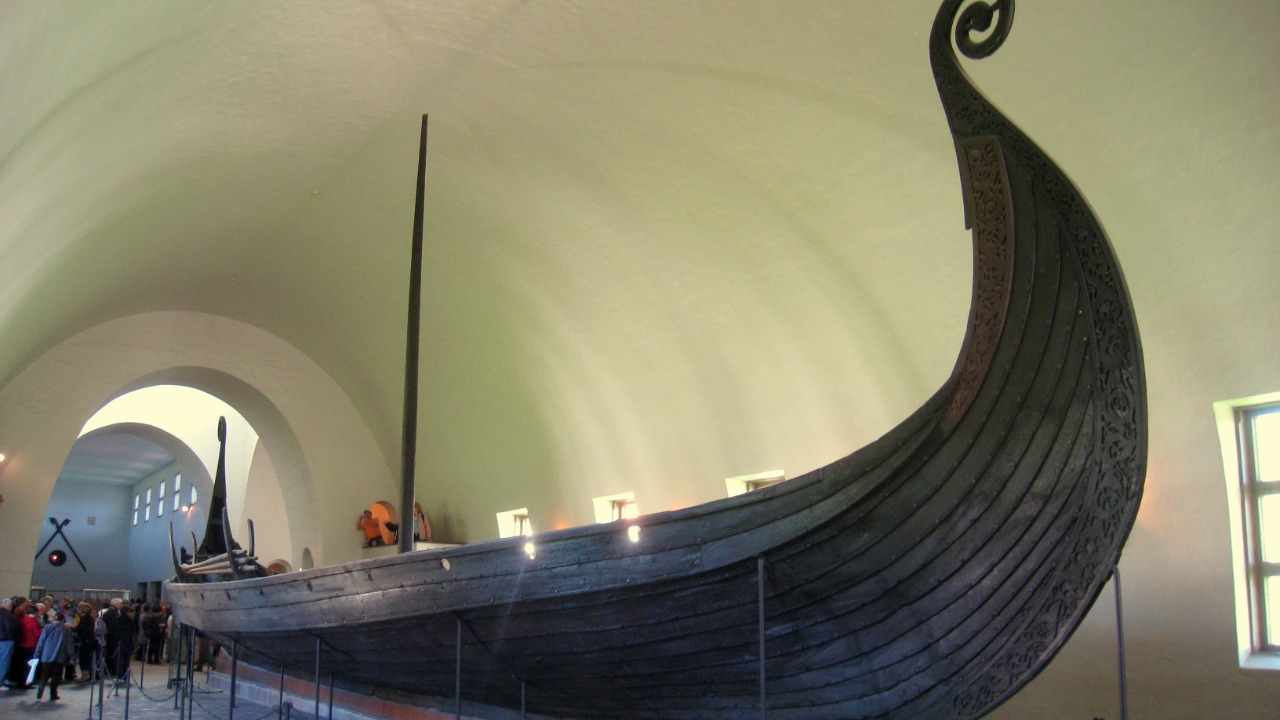
The vessel, referred to as the Gjellestad ship, marks the first Viking-era longship discovered in Norway in over a hundred years. The previous similar find was the Oseberg ship in 1904. This time span alone makes the project remarkable, but what distinguishes Gjellestad is the advanced techniques used to address an issue that has challenged Scandinavian archaeologists for many years: how to recover water-soaked wood without causing damage.
Why the vessel remained intact, and why it was at risk
The survival of the hull is entirely due to the ground where it was buried. Thick, oxygen-deprived clay and wet soil significantly reduced bacterial decay, maintaining the keel and lower hull planks in good condition as centuries went by. The vessel was constructed using the clinker method, which involved oak planks overlapping like clapboard and being secured with iron rivets, a technique that characterized Norse shipbuilding from around the seventh century onward.
However, living underground did not guarantee security. In 2018, a ground-penetrating radar study carried out by the Norwegian Institute for Cultural Heritage Research (NIKU) identified the ship's shape under a cultivated field. The same investigation uncovered concerning findings: fungal growth was already damaging the wooden structure. Contemporary farming practices had reduced the water level and allowed oxygen to enter soil layers that had remained undisturbed for a thousand years. The ship was deteriorating on the spot, and time was limited.
That radar mapping, as part of a larger initiative by theLudwig Boltzmann Institute for Archaeological Surveying, also indicated that the ship was not by itself. Around it were signs of other burial mounds, possible hall structures, and a ceremonial area that implied Gjellestad was a place of significant political and ritual significance during the Viking era. The ship burial probably commemorated a prominent person, although the identity, gender, and status of the individual buried there have not been verified as of June 2026.
A fresh perspective on a longstanding issue
Earlier Viking ship recoveries were daring but crude. The Oseberg and Gokstad ships were excavated using manual tools during a time when conservation science had not yet emerged as a field. Employees separated wooden parts on-site, and some sections warped or broke before they could be documented. Missing information in those archaeological records still remains today.
At Gjellestad, the team implemented a completely different approach. Instead of revealing individual planks in the trench, they divided the hull into large sections of soil and wood, encased and secured each section, and moved them to a laboratory at the University of Oslo. There, every block was scanned using a micro-CT machine before any work was done on the wood inside.
Micro-CT imaging functions similarly to a medical CT scan, but with significantly greater detail. It uses X-rays to pass through an object from various angles, compiling the information into a three-dimensional density image. For the Gjellestad blocks, this process allowed scientists to observe the exact placement of each plank, every rivet, and each area of organic material while the wood remained protected within its original soil. The outcome was a digital representation of the hull as it was found underground, detailed enough to assist conservators in their work on each individual plank.
The process is explained thoroughly in apeer-reviewed research article released by Elsevier, which details the scanning procedures, the process of lifting blocks, and how the resulting 3D models contributed to conservation planning. The paper serves as the most reliable technical description of the excavation as of mid-2026.
What does the ship look like now
The Gjellestad vessel is approximately 19 meters (around 62 feet) long, categorizing it in a similar group as the Gokstad ship, which served both for navigation and as a burial site. The keel and lower sections of the hull remained intact, but the upper parts of the vessel had been removed by years of plowing. For many years, farmers cultivating the land above the mound had been inadvertently cutting into the top of the ship.
Iron rivets were discovered across the remains, with numerous ones still in their initial placement, securing planks together. In waterlogged conditions, iron can release corrosive substances into nearby wood, and the extended chemical impact on the Gjellestad timber is currently under evaluation. Preservation is expected to require a prolonged process involving polyethylene glycol (PEG), the same waxy material utilized to stabilize the Oseberg and Vasa vessels, followed by gradual drying over several years.
Information regarding grave goods, weapons, or personal items that might have been part of the burial has not yet been officially released. Viking ship burials of this size usually contained swords, shields, tools, textiles, food offerings, and occasionally sacrificed animals. It is still unknown if such items remain at Gjellestad, and what they could indicate about the person buried there, as this is yet to be determined by expert analyses from the museum team.
What Gjellestad represents for the fields yet to be tilled
The importance of the Gjellestad project goes far beyond just one ship. Throughout Scandinavia, the agricultural plains are filled with burial mounds, most of which have been flattened by modern farming and are no longer visible on the surface. Ground-penetrating radar has revealed that some of these destroyed mounds still hold undisturbed burials, yet most have never been examined. The discovery at Gjellestad was, in a way, a fortunate coincidence: the radar team scanned the correct field before the fungal decay had progressed too much.
Other websites might not be as lucky. Improvements in drainage, deeper plowing, and climate-related changes in groundwater levels are changing soil chemistry throughout northern Europe, possibly speeding up the decomposition of organic materials that have remained stable for centuries. Archaeologists in the area have cautioned that a generation of unexplored ship burials could disappear before anyone becomes aware of their existence.
The Gjellestad project provides a framework for addressing that risk: start with non-invasive methods, excavate only when deterioration necessitates urgent action, and employ high-tech imaging to document all available information prior to any conservation efforts. This approach is based on the difficult experiences from previous recoveries, where rushed actions and outdated technology resulted in lasting gaps in the historical record.
Currently, the ship's timbers are kept in controlled storage at the University of Oslo, as they go through the slow and meticulous process of stabilization. A final display plan has yet to be revealed, but the Museum of Cultural History, which already contains the Oseberg and Gokstad ships, is expected to be its home. When the Gjellestad ship is finally shown to the public, it will not only tell the story of a Viking-era burial but also serve as a testament to 21st-century science that saved it from complete loss.
More from Morning Overview
- The NSA urgently alerts all mobile phone users regarding a feature that most individuals keep enabled
- Wolves that are 5,000 years old on a secluded island challenge the theory of domestication
- Scientists might have discovered a Type II civilization
- EPA finally removes 'senseless feature' from 60% of American vehicles following 14 years of driver frustration
*This article was researched using AI assistance, with human editors responsible for the final content.
Post a Comment for "Viking Longship Unearthed in Norway After 1,200 Years Under Peat"