
Civil Servants and the Threat of Industrial Action
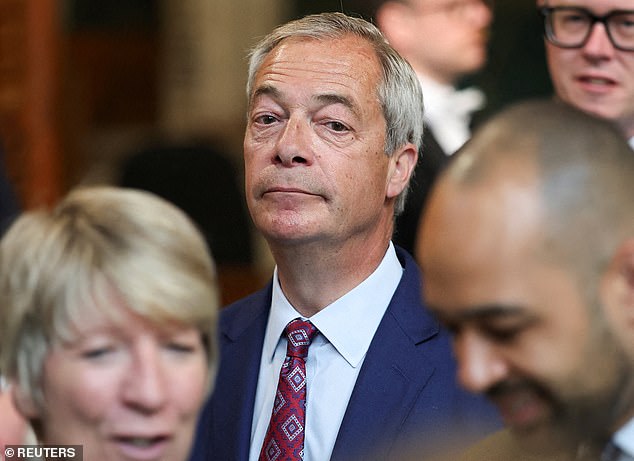
Whitehall officials are reportedly planning to disrupt the government through a sustained campaign of strikes if Nigel Farage leads the next election. This move comes as the largest trade union for civil servants, the Public and Commercial Services Union (PCS), prepares to vote on a motion calling for an "industrial defence strategy" to counter a potential Farage administration. The union has 170,000 members, and the proposed strategy involves workers being ready to strike with minimal notice.
Farage has promised to address what he calls the "institutional Left-wing bias" within the "Blob"—a term used to describe the civil service, local authorities, and schools—if he forms the next government. However, the motion under discussion at the PCS annual conference suggests that a Reform UK government would face an all-out conflict with Whitehall. The motion highlights the significant rise in polling and political influence of Reform UK, stating that a Reform government would pose an existential threat to the job security, pay, and professional integrity of every PCS member.
The motion also warns of a "culture war" aimed at demoralizing public servants. It calls for a "laser-focused industrial strategy" to defend the Civil Service as a vital, neutral institution through direct industrial and legal action. If approved, the union’s ruling NEC would develop the resistance strategy by the end of the year. The strategy will include launching a targeted recruitment drive in departments most at risk of cuts, ensuring the union has the mandate for sustained industrial action.
Conflict with Education Unions
Farage's recent gains in local elections have led to clashes with education leaders. Earlier this year, he exchanged words with a "Marxist" teachers' leader whose union has vowed to mobilize members to prevent him from becoming Prime Minister. At the National Education Union (NEU) annual conference, delegates called for the trade union movement to "throw its full weight behind stopping a Reform UK government." They also urged teachers to "collate and disseminate anti-racist teaching materials" and to "encourage school and community-based anti-deportation campaigns."
Farage has vowed to eliminate "politicized classrooms" if he becomes Prime Minister, targeting Daniel Kebede, the NEU's hard-Left general secretary. He criticized Kebede, saying, "The NEU should focus on the day job of teaching instead of trying to indoctrinate children. Daniel Kebede is an open Marxist and shouldn't be anywhere near our education system. Change is coming for the NEU—a Reform government will introduce a patriotic curriculum, no longer will teaching unions be able to politicise the classroom and talk down our country."
Kebede responded by calling Farage a "disaster for Britain," claiming he would cut schools and the NHS to the bone.
Civil Servants’ Pension Payouts
Civil servants are receiving taxpayer-funded pensions of more than £150,000 annually despite reforms aimed at curbing gold-plated public sector payouts, according to new figures. These payments come from the Civil Service Pension Scheme, one of the largest of its kind, which will cost taxpayers £7 billion this year—up from £6.8 billion last year.
Among those drawing from the scheme, 23 individuals receive more than £150,000 annually, with a further 263 collecting more than £100,000. These are guaranteed, inflation-linked pensions for life. Former Institute for Fiscal Studies director Paul Johnson described the numbers as "extraordinary," stating that the scheme was "paying out far more than you would ever imagine is reasonable."
He added, "This is evidence of a pension scheme that, at least historically, has got out of control. I think the real issue is we've got a totally wrong balance between pay and pensions, and it's increasingly wrong as the private sector no longer has anything along these lines."
The 2022 reforms aimed to limit payouts by basing pensions on average rather than final salary. However, pensions exceeding £50,000 have more than doubled since then, from 3,025 to 7,234, while those exceeding £100,000 rose from 71 to 263. Last November, the TaxPayers' Alliance found that 22 senior civil servants had accumulated pension pots worth more than £1 million—enough to generate retirement income of more than £70,000 a year.
No comments:
Post a Comment