
Young Pros Fear AI — Should They?
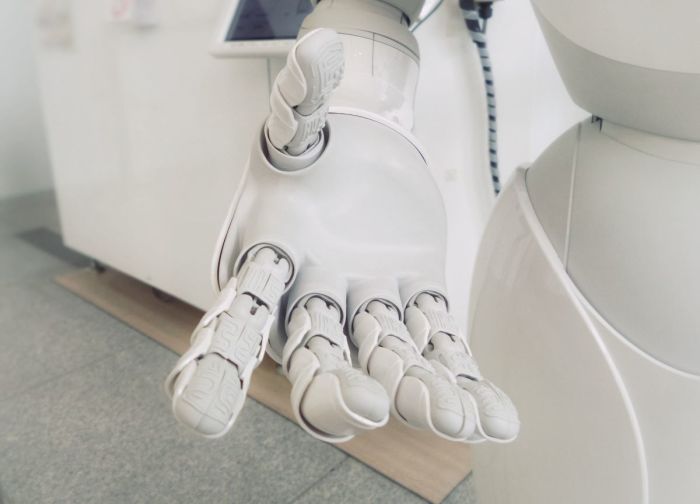
This spring, an unusual new trend has started to emerge at college graduation events throughout the United States.
Earlier this month, at the University of Central Florida, commencement speaker Gloria Caulfield tried to inspire graduates by referring to artificial intelligence as "the next industrial revolution." The students' reaction was quick and strong: thousands in the audience booed her.
Shortly after, former Google CEO Eric Schmidt faced a comparable response when addressing graduates at the University of Arizona. As Schmidt talked about the upcoming influence of artificial intelligence and the duty this generation will have in guiding its development, students repeatedly drowned him out with loud disapproval.
It's simple to overlook these instances as mere youthful exaggeration or fear of technology. However, I don't believe that's truly what's happening.
I believe we are witnessing a generation openly showing real anxiety about what lies ahead.
For numerous young Americans entering today's job market, artificial intelligence does not seem like an exciting advancement. Instead, it appears as a significant risk to the life they had planned for themselves. They have invested years in preparing for careers that now look more susceptible to being replaced by automation. Writers, artists, programmers, analysts, marketers, designers, and even those in entry-level positions within law and finance are all receiving the same alarming message: the machine might soon be capable of performing much of what they have trained to do.
Beneath the criticism lies a more profound concern than dissatisfaction with tech firms. There is an increasing worry that the future is turning uncertain. That the route taken by earlier generations toward adulthood may no longer be recognizable.
It's reasonable to feel that way. However, it's not something unprecedented.
Each era has encountered technological advancements that appeared ready to disrupt the world they were familiar with. The emergence of railroads changed commerce and transportation in ways earlier generations could hardly envision. Electricity took the place of candles and kerosene lamps, changing entire industries and routines of everyday life. The automobile significantly impacted manufacturing, farming, travel, and even the layout of American cities.
Every one of these uprisings pushed workers aside. Whole fields of work disappeared from history. Previous abilities were no longer useful. However, humanity persisted because people are more than the devices they operate or the roles they hold.
Emerging technologies eliminate specific types of employment while simultaneously generating innovative prospects that earlier generations could not have imagined. The advent of computers removed numerous positions associated with typewriters, record management, and manual data storage, but also led to the development of entire sectors that now provide jobs for millions worldwide.
Artificial intelligence is likely to follow a similar trend. Certain jobs will decrease in size. Others will change over time. New areas of work will come into existence. People will adjust as they have done throughout history.
However, I am increasingly convinced that the true concern about AI is not primarily economic. It is religious.
Contemporary society has subtly instilled in a whole generation the notion of defining oneself through accomplishments, efficiency, social standing, and career triumphs. From an early age, numerous young individuals have internalized the belief that life's goal is to shape oneself via professional achievements. Craft your resume. Secure an internship. Ascend the career hierarchy. Gain recognition. Attain financial stability. Develop an identity that commands respect.
But what occurs when a machine unexpectedly becomes able to carry out elements of that identity more quickly, at a lower cost, and with greater efficiency?
The fear associated with AI reveals a more profound issue than just economic anxiety. It highlights the vulnerability of a perspective that is largely based on human utility.
This is where Christianity presents a profoundly distinct and deeply reassuring approach.
The Christian perspective on human value has never been tied to economic output. The Bible states that people have worth because they are made in the image of God, not due to their financial significance. Individuals have inherent value because they reflect the mark of their Creator.
The significance of truth is immense during periods of technological change.
If your sense of self is completely based on your professional achievements, then any danger to your job becomes a threat to your entire identity. However, if your identity is built on Christ, then technological changes, although still challenging and disruptive, no longer have the ability to determine or destroy who you are.
The Westminster Shorter Catechism opens with one of the most significant questions ever posed: "What is the primary purpose of humanity?" Its response continues to be strongly against the grain even after many years: "To honor God, and to find joy in Him forever."
Notice what is not mentioned.
It doesn't state that the main goal of humanity is to maximize efficiency. It doesn't suggest that life's purpose is to gather money, surpass others, or gain career recognition. It doesn't claim that people are only here to generate economic worth.
Those elements might hold significance. The act of working carries respect. Christians ought to strive for quality and responsibility in their callings. However, a vocation was never intended to define one's entire identity, and achievement was never meant to serve as a rescuer.
That difference becomes extremely significant in an era increasingly shaped by artificial intelligence.
Throughout history, times of swift technological change have frequently led to more profound spiritual exploration. As traditional beliefs break down and societies evolve quickly, individuals start to ponder bigger questions regarding significance, endurance, intent, and self. They start seeking something reliable enough to endure the uncertainty surrounding them.
This search makes sense since every human identity ultimately falls short. Careers come to an end. Industries crumble. Wealth vanishes. Abilities decline. Even in the best situations, professional accomplishments and financial gains are fleeting and unable to bear the burden of true significance.
The reality was not brought into existence by technology. It simply reveals it.
In numerous respects, artificial intelligence acts as a reflection of contemporary society. It is highlighting the extent to which we have come to link human worth with economic productivity. It is uncovering the misguided ideals we constructed long before the emergence of the first chatbot.
But believers need not worry about the fall of those false gods.
The Creator of the cosmos has always been clear about the origin of human value. Our significance is not based on our productivity, income, or qualifications. It stems from reflecting His image and being part of Him.
That reality should offer deep reassurance to young individuals stepping into an unpredictable world.
Certainly, artificial intelligence will transform various sectors. Indeed, it will bring about substantial changes in the workforce. This has been the case with every major technological advancement. However, no algorithm can decipher the significance of a human life. No machine has the power to give or take away the dignity that comes from a divine source.
The response to technological disruption isn't fear. It's a broader view.
The young individual entering the era of artificial intelligence needs to grasp a lesson that earlier generations ultimately discovered: the world will undergo constant changes during your lifetime. Entire sectors will emerge and disappear. Innovations will reshape how people live and work. However, if your sense of self is based on Christ instead of your profession, you will have something that this world cannot steal from you.
The primary purpose of human life is not to rival a machine.
It is to honor the divine and to find eternal delight in Him.
Support making The Christian Post accessible to everyone.Contribute to The Christian Post.
Become part of a community of more than 450,000 Christian Post subscribers who receive the best stories each day, along with exclusive deals!Subscribe for free
Post a Comment for "Young Pros Fear AI — Should They?"