
BMW's Electric M3 Defies V8 Legacy with Something Better
The Goal of the Electric M3’s Sound
The primary objective of the electric M3’s sound is not to mimic the roar of a V8, V10, or straight-six engine. Instead, it aims to provide drivers with the speed and acceleration cues that are typically associated with internal combustion engines. BMW emphasizes that the sound should help drivers gauge their speed, especially in high-performance scenarios like track driving.
This approach is different from other manufacturers who may use pre-recorded engine sounds. BMW has taken a more nuanced path by studying the emotional appeal of classic M cars to create a unique auditory experience for its electric models.
Understanding the Emotional Appeal
BMW's engineers have analyzed iconic M cars to understand what makes their engine sounds so captivating. While they won't directly copy these sounds, they’ve used them as a foundation to develop something new and compelling. The result is an artificial sound that blends hints of a combustion engine with a distinct, high-pitched tone that feels both aggressive and exciting.
The goal isn’t to trick drivers into thinking they’re in a traditional gasoline-powered car. Rather, it’s about creating a unique auditory identity that enhances the driving experience. This sets BMW apart from competitors like the Hyundai Ioniq 5 N and the upcoming Mercedes-AMG GT 4-Door, which use fake V-8 sounds and vibrating seats to simulate the feel of a combustion engine.
Avoiding the Flat Drone
One challenge with high-performance electric vehicles is the lack of acoustic feedback. Without the familiar engine noise, it can be difficult for drivers to judge their speed, especially on a track. BMW is addressing this issue by ensuring that the M3 EV’s sound remains engaging throughout the entire rev range.
When analyzing the V-10 engine note, one engineer noted that it can sound flat and unexciting at certain RPMs. BMW wants to avoid such dead spots in the M3 EV’s sound, making sure it stays dynamic and exciting no matter how fast the car is going.
Simulated Gears and Progression
Another aspect of the M3 EV’s design is the potential inclusion of simulated gears. While most electric vehicles only have one forward gear, some automakers have chosen to simulate multiple gear shifts to add drama to the driving experience. It appears that BMW might follow this approach, especially for the quad-motor M3.
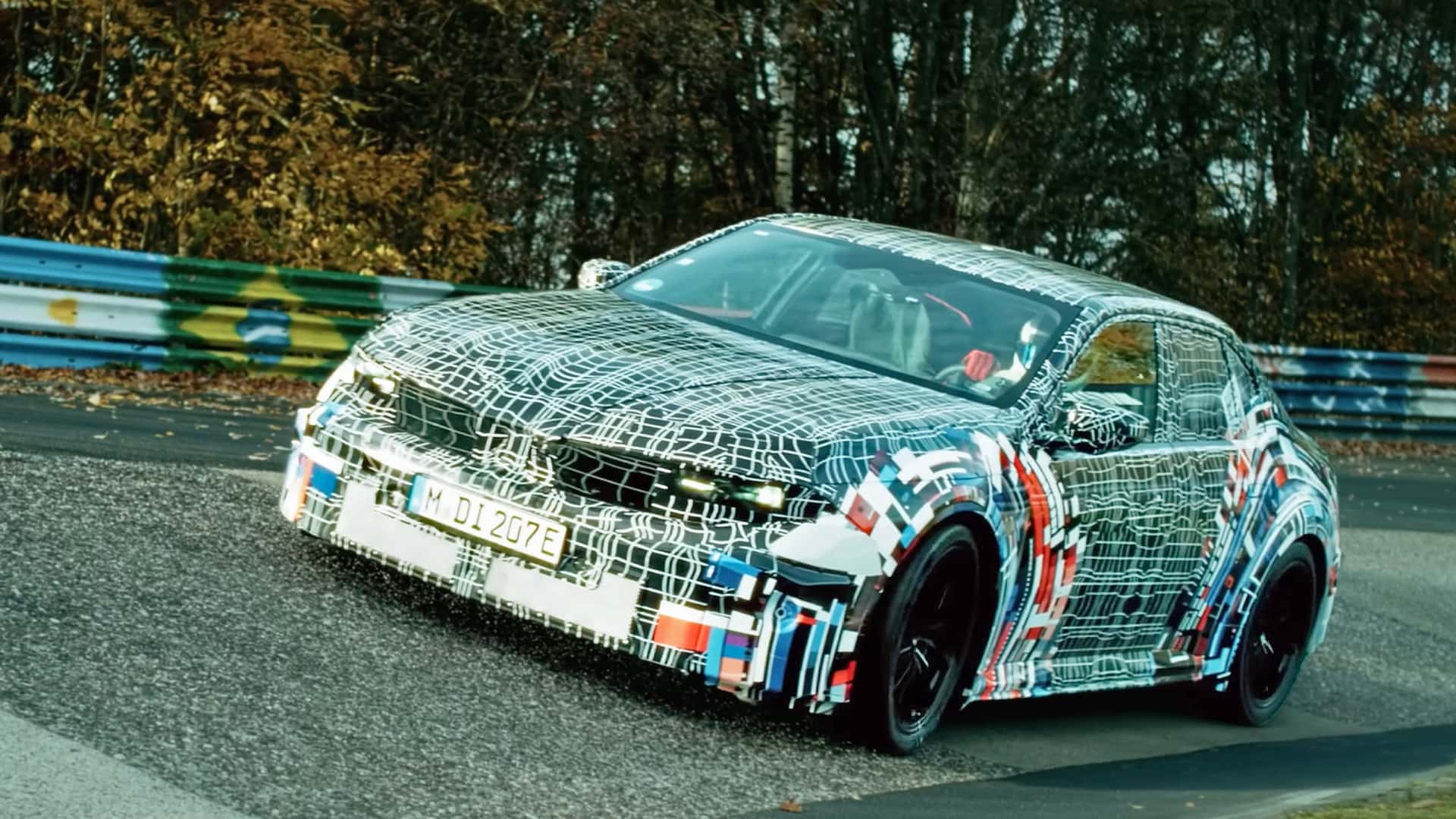
At the three-minute mark in a recent video, an engineer was seen pulling on the right paddle on the steering wheel while driving on a track. This could indicate an "upshift" in the simulated gear system. As the car accelerates, the sound will evolve, becoming more intense with each shift, providing a sense of progression and excitement.
Avoiding the Drone and Including Electric Motor Sounds
BMW is also working to avoid the drone-like sound that some high-performance combustion engines produce at certain RPMs. To achieve this, they’ve incorporated hints of the electric motor’s sound, recorded directly from the car’s drive units. This blend of sounds creates a more immersive and dynamic experience for drivers.
Testing Around the Nurburgring
BMW is testing the M3 EV around the Nurburgring, where audible reference points are crucial for understanding speed without constantly checking the speedometer. These reference points will be even more important in the electric M3, as it delivers power more quickly and intensely than its gasoline counterpart.
Final Thoughts
Despite the absence of real pistons, BMW is striving to make the M3 EV as exciting as possible. By focusing on the driver’s experience and avoiding common approaches, the company is taking a bold step toward redefining what an electric performance car can sound like.
Post a Comment for "BMW's Electric M3 Defies V8 Legacy with Something Better"