
Rebuild Britain's Industry for Future-Proof Jobs, Says Paul Stein
The Crisis of NEETS and the Path to Re-Industrialisation
Britain is facing a significant challenge, with over one million young people aged 16-24 falling into the category of Not in Education, Employment or Training (NEETS). This issue has sparked numerous discussions about its causes and potential solutions. While some suggest tax increases or measures to enhance employee rights, these approaches often fail to address the deeper structural problems within the economy.
As a technologist who has worked across various industries, including serving as Chief Technology Officer of Rolls-Royce and engaging with government initiatives, I have witnessed firsthand the importance of re-industrialisation. My current role in growing a UK start-up reinforces the belief that revitalising manufacturing and technology sectors can provide meaningful opportunities for the younger generation.
At the Christopher Nieper Foundation, where I serve as a trustee, we are committed to supporting NEETS through various initiatives. Our focus is on understanding and addressing the underlying issues that contribute to this crisis.
The Impact of De-Industrialisation
De-industrialisation, which began during Margaret Thatcher’s era, aimed to eliminate inefficient industries. However, this led to a shift in wealth creation towards a heavily deregulated financial sector. 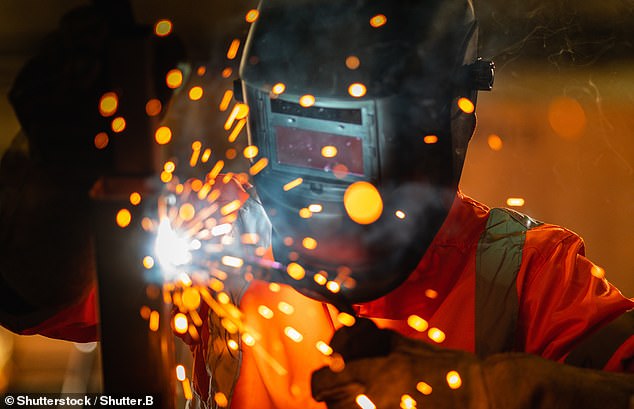 This transition resulted in a significant change in employment patterns, moving jobs from regions where manufacturing was integral to community life to a service-based economy, particularly in the South-East.
Historians and economists continue to debate whether this move was necessary to correct an inefficient post-war industrial economy. Nonetheless, it is evident that Britain's 'rust belt' has not been replaced by quality industries capable of providing fulfilling jobs for younger people.
The Role of AI in the Economy
Another critical issue is the impact of artificial intelligence (AI) on the UK economy. Unlike many other countries, AI is having a more pronounced effect here. Work involving manual components, such as manufacturing, medicine, and equipment design, can often be enhanced by AI. However, purely service or knowledge-based work can be replaced by it.
Given that Britain's economy is now 80% service-based, the challenge lies in ensuring that AI generates enough jobs to meet the needs of NEETS. While AI will create new roles, it may not provide the numbers required to address the current crisis.
Challenges in Re-Industrialisation
Re-industrialisation faces several challenges, including a de-skilled Whitehall that struggles to respond to industrial changes. High energy costs, weak supply chains, and poor synergies between the defence and commercial sectors further complicate the situation. Additionally, government procurement policies often judge UK design and manufacture against overseas suppliers, despite the benefits of 'buying British.'
To create jobs for young people, re-industrialisation is essential. It can foster high-quality, fulfilling jobs while driving growth, improving national security, and instilling a sense of pride and community. Re-industrialisation does not mean reverting to historical smokestack industries. Companies like JCB, Rolls-Royce, JLR, Unilever, and GSK exemplify world-class manufacturing, and many start-ups have the potential to become future leaders.
 These companies and their suppliers can generate diverse high-value jobs for graduates and apprentices. Sectors such as electronics, semiconductors, agricultural technology, nuclear energy, electric vehicles, new materials, biotech, and defence offer rich opportunities for re-industrialisation.
A Systemic Approach to Industrial Policy
To capitalise on these opportunities, a comprehensive rethinking of industrial policy, government procurement, net zero, defence industrial strategy, education, and financial incentives for growth is necessary. A long-term look at science budgets and the skill base within Whitehall is crucial.
This systemic problem cannot be addressed with superficial fixes. One area where the UK is particularly challenged is the lack of incentives for entrepreneurs. New businesses require risk-taking, but legislation aimed at increasing tax revenue and improving governance is suppressing employment and reducing the upside for entrepreneurs, driving many abroad.
Balancing Growth and Innovation
Re-industrialisation should not come at the expense of other growing sectors. The creative industries, tourism, AI-driven jobs, and innovative service delivery models all play a vital role in economic growth and employing NEETS. It is not an either-or choice; both can thrive together.
The UK needs to pivot from its downward industrial spiral into an attractive economy for investors, with 'Zero NEETS' as a key national target. Urgent measures include removing red tape and tax barriers to starting businesses. Re-evaluating Net Zero energy policy is also essential, as it currently hampers heavy manufacturing and the development of energy-hungry AI.
Small steps have been taken to 'buy British,' but these need to be expanded. Across nuclear energy, defence, healthcare, local authority spending, and policing, the country must support products designed and manufactured in the UK.
Building a Stronger Future
While the UK has a talented civil service, there is a shortage of commercial, technical, and engineering risk-judgment skills in Whitehall. This needs to change if the government is to drive industrial growth effectively.
Implementing ideas like these would significantly boost business confidence, leading to rapid growth in employment prospects for NEETS. The wealth generated would fund tax incentives and spread across the UK, including in depressed areas.
It is time for Britain to move towards a modern, profitable re-industrialised nation fit for the 21st century. By addressing these challenges, we can ensure a brighter future for our young people.
Post a Comment for "Rebuild Britain's Industry for Future-Proof Jobs, Says Paul Stein"