
Why gray whales are appearing in San Francisco Bay and what it signifies
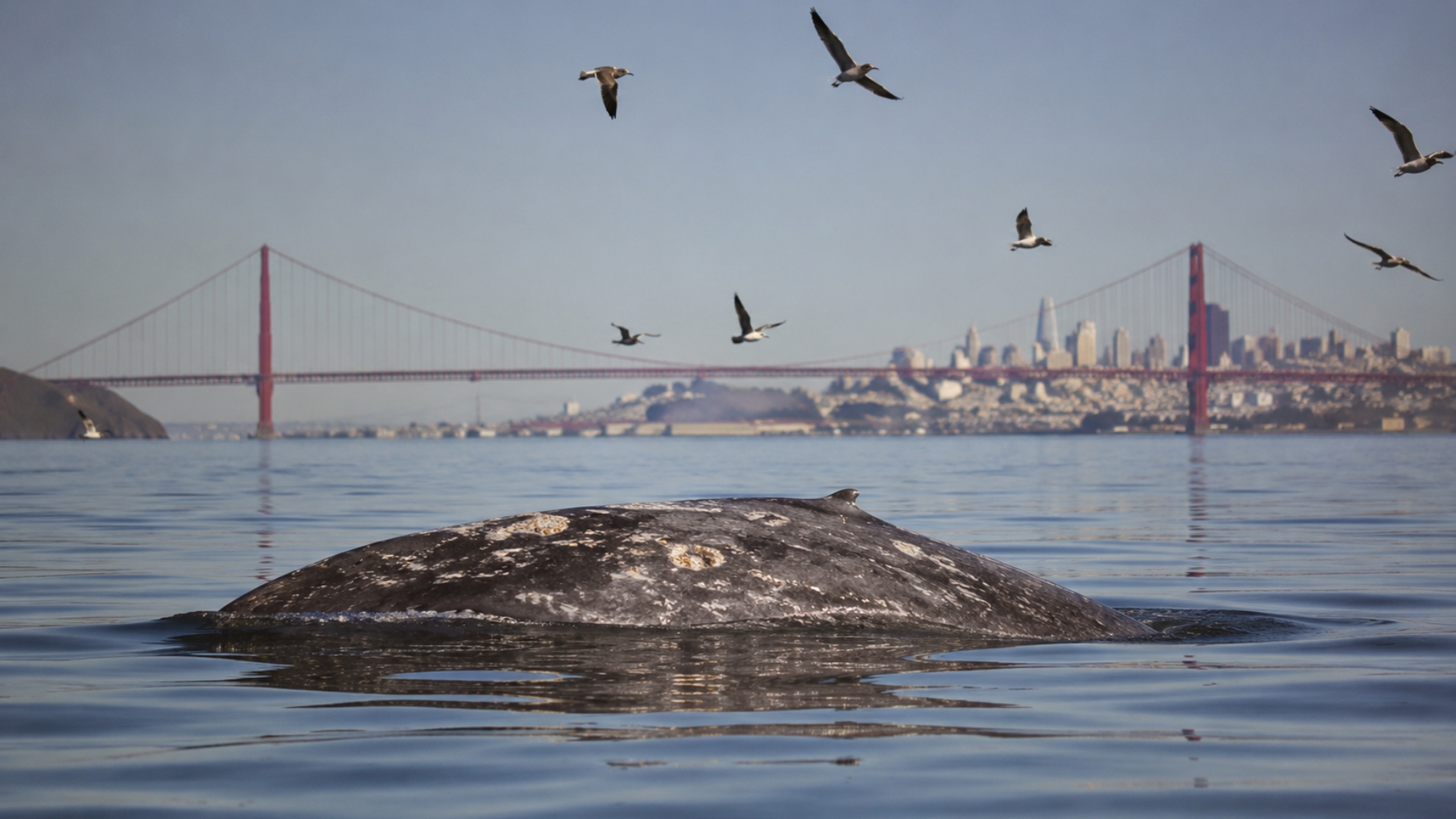
Gray Whales Are Turning Heads in San Francisco Bay
For most people, San Francisco Bay is associated with ferries, cargo ships, sailboats, and the iconic Golden Gate Bridge. Recently, however, another visitor has been drawing attention. An increasing number of gray whales have been entering the bay, sometimes remaining for extended periods in waters more commonly associated with urban activity than large marine mammals. The sightings have captivated residents, tourists, and whale watchers while providing scientists with a rare opportunity to study one of the Pacific's most famous migratory species up close.
The trend has also sparked an important question: why are so many whales spending time in the bay?
One of the Longest Migrations on Earth
The Gray Whale undertakes one of the most extraordinary migrations in the animal kingdom. Most eastern North Pacific gray whales travel between feeding grounds in Arctic and sub-Arctic waters and breeding lagoons along the Pacific coast of Mexico. During these journeys, they cover thousands of miles each year.
California lies directly along that migratory route, making whale sightings common offshore. What is less common is seeing multiple gray whales move deep into a large urban estuary such as San Francisco Bay.
Scientists Are Looking for Clues
Researchers believe several factors could be contributing to the increase in sightings. One possibility is that whales are exploring new feeding opportunities. Gray whales are known to be adaptable foragers and may alter their behavior when prey availability changes elsewhere in their range.
Environmental conditions could also play a role. Ocean temperatures, currents, and food distribution patterns influence where whales travel and how long they remain in particular areas. Scientists are particularly interested in understanding whether these bay visits represent a temporary phenomenon or part of a broader shift in whale behavior.
Food May Be Part of the Story
Gray whales traditionally feed on small bottom-dwelling organisms in Arctic waters. However, studies have shown that they can also take advantage of alternative food sources when conditions require it. Changes in Arctic ecosystems, sea ice patterns, and prey abundance may influence how whales use habitat during migration.
Researchers have closely monitored gray whale populations in recent years following periods when unusually high numbers of whales were found dead along the Pacific coast. Those mortality events raised concerns about food availability and changing environmental conditions.
Understanding why whales are appearing in San Francisco Bay could help scientists better understand these larger ecosystem changes.
Urban Waters Can Present Risks
Although whale sightings generate excitement, busy waterways are not without hazards. Large vessels, commercial shipping traffic, recreational boats, and fishing activities can increase the risk of disturbance or collision. Vessel strikes remain one of the most significant human-related threats facing large whales in many regions.
Wildlife authorities often remind boaters to maintain safe distances from whales and follow established marine mammal protection guidelines. Protecting whales in heavily trafficked areas requires cooperation between scientists, regulators, commercial operators, and the public.
A Conservation Success Story With New Challenges
The eastern North Pacific gray whale population is often cited as one of the great marine conservation success stories. Commercial whaling dramatically reduced numbers during the nineteenth and early twentieth centuries. International protections eventually allowed the species to recover, leading to a substantial rebound.
Today, gray whales remain among the most recognizable marine mammals on the Pacific coast. Yet recovery does not mean challenges have disappeared. Climate change, shifting ocean conditions, vessel traffic, and ecosystem changes continue to influence the species' future.
Wildlife and Cities Are Intersecting More Often
The presence of gray whales in San Francisco Bay reflects a broader trend seen around the world. Wildlife is increasingly being observed in places where human development dominates the landscape. Some animals are adapting to urban environments, while others are responding to environmental changes that alter traditional movement patterns.
These encounters often remind people that cities remain connected to surrounding ecosystems, even when that connection is easy to overlook. Seeing a whale surface against the backdrop of a major metropolitan skyline creates a powerful visual reminder of that relationship.
Why These Sightings Matter
The growing number of gray whale sightings in San Francisco Bay is about more than spectacular photographs or memorable wildlife encounters. For scientists, the whales may offer important clues about the state of Pacific Ocean ecosystems. For conservationists, they highlight the need to protect marine wildlife even in heavily developed environments. And for the public, they provide a rare opportunity to witness one of nature's great migrations unfolding close to home.
Researchers may not yet have all the answers about why gray whales are spending more time in the bay. But each new sighting contributes to a better understanding of how marine mammals are responding to a rapidly changing world.
For now, the whales have transformed one of America's busiest waterways into an unexpected stage for one of the ocean's most remarkable travelers.
Post a Comment for "Why gray whales are appearing in San Francisco Bay and what it signifies"