
Why Gray Whales Are Visiting a Busy American Bay
A Growing Presence of Whales in an Unlikely Location
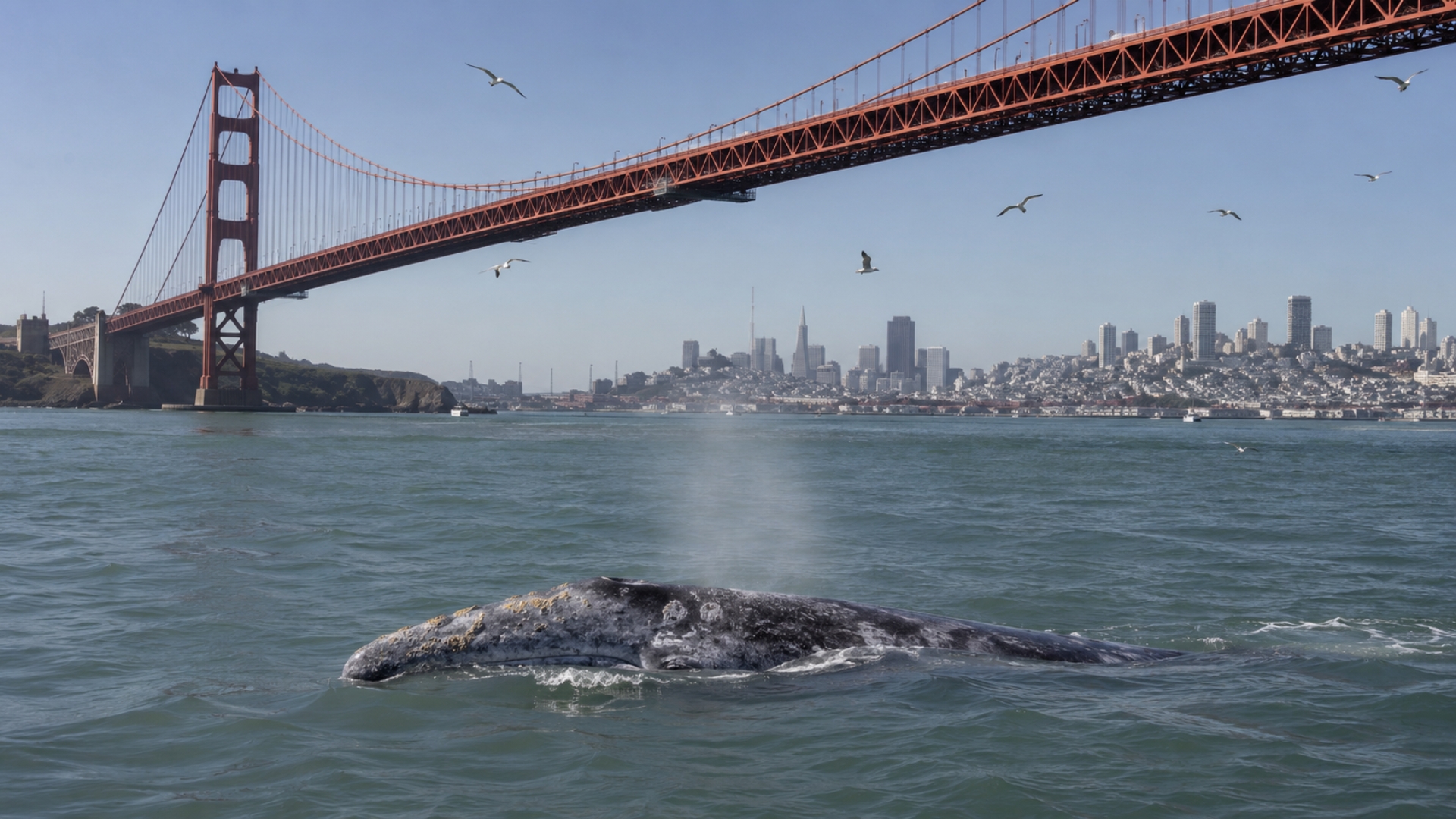
San Francisco Bay is typically associated with cargo ships, ferries, and sailboats, as well as the iconic Golden Gate Bridge. It is not a place that one would expect to see large whales. However, in recent years, there has been a noticeable increase in the number of gray whales observed in and around the bay. These majestic creatures have been seen lingering for days or even weeks, which has brought joy to both residents and tourists while also prompting important questions for marine scientists.
The sightings offer a rare chance to observe one of the Pacific Ocean's most famous migratory species in an environment more commonly linked to urban life than marine wildlife.
One of Nature’s Great Migrators
Gray whales are known for their incredible long-distance migrations. Most eastern North Pacific gray whales spend their summers feeding in nutrient-rich Arctic waters before traveling thousands of miles south to breed and calve along the Pacific coast of Mexico. Twice a year, they pass through California during these remarkable journeys.
Although gray whales are often seen offshore during migration, entering bays and harbors is less common. Therefore, their repeated appearances in San Francisco Bay are particularly noteworthy.
Why Are the Whales Entering the Bay?
Scientists are still investigating why more gray whales are being seen in the bay. Several theories have been proposed. Some whales may be following prey or exploring feeding opportunities. Others might be seeking temporary refuge from rough ocean conditions. Young whales, in particular, can display exploratory behavior as they navigate unfamiliar environments.
Researchers are also looking into whether broader environmental changes in the Pacific could be influencing whale movements. Marine ecosystems are constantly changing, and shifts in food availability can affect where whales travel and how they use habitat.
Ocean Conditions May Be Playing a Role
Gray whales rely heavily on productive feeding grounds. Many spend the summer consuming amphipods and other small organisms in Arctic and sub-Arctic waters. When food availability changes, whales may alter their migration patterns, feeding behavior, or habitat use.
In recent years, researchers have been closely monitoring gray whale populations following periods of elevated mortality and signs that some animals were struggling to find adequate food. Understanding why whales are appearing more frequently in San Francisco Bay could provide valuable clues about conditions elsewhere in the Pacific ecosystem.
Opportunities and Risks
While the sight of whales brings excitement, entering a busy urban waterway can expose them to additional dangers. Large vessels, recreational boats, fishing gear, and industrial activity all increase the risk of disturbance or accidental collisions. Vessel strikes are among the most significant threats facing many whale species globally.
Wildlife managers often encourage boaters to maintain safe distances and follow established guidelines when whales are present. The goal is to allow people to enjoy the experience while minimizing stress and danger for the animals.
Gray Whales Have Made a Remarkable Comeback
The eastern North Pacific gray whale population is often cited as a conservation success story. Commercial whaling once pushed the species toward extinction, but international protections allowed numbers to recover significantly over subsequent decades. Today, gray whales are among the most recognizable marine mammals along North America's Pacific coast.
Their recovery shows how conservation measures can help species rebound when major threats are reduced. At the same time, changing ocean conditions continue to present new challenges that scientists are working to understand.
Urban Wildlife Encounters Are Becoming More Common
The presence of whales near major cities reflects a broader trend. Around the world, wildlife is increasingly being observed in places where people do not traditionally expect it. Some species are adapting to human-dominated landscapes, while others are responding to environmental changes that alter movement patterns and habitat use.
These encounters often spark public interest because they provide a direct connection to nature in highly developed environments. Seeing a whale surface near one of the busiest metropolitan areas in the United States can make marine conservation feel immediate and personal.
Why These Sightings Matter
Every gray whale entering San Francisco Bay represents more than just a memorable wildlife encounter. For researchers, each sighting is an opportunity to learn about migration, behavior, health, and the changing conditions affecting marine ecosystems. For the public, the whales serve as powerful reminders that even heavily urbanized coastlines remain connected to the natural world.
The reasons behind the recent increase in sightings may not yet be fully understood. But the growing presence of gray whales in the bay highlights the dynamic nature of ocean ecosystems and the importance of continued monitoring.
For now, residents and visitors have been given an unusual privilege: the chance to witness one of the world's great marine travelers navigating the waters beneath the Golden Gate Bridge, bringing a touch of wildness into the heart of a modern city.
Post a Comment for "Why Gray Whales Are Visiting a Busy American Bay"