
First Live Sighting of Rare Tusked Whale Ends in Crossbow Encounter
A Breakthrough in the Study of Ginkgo-Toothed Beaked Whales
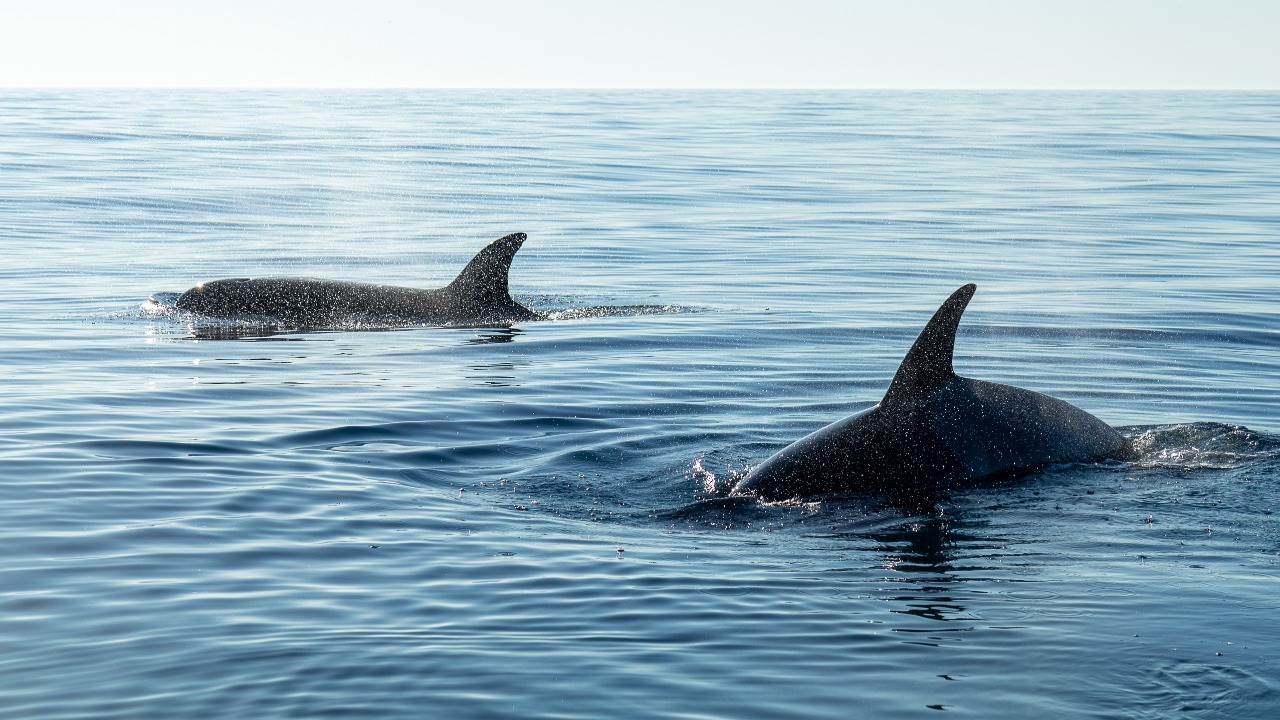
Researchers off the coast of Baja California, Mexico, made a historic discovery by confirming the presence of two ginkgo-toothed beaked whales alive at sea for the first time. This breakthrough was achieved through a combination of visual documentation, genetic analysis, and acoustic recordings. The team used a crossbow-fired biopsy dart to collect a tissue sample from one of the animals, marking a significant step forward in understanding this elusive species.
Why This Discovery Matters
Before this encounter, all confirmed identifications of Mesoplodon ginkgodens came from dead specimens. The U.S. Fish and Wildlife Service classifies the whale as data-deficient, reflecting the limited knowledge about its population size, range, or behavior. This gap exists largely because no one had reliably seen the animal alive in the open ocean. Beaked whales, in general, spend most of their time at depth, surfacing briefly and unpredictably, which makes visual surveys from ships inefficient for tracking them.
The new paper changes this dynamic by providing a practical method for monitoring the species. During the sighting, researchers recorded signals matching a call type known as BW43. Scientists had detected BW43 across parts of the Pacific but could not assign it to a species. Now that the call has been recorded at the same time and place as a genetically confirmed ginkgo-toothed beaked whale, monitoring networks can listen for BW43 on fixed hydrophone arrays rather than waiting for another chance visual encounter. This shift from ship-based searching to acoustic detection could allow scientists to map the species’ range across a far wider area, at lower cost, and without disturbing the animals.
Crossbow Biopsy, Acoustic Match, and Genetic Proof
The core evidence for the Baja California encounter rests on three interlocking data streams collected during a single research cruise. First, field observers photographed two medium-sized beaked whales with characteristic ginkgo-shaped tooth scars and body proportions that matched descriptions from skeletal material. The animals surfaced repeatedly, giving researchers enough time to document external features and behavior consistent with deep-diving, squid-eating beaked whales.
Second, a researcher used a modified crossbow to obtain a biopsy from one of the whales. The team employed a 150-lb draw recurve crossbow loaded with a punch-tip arrow engineered to take a shallow core of skin and blubber before bouncing free. The arrow struck the flank of the whale, dislodged a small tissue plug, and was retrieved at the surface by the research crew. This technique is widely used in cetacean studies because it allows sampling of free-swimming animals without capture or prolonged close contact.
Third, passive acoustic instruments deployed during the same period recorded a series of echolocation clicks and calls matching the BW43 signal type. These detections occurred while the whales were visually present near the vessel, giving researchers strong circumstantial evidence that the sounds and the animals belonged to the same species. Because acoustic data can be collected continuously and autonomously, this link between BW43 and Mesoplodon ginkgodens dramatically expands the potential to study the species beyond rare shipboard sightings.
What We Still Don’t Know
Even with this landmark confirmation, major questions about Mesoplodon ginkgodens remain unanswered. Two individuals sighted on a single day do not yield a population estimate, nor do they clarify whether the species is rare or simply difficult to detect. Strandings have been documented across a broad Indo-Pacific swath, but the new encounter alone cannot determine how many subpopulations exist, how they are connected, or whether any are declining.
The peer-reviewed account of the encounter focuses on confirming species identity and linking BW43 to ginkgo-toothed beaked whales. It does not attempt formal distribution modeling or abundance estimation. Without systematic surveys or long-term acoustic datasets specifically tuned to BW43, conservation agencies still lack the information needed to assess extinction risk or to designate critical habitats.
Future Directions
The most consequential scientific question now is how quickly BW43 can be integrated into broader passive acoustic monitoring systems. Fixed hydrophone arrays, mobile gliders, and autonomous recorders already operate across large portions of the Pacific, but many are not yet configured to flag BW43 in real time. Incorporating this call type into automated detection algorithms would allow researchers to retrospectively scan archived audio and to track new detections as they occur, gradually building a map of where ginkgo-toothed beaked whales spend their time.
Such a map could, in turn, guide more targeted visual surveys and additional biopsy efforts, filling in gaps about diet, contaminant exposure, and genetic diversity. It could also reveal whether the Baja California encounter represents a peripheral outpost of the species’ range or a previously unrecognized hotspot. For now, the two whales documented off Mexico stand as proof that Mesoplodon ginkgodens still swims in the open ocean—and that a carefully aimed crossbow bolt, coupled with hydrophones and DNA sequencing, can transform a ghost known only from bones into a living species that science can finally begin to study in detail.
Post a Comment for "First Live Sighting of Rare Tusked Whale Ends in Crossbow Encounter"