
India and Japan unveil historic UNICORN stealth naval defense project
A Historic Defense Partnership Between India and Japan
In a significant development for Indo-Pacific maritime security, India and Japan have taken a major step forward by launching their first-ever joint military hardware development initiative: the UNICORN stealth mast project. Officially known as the Unified Complex Radio Antenna or the NORA-50 Integrated Mast, this advanced technological collaboration marks a turning point in bilateral defense relations.
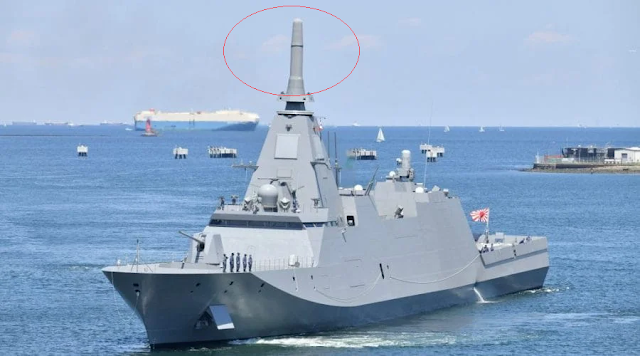
Indian Navy to Receive Next-Gen UNICORN Stealth Masts for Warships as India-Japan Sign Historic Co-Development Agreement (defence.in)
As the global focus continues to shift toward the Indo-Pacific region, this agreement goes beyond a simple arms deal. It is a clear statement of intent from New Delhi and Tokyo to strengthen regional stability, ensure freedom of navigation, and uphold a rules-based international order. For Japan, which has traditionally maintained strict limitations on military exports, partnering with India to co-develop top-tier naval technology under their 2015 bilateral defense technology agreement reflects a deepening strategic alignment and mutual recognition of the complex security environment in Asian waters.
Technological Advancements of the UNICORN Mast
At the core of this partnership is the UNICORN mast, an engineering breakthrough that has already demonstrated its effectiveness aboard the Japan Maritime Self-Defense Force’s Mogami-class stealth frigates. Traditional warships often feature a chaotic arrangement of exposed antennas and sensors on their superstructures, increasing their radar cross-section (RCS) and making them more vulnerable to enemy radar and anti-ship missiles.
The UNICORN system transforms this design by housing essential arrays—such as communications, tactical data links, Identification Friend or Foe (IFF) systems, Electronic Support Measures (ESM), and Tactical Air Navigation (TACAN) equipment—within a single, enclosed, geometrically optimized radome. This streamlined approach significantly reduces electromagnetic reflections and manages the vessel's electronic signature efficiently, making future Indian Navy surface combatants highly stealthy and nearly invisible to older threat detection systems.
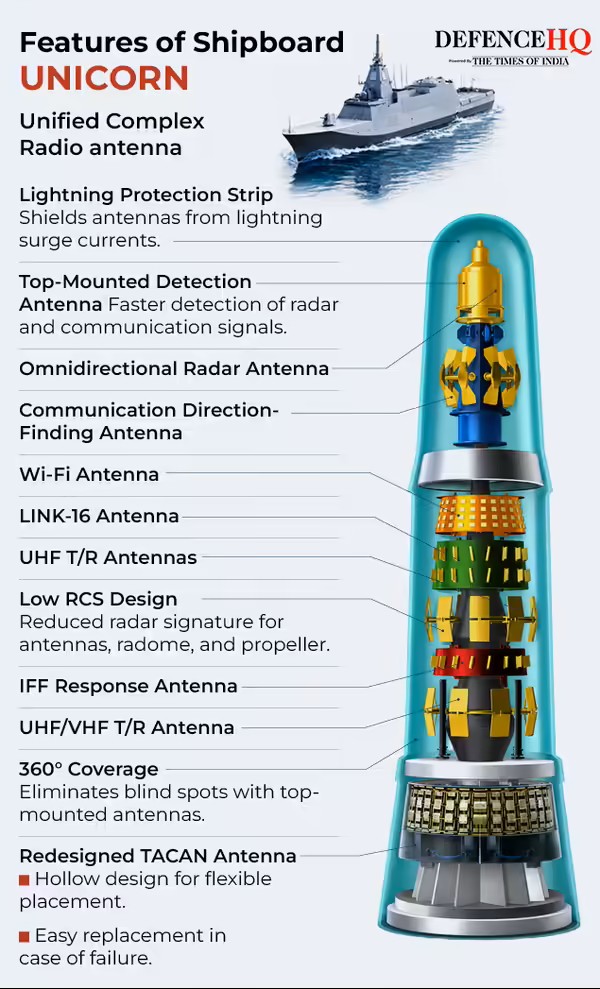
(Photo by Timesofindia)
Operational and Logistical Benefits
Beyond the tactical advantages of surviving high-intensity maritime combat, the integration of the NORA-50 mast brings numerous logistical and operational benefits to the fleet. The enclosed nature of the system protects sensitive electronic components from the harsh, corrosive maritime environment, simplifying maintenance protocols and reducing life-cycle costs.
Additionally, consolidating these systems frees up valuable internal space within the warship and eliminates topside clutter, enhancing the overall performance of the ship’s sensory and communication suites. As the Indian Navy modernizes its fleet to project power and protect its vast maritime interests, equipping its next-generation frigates and destroyers with this level of advanced situational awareness and network-centric warfare capability will provide a decisive edge in the contested waters of the Indian Ocean and beyond.
Industrial and Economic Impact
The industrial and economic dimensions of this partnership are equally important, serving as a catalyst for India's "Make in India" initiative. Rather than a standard procurement, this is a true co-development and production endeavor. Indian defense manufacturers, led by state-owned enterprises like Bharat Electronics Limited (BEL), will collaborate with Japanese industrial partners to integrate, adapt, and manufacture the UNICORN systems on Indian soil.
This collaboration not only facilitates the transfer of advanced stealth and sensor technology but also strengthens India's indigenous naval industrial base, creating a resilient defense supply chain that is increasingly self-reliant.
Strategic Implications
From a broader strategic perspective, the UNICORN project highlights the growing geopolitical alignment between key democratic powers in the Indo-Pacific. Both India and Japan, as pillars of the Quad framework alongside the United States and Australia, recognize that maintaining a free and open maritime domain requires more than diplomatic alignment—it demands tangible, interoperable military capabilities.
By sharing elite defense technology and enhancing their naval communication architectures, Tokyo and New Delhi are laying the foundation for more complex joint exercises and seamless allied operations. As the Indian Navy prepares to deploy its next generation of stealth combatants, the integration of Japan's combat-proven UNICORN mast ensures that the fleet will be equipped with the premier stealth, intelligence, and network capabilities needed to deter aggression and maintain sovereignty across the world's most critical maritime corridors.
Post a Comment for "India and Japan unveil historic UNICORN stealth naval defense project"