
Neo: The Home Robot Now Preorderable at $20,000 with $499 Monthly Plan
The Launch of NEO: A New Era in Home Robotics
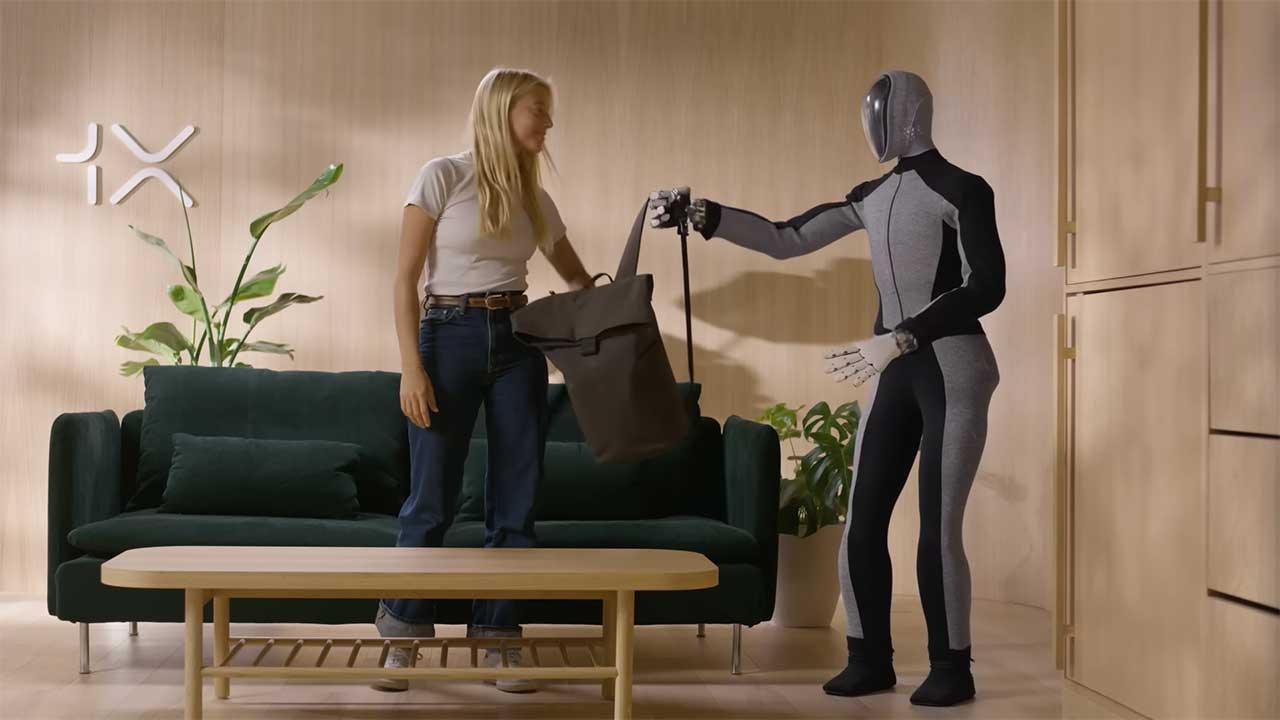
Norwegian robotics company 1X Technologies has launched preorders for its latest creation, the NEO humanoid robot. Designed for household use, the robot is available for a one-time purchase of $20,000 or through a monthly subscription plan of $499. The first units are expected to be delivered to U.S. homes in 2026. To support this launch, 1X has established a new American factory with an ambitious target of producing 10,000 robots in its first year. This move represents a bold step into the consumer market and tests whether households are willing to invest in a machine that has yet to prove itself in real-world environments.
Financial Implications of the Pricing Model
The pricing structure introduces a significant financial decision for early buyers. Opting for the $499 monthly subscription would result in spending approximately $6,000 in the first year, which is much lower than the upfront cost of $20,000. However, over a 40-month period, the subscription cost would surpass the purchase price. This means that the financial viability of each option depends on how long the buyer intends to keep the robot and how quickly the hardware improves over time.
Maintenance and software updates further complicate this equation. The subscription model shifts the risk of repairs and upgrades to 1X, while outright owners bear these costs themselves. If the subscription includes ongoing service, remote diagnostics, and automatic software upgrades, it effectively turns NEO into a robotics-as-a-service offering. On the other hand, those who pay $20,000 upfront are betting that the first-generation hardware will remain capable and supported for a long enough period to justify the premium.
Until 1X provides more details about warranty terms, service-level commitments, and what happens if a subscriber cancels, buyers will have to make decisions based on incomplete information. The lack of clarity on repair processes, accidental damage, and end-of-life recycling leaves potential customers comparing two options without full understanding of the long-term costs or flexibility.
Factory Expansion and Technical Specifications
The production side of the equation took a concrete step forward when 1X opened a U.S. plant with plans to build 10,000 home robots in its first year. This target would represent one of the largest initial manufacturing runs for any consumer humanoid robot to date, although no independent audit or third-party verification of the facility’s capacity has been published. The company describes the site as highly automated, with assembly lines tuned for humanoid form factors rather than traditional industrial arms.
In its own materials, 1X presents the factory as a cornerstone of a broader strategy to localize production and shorten supply chains for American buyers. A dedicated page on the company’s site frames the new facility as a specialized NEO factory focused on scaling up humanoid manufacturing while maintaining quality and safety checks. If the plant reaches its 10,000-unit goal, 1X will have to solve not only mechanical assembly at scale but also calibration, software flashing, and end-of-line testing for thousands of mobile, sensor-rich machines.
On the technical side, NEO runs on an onboard AI system called Redwood, a vision-language model with approximately 160 million parameters that processes information at around 5 Hz on the robot’s GPU, according to 1X’s technical overview. These numbers are modest compared to the billion-parameter models powering cloud-based AI assistants, but the design choice reflects a deliberate tradeoff: running inference locally means the robot can function without a constant internet connection and avoids the latency of cloud round-trips during physical tasks like picking up objects or navigating a hallway.
Unanswered Questions and Future Outlook
Several significant unknowns stand between the preorder page and a working robot in someone’s kitchen. No independent performance benchmarks exist for Redwood’s 5 Hz onboard inference on real household tasks. The only data available comes from 1X itself. Until third-party testers, consumer reviewers, or academic researchers run NEO through standardized manipulation and navigation tests, buyers are relying entirely on the manufacturer’s claims about what the robot can actually do.
That lack of external validation extends to edge cases that matter in homes: slippery floors, cluttered hallways, dim lighting, and interactions with pets or children. It is unclear how NEO handles failures, such as dropping objects, misclassifying items, or losing localization in a busy room. Without published logs or safety case studies, potential customers have no way to gauge how gracefully the robot recovers from mistakes—or how often those mistakes occur.
Regulatory and safety certification status is another blind spot. None of the available primary sources address whether NEO has cleared UL, FCC, or any other consumer safety standards required for a powered machine operating autonomously in a home with people, pets, and fragile objects. For a product shipping in 2026, the absence of any public certification timeline is notable. If approvals slip, the delivery schedule could move even if the factory hits its production targets.
Privacy and data handling also remain largely unaddressed in public materials. A humanoid robot with cameras and microphones in living spaces raises immediate questions about how video, audio, and sensor data are stored, who can access them, and whether any of that information is used to further train Redwood. 1X has not yet laid out a detailed privacy policy specific to NEO’s in-home operation, leaving early adopters to assume how their household data might be treated.
Demand signals are equally opaque. 1X has not disclosed how many preorders it has received, how the split between $20,000 purchases and $499 subscriptions is trending, or what its waitlist looks like. Without those numbers, the 10,000-unit factory target is a supply-side ambition with no visible demand-side anchor. If orders fall short, the company may need to slow the production ramp, discount units, or lean more heavily on subscription offerings to fill capacity.
The practical question for anyone considering a preorder comes down to timing and risk tolerance. Placing a $20,000 order now means committing before any consumer reviews, safety certifications, or long-term reliability data exist. The subscription path at least limits the immediate financial exposure to $499 per month, but even that requires trusting that 1X will deliver on time, support the hardware for years, and keep improving Redwood’s capabilities. Until independent testing, clear warranty terms, and concrete certification updates emerge, NEO remains a bold promise: a full-size humanoid assistant priced like a car, asking households to decide how much of the future they are willing to prepay for today.
Post a Comment for "Neo: The Home Robot Now Preorderable at $20,000 with $499 Monthly Plan"